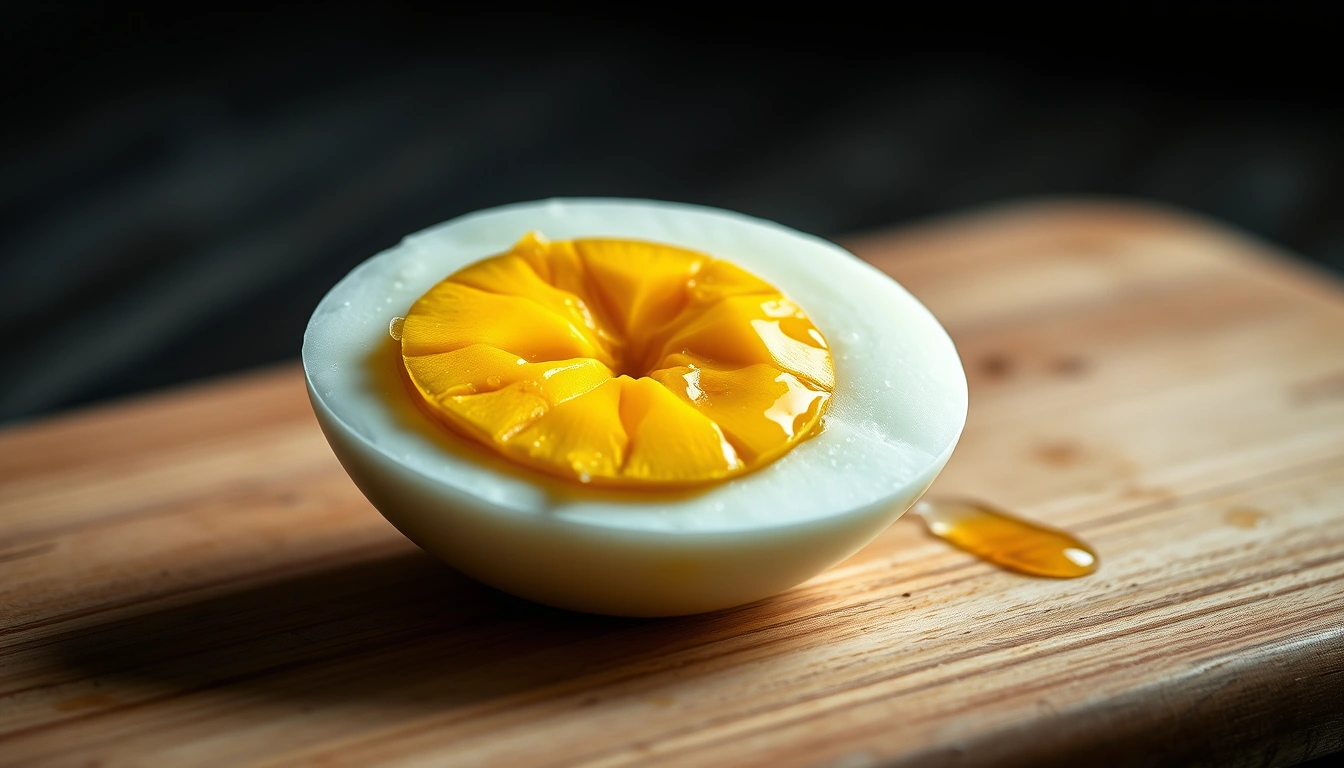
Hard-boiled egg
155 kcal per 100 g
Category: Dairy
Nutritional information (per 100 g)
| Calories | 155 kcal |
| Protein | 13g |
| Carbohydrates | 1.1g |
| Sugars | 1.1g |
| Total fats | 11g |
| Saturated fats | 3.3g |
| Fiber | 0g |
| Sodium | 124mg |
| Cholesterol | 373mg |
Vitamins and minerals
Description
Hard-boiled egg is a chicken egg that has been cooked in water until the yolk and white are completely firm. It is a basic and very versatile ingredient in the kitchen, used in salads, sandwiches, appetizers, and as a garnish. Its preparation is simple: the egg is cooked in boiling water for approximately 9 to 12 minutes, depending on its size, to achieve the desired texture.
The origin of the hard-boiled egg is as old as the human consumption of eggs. Since prehistoric times, the egg has been an important source of nutrition, and hard-boiling it has allowed for easy preservation and transportation.
Properties: The hard-boiled egg is an excellent source of high-quality protein, vitamins such as B12 and D, and minerals like iron and zinc. It also provides healthy fats and is low in carbohydrates, making it ideal for balanced and nutritious diets.
In different regions of Latin America, the hard-boiled egg has various synonyms or colloquial names such as "huevo cocido", "huevo pasado por agua" (when it is slightly less cooked), or simply "huevo sancochado". However, the term "huevo duro" is the most universal in the Spanish-speaking culinary world.