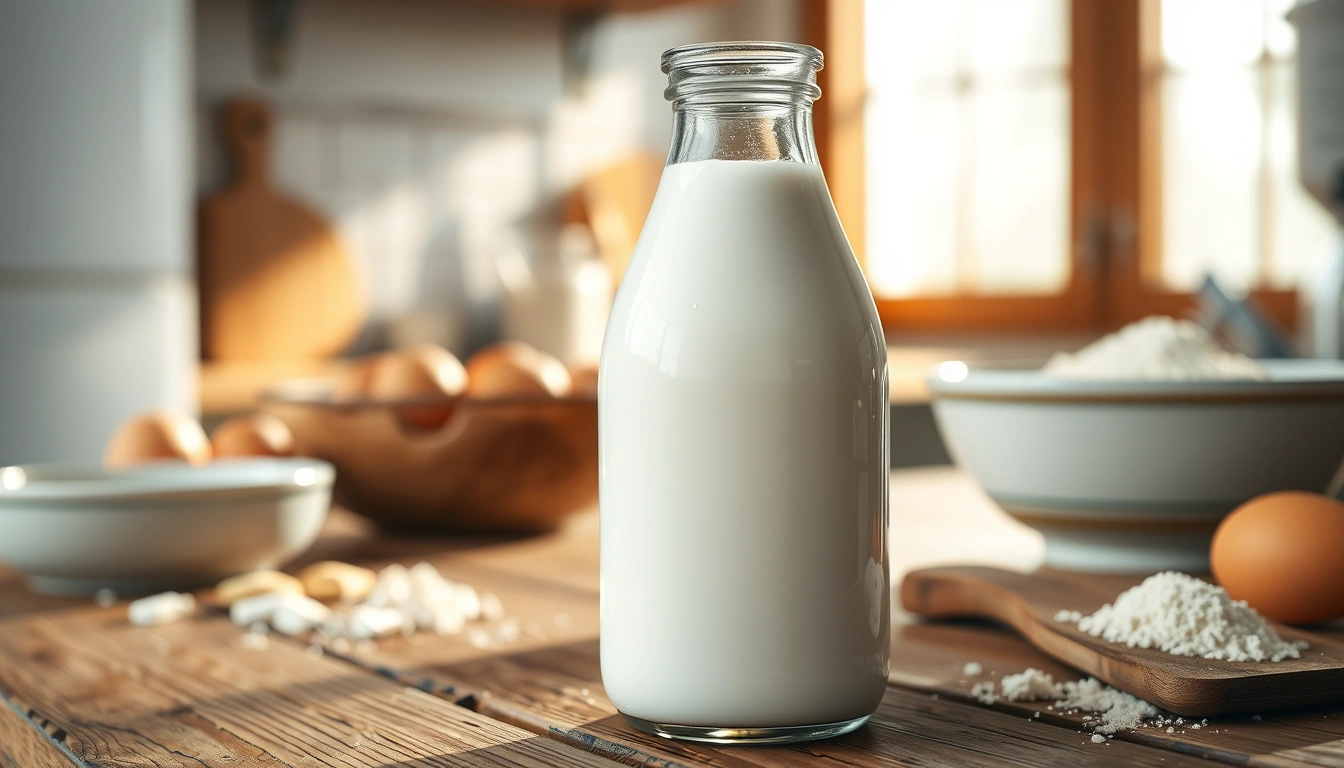
Lactose-free milk
42 kcal per 100 g
Category: Dairy
Nutritional information (per 100 g)
| Calories | 42 kcal |
| Protein | 3.4g |
| Carbohydrates | 5g |
| Sugars | 5g |
| Total fats | 1.5g |
| Saturated fats | 1g |
| Fiber | 0g |
| Sodium | 45mg |
| Cholesterol | 5mg |
Vitamins and minerals
Description
Lactose-free milk is a variety of milk that has undergone a process to remove or break down lactose, the natural sugar present in traditional milk. This makes it an excellent option for people with lactose intolerance, as it facilitates digestion without causing gastrointestinal discomfort.
This milk maintains a nutritional profile very similar to that of conventional milk, providing calcium, protein, vitamins A and D, and other minerals essential for a balanced diet. Its taste is slightly sweeter due to the breakdown of lactose into simpler sugars like glucose and galactose.
The origin of lactose-free milk is linked to food innovation in countries with a high prevalence of lactose intolerance, with its development being notable in Europe and North America. Currently, its production and consumption have spread worldwide, and it is commonly found in supermarkets and specialty stores.
In different regions of Latin America, lactose-free milk may go by various synonyms, although the most commonly used term is precisely "leche sin lactosa" (lactose-free milk). Other less frequent names include "leche deslactosada" or "leche libre de lactosa." However, in the context of cooking recipes, it is recommended to use "lactose-free milk" to maintain clarity and general understanding.