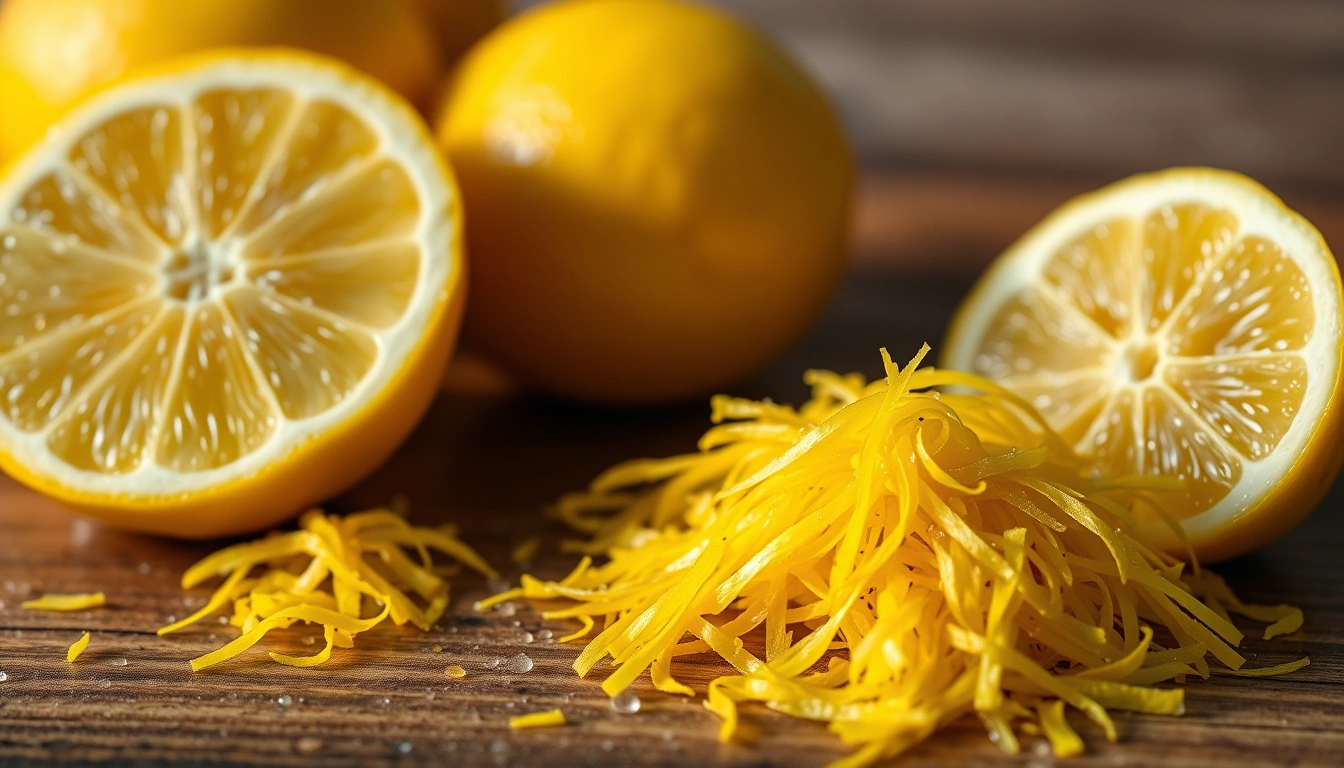
Lemon juice and zest
25 kcal per 100 g
Category: Spices and Herbs
Nutritional information (per 100 g)
| Calories | 25 kcal |
| Protein | 0.4g |
| Carbohydrates | 8.3g |
| Sugars | 2.5g |
| Total fats | 0.2g |
| Fiber | 0.3g |
Vitamins and minerals
Description
Lemon juice and zest
Lemon juice is the acidic liquid obtained by squeezing the pulp of the lemon fruit, while lemon zest corresponds to the outer superficial layer of the peel, which is rich in aromatic essential oils.
The lemon is native to Asia, particularly regions such as northeastern India and southern China, and its cultivation has spread worldwide, making it a fundamental ingredient in international cuisine.
In gastronomy, lemon juice and zest provide a fresh, acidic, and aromatic flavor that enhances both sweet and savory dishes. They are used to marinate meats, fish, and vegetables, in dressings, sauces, and desserts, and also to prevent the oxidation of cut fruits and vegetables.
Among their properties, their high content of vitamin C, antioxidants, and compounds that aid digestion and food preservation stand out.
In different Latin American countries, lemons may have different names depending on their variety and region. Some common synonyms include: yellow lemon (for the common lemon), lime (in some countries, referring to the green lemon), Persian lemon, or creole lemon. It is important to note that in some countries, such as Mexico, the lime refers to a different fruit with a less acidic flavor than the traditional lemon.