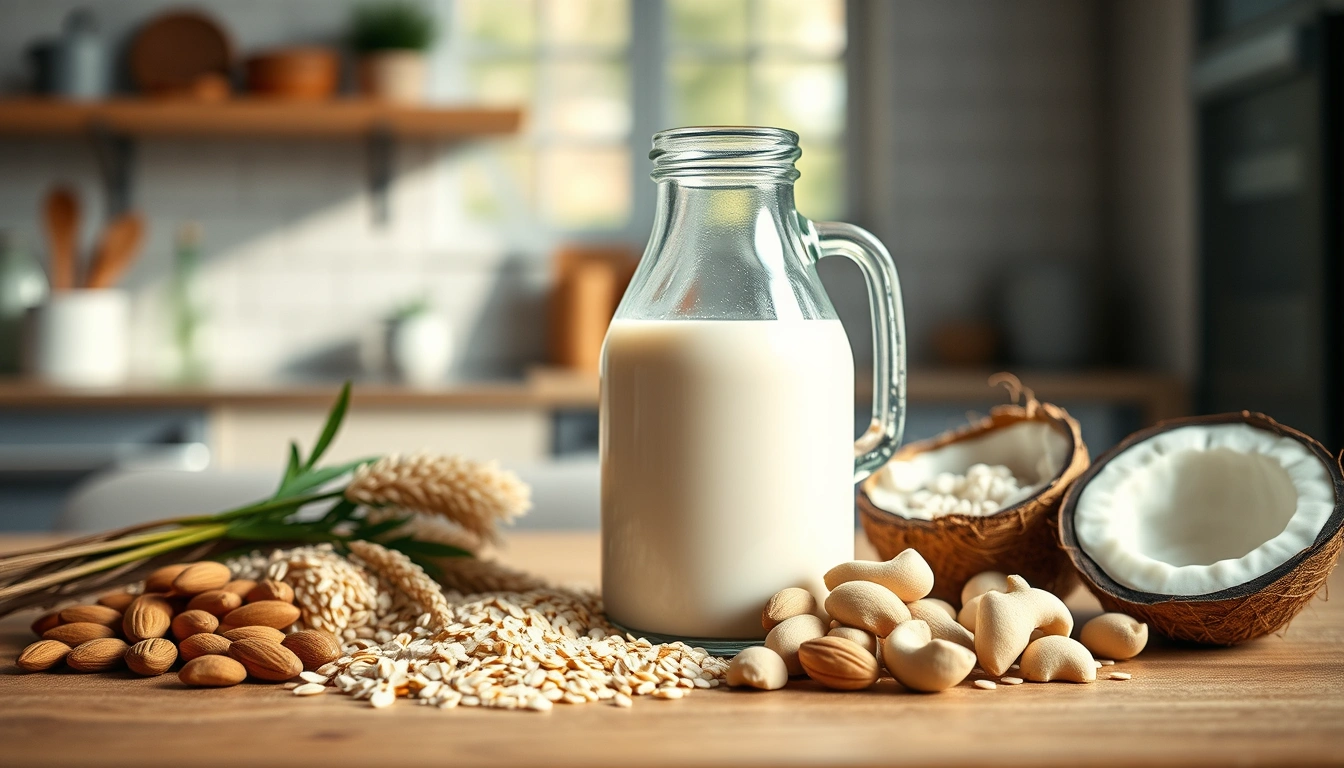
Non-dairy milk substitute
40 kcal per 100 g
Category: Dairy
Nutritional information (per 100 g)
| Calories | 40 kcal |
| Protein | 1g |
| Carbohydrates | 3g |
| Sugars | 2g |
| Total fats | 3g |
| Saturated fats | 0.3g |
| Trans Fat | 0g |
| Fiber | 0.5g |
| Sodium | 50mg |
Vitamins and minerals
Description
Non-dairy milk substitute is a plant-based alternative to cow's milk commonly used in cooking recipes for people with lactose intolerance, allergies, or vegan and vegetarian diets. These substitutes can be made from various sources such as almonds, soy, rice, oats, coconut, cashews, among others.
The origin of non-dairy milk substitutes dates back to various cultures around the world that have used traditional plant-based beverages, such as soy milk in Asia or almond milk in the Mediterranean basin. Today, these alternatives have become popular globally due to their nutritional benefits and ethical or health reasons.
Properties: Non-dairy milk substitutes are typically low in saturated fats and lack cholesterol, making them heart-healthy options. Additionally, many are fortified with calcium, vitamin D, and B12 to approximate the nutritional profile of cow's milk. Their flavor and texture vary depending on the base ingredient, adding different nuances to culinary preparations.
Synonyms in Latin American Spanish: leche vegetal, bebida vegetal, leche de origen vegetal, bebida no láctea.
In cooking, these substitutes are used in a wide variety of recipes, from desserts and smoothies to sauces and baked goods, easily adapting for those seeking dairy-free options without sacrificing flavor or texture.