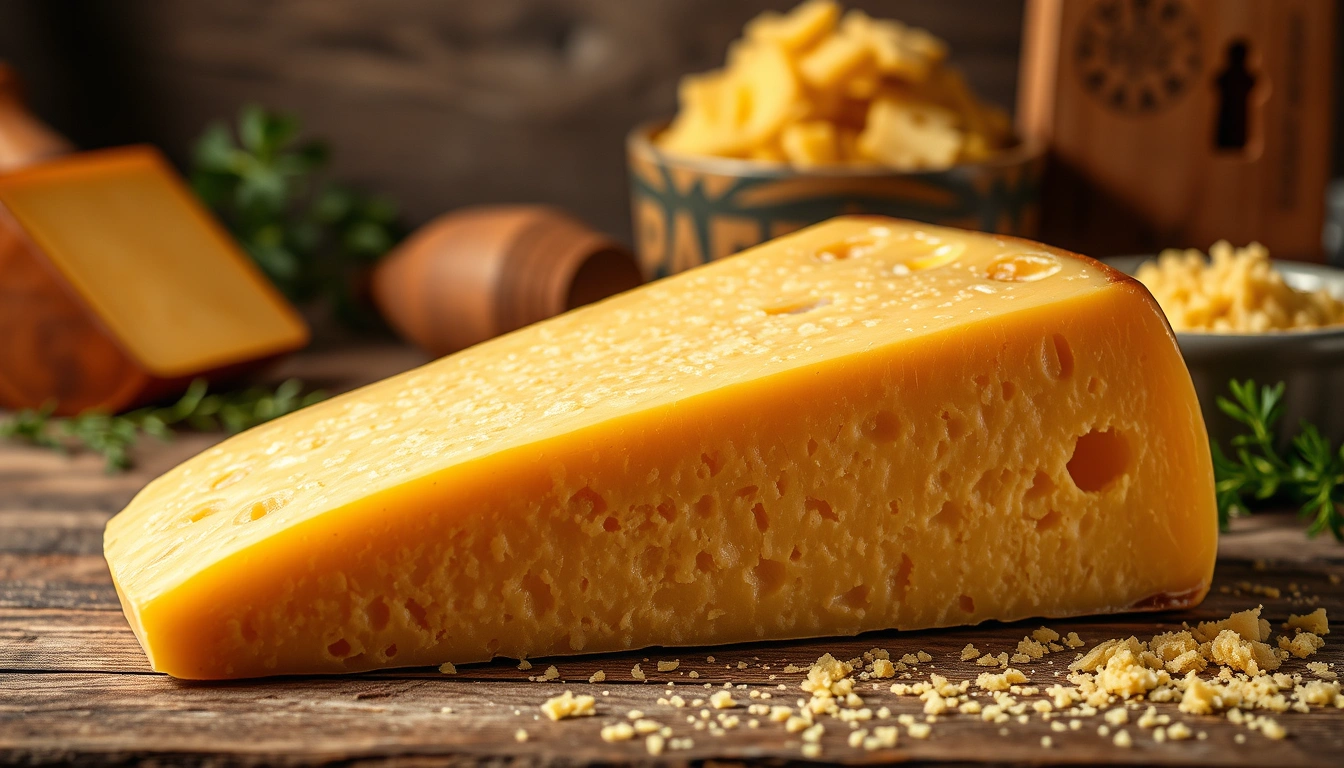
Parmesan cheese
431 kcal per 100 g
Category: Dairy
Nutritional information (per 100 g)
| Calories | 431 kcal |
| Protein | 38g |
| Carbohydrates | 4g |
| Sugars | 0g |
| Total fats | 29g |
| Saturated fats | 19g |
| Fiber | 0g |
| Sodium | 1600mg |
| Cholesterol | 88mg |
Vitamins and minerals
Description
Parmesan cheese is a hard, granular cheese with an intense flavor, originating from the Parma region of Italy. Recognized worldwide for its firm texture and salty, umami taste, it is an essential ingredient in many Italian recipes and international cuisine.
This cheese is primarily made from raw cow's milk and is aged for a minimum period of 12 months, which gives it its characteristic aroma and texture. Its maturation process can extend to 24 or 36 months, increasing its flavor complexity.
Regarding its properties, parmesan cheese is an excellent source of high-quality protein, calcium, and phosphorus, minerals that are fundamental for bone health. Additionally, it contains vitamins A and B12, and is low in lactose due to its prolonged maturation, making it more digestible for people with lactose sensitivity.
In Spain and Latin America, this cheese is also known as parmesan cheese, although in some regions it may be found under names such as parmesano or simply parmesa. However, it is important to differentiate it from other hard cheeses that seek to imitate its flavor, as the authentic parmesan cheese comes from a protected designation of origin called Parmigiano-Reggiano.
In cooking, parmesan cheese is used grated or in shavings to sprinkle over pasta, salads, soups, and risottos, providing a touch of deep, salty flavor that enhances dishes.