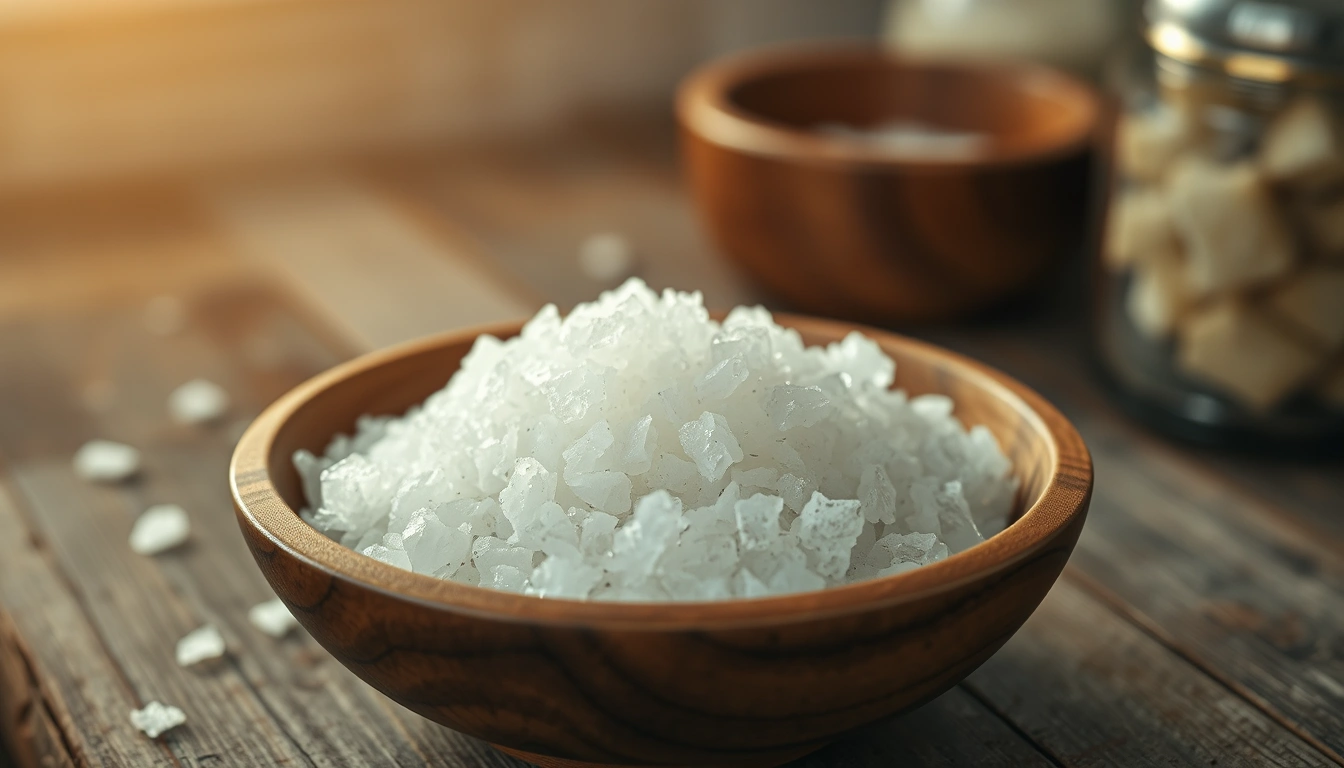
Pickling salt
0 kcal per 100 g
Category: Spices and Herbs
Nutritional information (per 100 g)
| Calories | 0 kcal |
| Protein | 0g |
| Carbohydrates | 0g |
| Total fats | 0g |
| Fiber | 0g |
| Sodium | 38758mg |
Vitamins and minerals
Description
Pickling salt is a type of salt specially selected for the preservation and preparation of pickles, such as gherkins, olives, vegetables, and other fermented or brine-preserved foods. Unlike common table salt, pickling salt is usually pure sea salt or common salt without additives (such as iodine or anti-caking agents), which promotes the natural fermentation process and prevents the product from developing unwanted flavors.
This ingredient is essential in many cuisines around the world for preparing homemade pickles, where the salt helps to draw water out of the vegetables, inhibits the growth of harmful microorganisms, and promotes the growth of beneficial bacteria that contribute to the characteristic flavor and texture of fermented products.
Regarding its origin, pickling salt can come from sea salt flats, where it is obtained through the natural evaporation of seawater, or from salt mines, always undergoing minimal processing to maintain its purity.
Main properties:
- High purity and free of additives to promote fermentation.
- Promotes the long-term preservation of food without altering its natural flavor.
- Ability to draw out liquids and prevent the development of unwanted microorganisms.
In different Spanish-speaking countries, pickling salt may be known by other names such as curing salt, brine (when referring to the mixture with water), or simply coarse salt or unrefined sea salt, terms that can also be used depending on the context and region to indicate the ideal salt for this type of preparation.