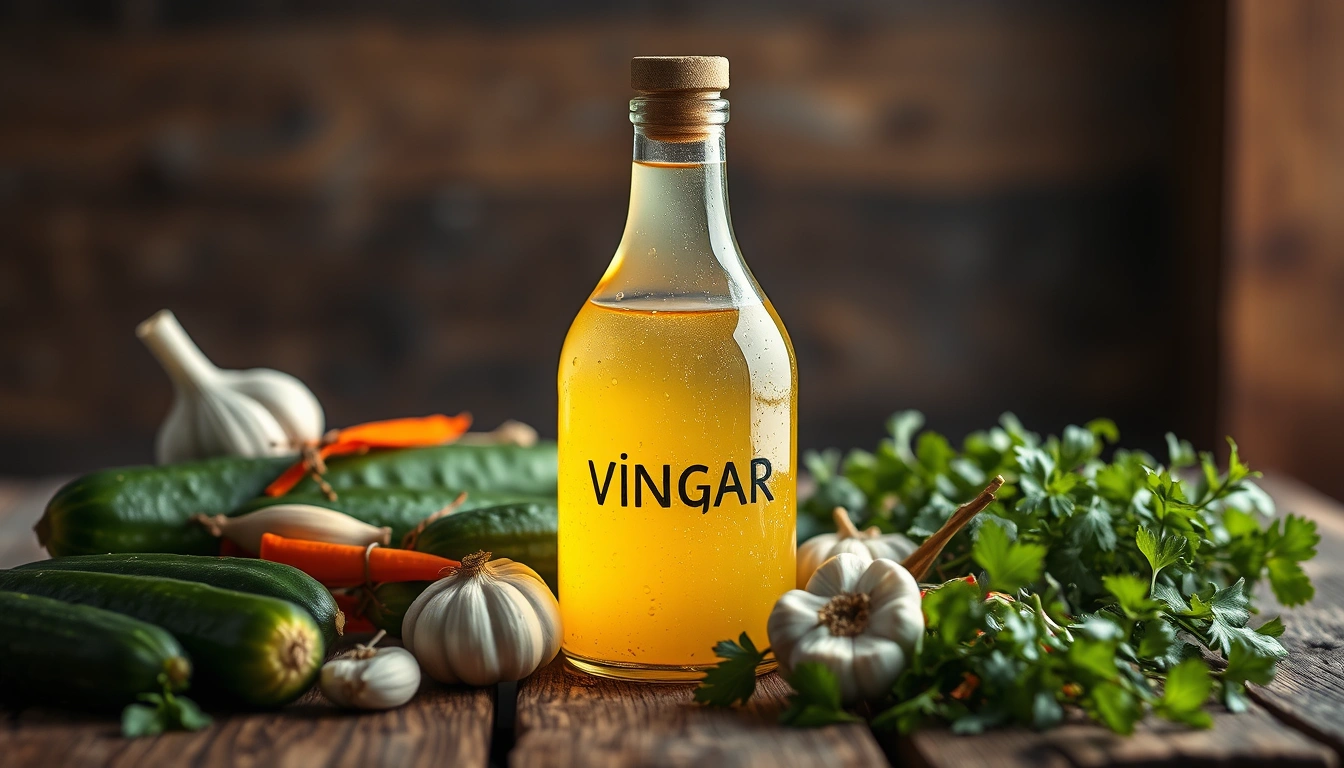
Pickling vinegar
18 kcal per 100 g
Category: Spices and Herbs
Nutritional information (per 100 g)
| Calories | 18 kcal |
| Protein | 0g |
| Carbohydrates | 0.9g |
| Sugars | 0.4g |
| Total fats | 0g |
| Saturated fats | 0g |
| Sodium | 1000mg |
Vitamins and minerals
Description
Pickling vinegar is a type of vinegar especially used for the preservation and flavoring of food through the pickling process. It is characterized by having an adequate acidity, generally between 5% and 7%, which allows for the fermentation and preservation of vegetables, fruits, and other ingredients, giving them a sour, fresh, and slightly spicy flavor.
Origin: Pickling vinegar comes from the fermentation of the alcohol present in different raw materials, such as wine, apple, rice, or corn, depending on the region. Its use for pickling has ancient roots in various cultures around the world, being a traditional method for preserving food before the invention of refrigeration.
Properties: In addition to its function as a natural preservative thanks to its acidity, pickling vinegar adds flavor and texture to foods, helps preserve nutrients, and may aid digestion. It is low in calories and contains no fats or sugars, making it an ally for preparing healthy and tasty foods.
Synonyms in Spanish from Latin America: Depending on the region, pickling vinegar may simply be called vinegar, or more specifically white vinegar, spirit vinegar, or cooking vinegar. In some countries, it is also known as preserving vinegar or homemade preserving vinegar, emphasizing its use for pickling and preservation.