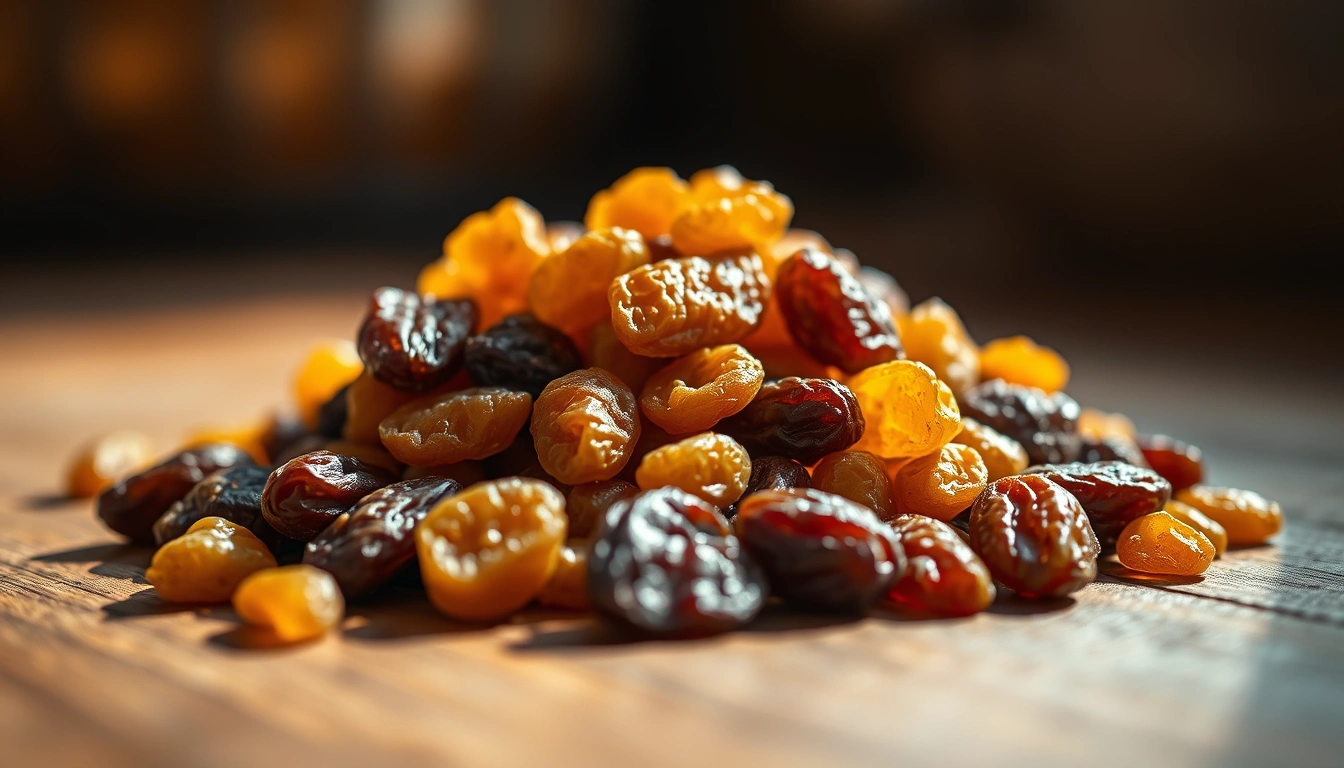
Raisins
299 kcal per 100 g
Category: Nuts
Nutritional information (per 100 g)
| Calories | 299 kcal |
| Protein | 3.1g |
| Carbohydrates | 79g |
| Sugars | 59g |
| Total fats | 0.5g |
| Fiber | 3.7g |
Vitamins and minerals
Description
Raisins are small, sweet dried grapes that are commonly used in various recipes around the world. Their concentrated flavor and chewy texture make them ideal for both sweet and savory dishes, adding a touch of natural sweetness and depth of flavor.
Originating in the Middle East and the Mediterranean region, raisins have been valued since ancient times for their nutritional properties and their ability to be preserved for long periods. They are obtained by drying grapes, traditionally in the sun, which concentrates their sugars and nutrients.
Regarding their properties, raisins are an excellent source of quick energy due to their high content of natural sugars. In addition, they provide dietary fiber, antioxidants, vitamins such as B6, and essential minerals like iron, potassium, and calcium. Their consumption aids digestion, helps maintain healthy iron levels in the blood, and contributes to bone and cardiovascular health.
In different Latin American countries, raisins may have other names or variants, although "pasas" is the most common term. In some regions, they are also called uvas pasas or simply uvas secas (dried grapes). In Mexico, for example, it is common to refer to them as "pasas" without variations, while in other places terms like pasa in the singular, or simply "fruta seca" (dried fruit) may be found.
In cooking, raisins are versatile ingredients incorporated into breads, desserts, salads, stews, rice dishes, and traditional meals like rice pudding or Moroccan tagine. Their natural sweetness complements and balances flavors, making raisins an essential element in many recipes.