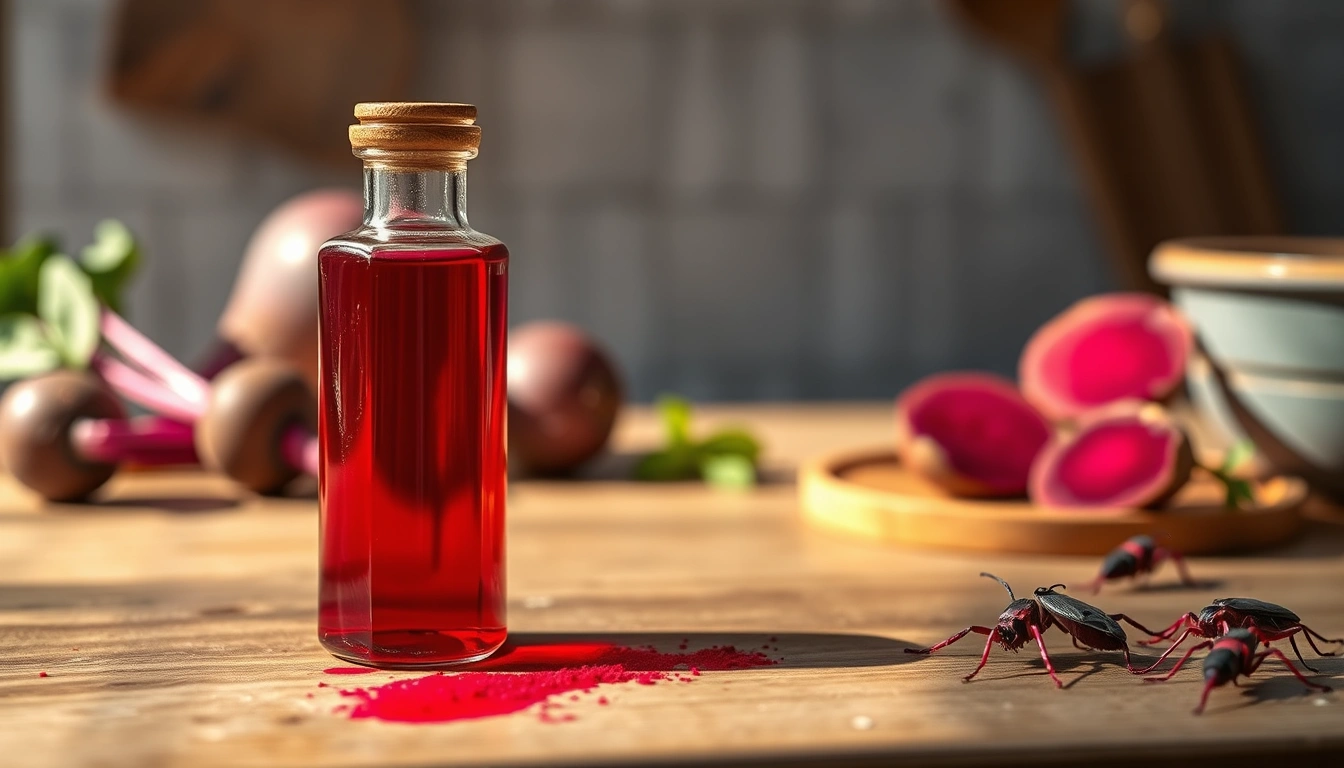
Red food coloring
0 kcal per 100 g
Category: Spices and Herbs
Nutritional information (per 100 g)
| Calories | 0 kcal |
| Protein | 0g |
| Carbohydrates | 0g |
| Total fats | 0g |
| Fiber | 0g |
| Sodium | 0mg |
Vitamins and minerals
Description
Red food coloring is a food additive used to give a vibrant red tone to a wide variety of culinary preparations, from desserts to sauces and beverages. This coloring can be of natural origin, such as cochineal extract or beet extract, or synthetic, such as azo dyes.
Its use is very common in baking and the food industry to enhance the visual presentation of dishes and attract the diner's attention, without altering the flavor or texture of the food.
The origin of natural red colorings dates back to ingredients like cochineal (an insect that produces carmine) or beetroot, traditionally used in various countries. Synthetic colorings were developed to offer a more stable and economical alternative.
Regarding its properties, red food coloring is safe for consumption when used in the recommended doses and is approved by food regulatory agencies in most countries. Some natural colorings also provide antioxidants and beneficial compounds, although their concentration is usually low in commercial products.
In the context of Latin America, red food coloring can be found under names such as colorante rojo, colorante alimentario rojo, colorante carmín (when it is of natural origin), or simply colorante. In some countries, it is also known as colorante de betabel (beet) when it is natural, and less commonly as pintura roja para alimentos.