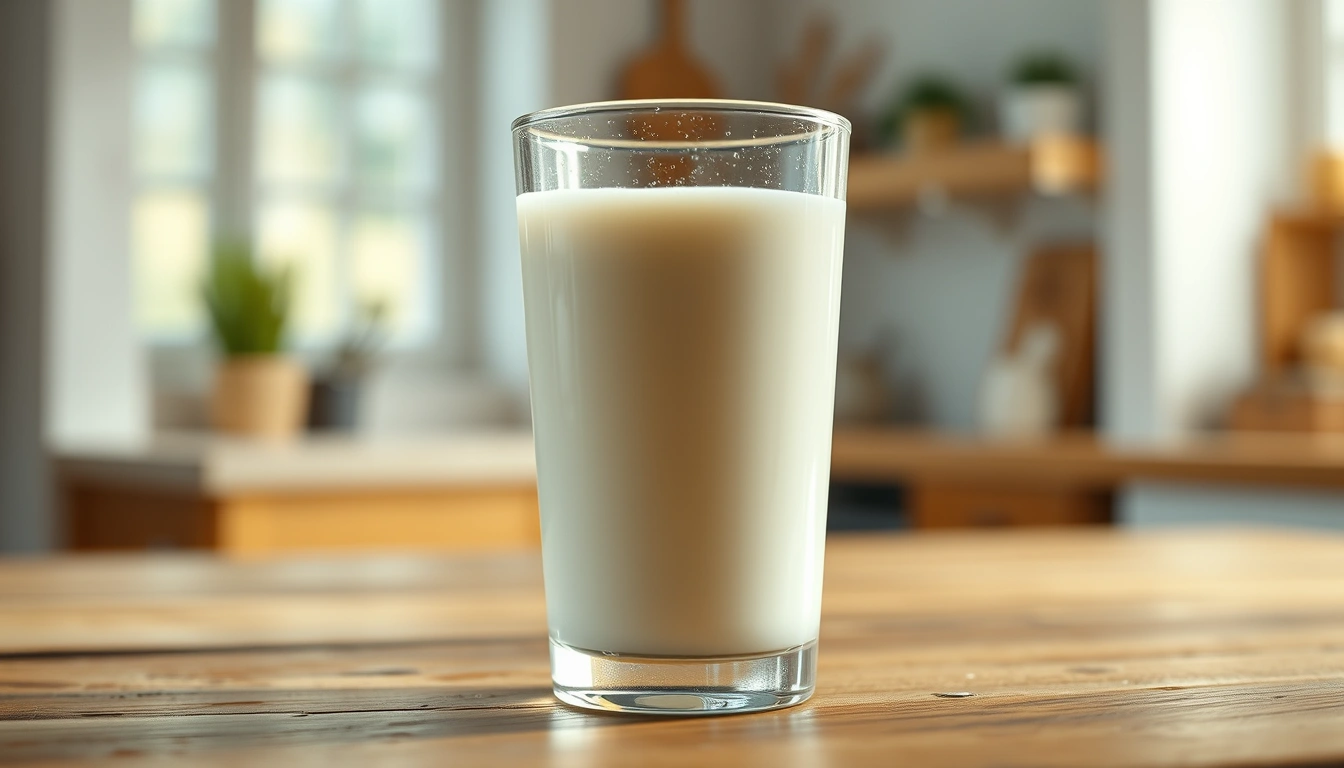
Skim milk
35 kcal per 100 g
Category: Dairy
Nutritional information (per 100 g)
| Calories | 35 kcal |
| Protein | 3.4g |
| Carbohydrates | 5g |
| Sugars | 5g |
| Total fats | 0.1g |
Vitamins and minerals
Description
Skim milk is a type of milk from which most of the dairy fat has been removed, typically reducing its fat content to less than 0.5%. This results in a much lighter, lower-calorie milk, ideal for those looking to care for their diet without giving up the nutritional benefits of milk.
This ingredient is very common in cuisines all over the world and is used in a wide variety of recipes, from breakfasts, desserts, sauces, and smoothies to main dishes that require a smooth and creamy texture but with low fat content.
The origin of skim milk is the same as that of conventional milk, coming from the extraction of cow's milk, although it can also be found in versions from goats or other animals. The industrial process involves centrifuging fresh milk to separate the fat and then reintroducing a minimal amount to obtain skim milk.
Regarding its properties, skim milk retains a high content of protein, calcium, vitamins A and D (when fortified), and other essential nutrients, but with a much lower contribution of saturated fats and calories, making it an ally for hypocaloric diets or for reducing fat consumption.
In different Spanish-speaking regions, skim milk may go by various synonyms, such as:
- Lactose-free milk (although this strictly indicates the absence of lactose, it is sometimes used interchangeably)
- Skimmed milk (a more common term in Spain and some Latin American countries)
- Fat-free milk
- Light milk
When using skim milk in cooking, it is recommended to keep in mind that, as it has less fat, it can alter the texture and final flavor of some dishes, so it is sometimes combined with other ingredients to maintain the desired creaminess.