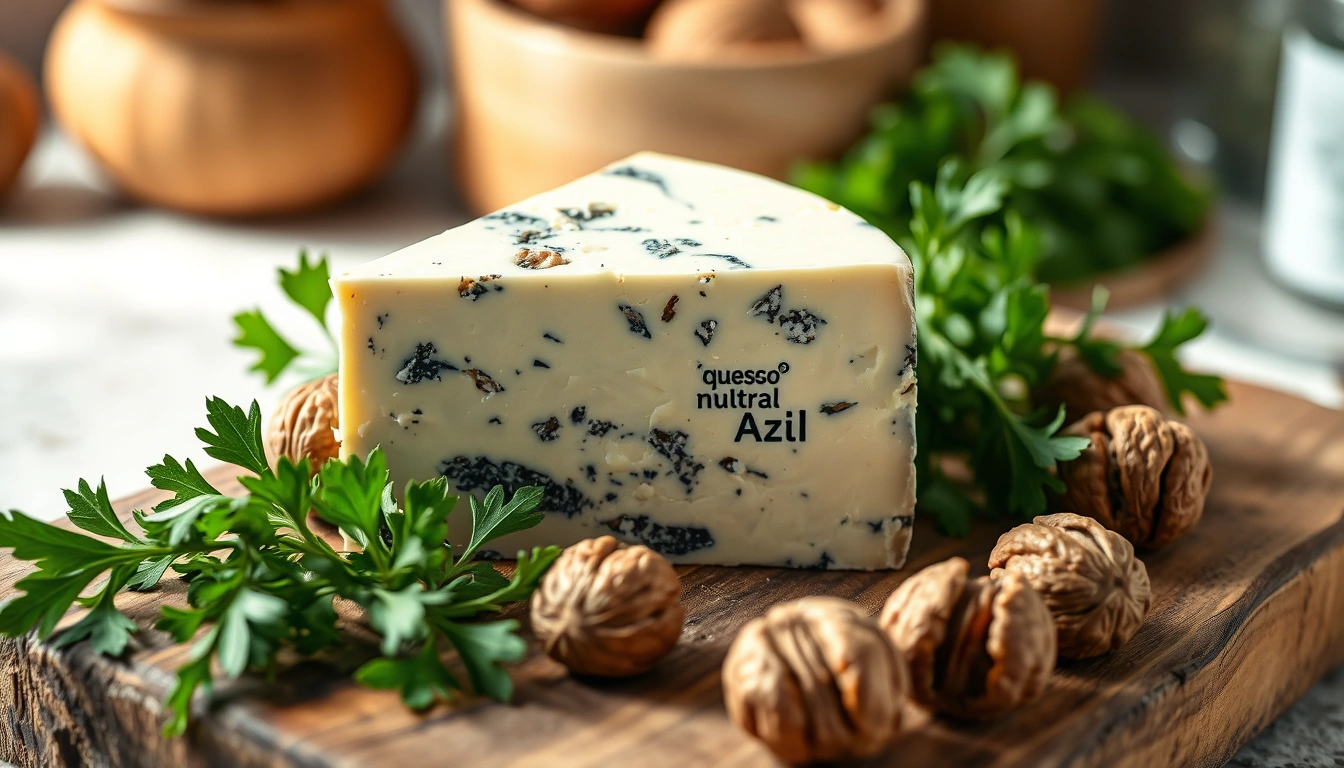
Vegetarian blue cheese
353 kcal per 100 g
Category: Dairy
Nutritional information (per 100 g)
| Calories | 353 kcal |
| Protein | 21g |
| Carbohydrates | 2g |
| Sugars | 0.5g |
| Total fats | 28g |
| Saturated fats | 18g |
| Fiber | 0g |
| Sodium | 1100mg |
Vitamins and minerals
Description
Vegetarian blue cheese is a type of cheese specially made for those who follow a vegetarian diet and wish to enjoy the characteristic intense and spicy flavor of traditional blue cheese, but without the use of animal rennet. This cheese uses microbial or plant-based rennets to facilitate the coagulation of milk.
Blue cheese originates from European regions such as France (Roquefort), Italy (Gorgonzola) and the United Kingdom (Stilton), where ancient techniques of maturation with specific molds (Penicillium roqueforti or Penicillium glaucum) were developed, which generate the characteristic blue veins and its unique flavor. Vegetarian blue cheese respects these traditions but adapts its production to offer a suitable option for vegetarians.
Among its properties, vegetarian blue cheese provides high-quality proteins, calcium, and healthy fats. In addition, it usually has a high sodium content and is rich in flavor, which is why it is used in various preparations such as salads, sauces, spreads, or as a complement in pasta and meat dishes.
In different Hispanic American countries, it is also known as blue cheese without animal rennet, vegetable blue cheese, or simply vegetarian blue cheese. It is worth noting that, although it is not a traditional term in the region, its growing popularity has made its use increasingly common in recipe books aimed at vegetarian diets.