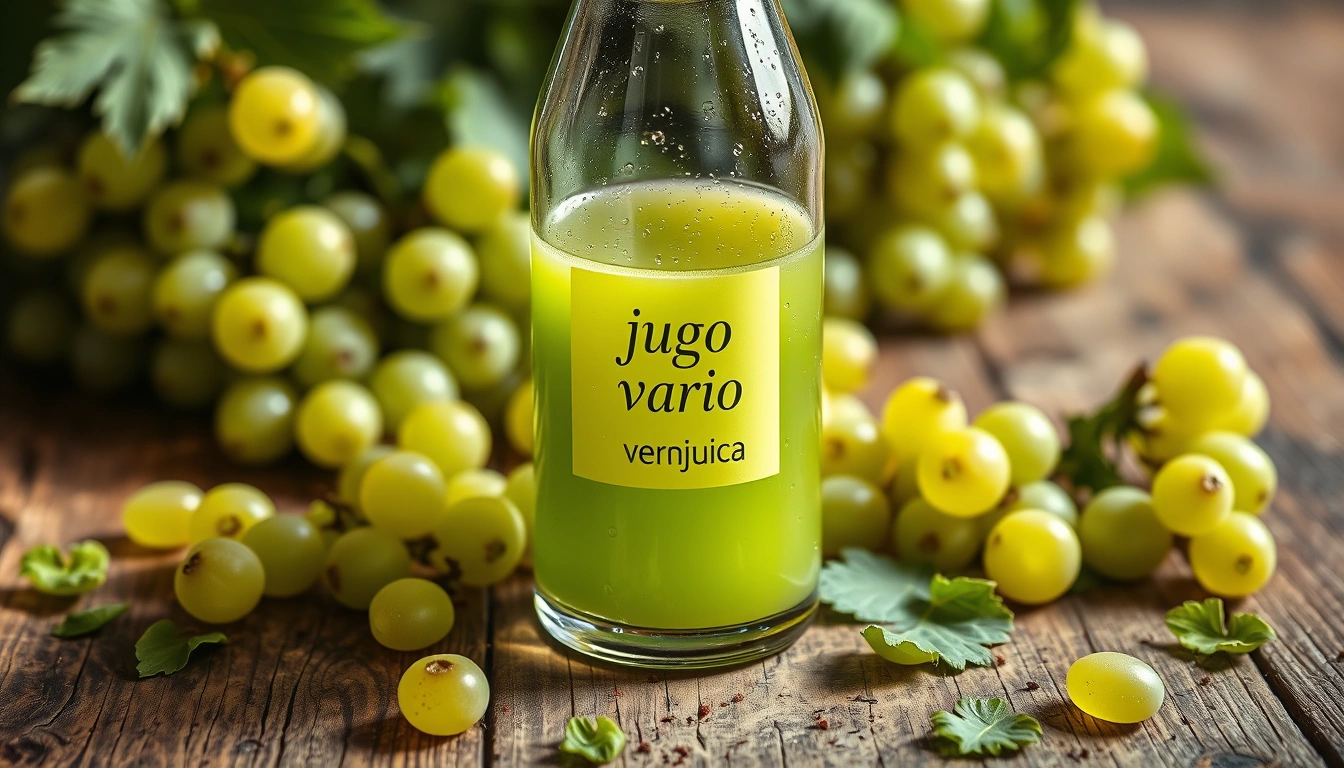
Verjuice
22 kcal per 100 g
Category: Spices and Herbs
Nutritional information (per 100 g)
| Calories | 22 kcal |
| Protein | 0.2g |
| Carbohydrates | 5.4g |
| Sugars | 3.9g |
| Total fats | 0.1g |
| Fiber | 0.3g |
Vitamins and minerals
Description
Verjus is a sour and slightly tangy juice obtained from green or unripe grapes, before they begin to ripen and ferment. Its flavor is refreshing and less intense than vinegar or lemon juice, making it an excellent flavor neutralizer in sauces, dressings, and marinades.
The origin of verjus dates back to European cuisine, especially in France, where it has been used since the Middle Ages as a mild condiment to add acidity to dishes without the strong character of vinegar. Traditionally, it is extracted by pressing green grapes, and its use has been resurging in modern gastronomy due to its versatility and subtlety.
Among its properties, verjus stands out for being a natural ingredient, low in calories, with no alcohol or added sugar. Furthermore, being a fresh juice, it retains certain antioxidants present in green grapes, which can provide health benefits. It is ideal for those looking for a milder acidic alternative, especially in recipes for fish, poultry, vegetables, and salads.
Regarding synonyms or similar terms in the Spanish of Latin America, verjus does not have a very common exact equivalent, but it is sometimes called "jugo de uva verde" (green grape juice) or simply "jugo agrio de uva" (sour grape juice). However, these terms are not commonly used, so verjus remains the most recognizable term in specialized culinary contexts.