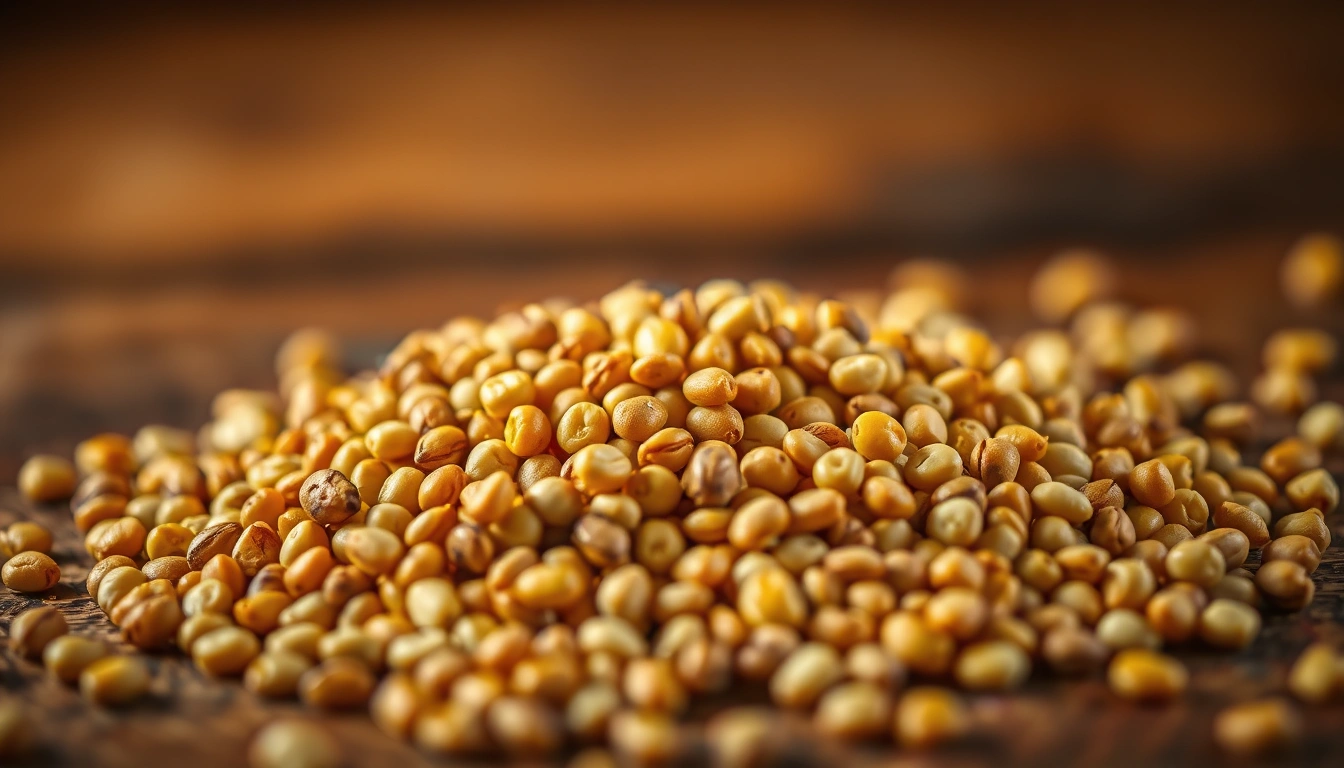
Whole grain mustard
60 kcal per 100 g
Category: Spices and Herbs
Nutritional information (per 100 g)
| Calories | 60 kcal |
| Protein | 3.3g |
| Carbohydrates | 5.1g |
| Total fats | 4.4g |
| Fiber | 3.3g |
Vitamins and minerals
Description
Whole grain mustard is an ingredient made up of the small seeds of the mustard plant, which can vary in color from light yellow to dark brown or black. These seeds are widely used in cooking to provide a characteristic, spicy, and slightly bitter flavor, in addition to a crunchy texture when added whole.
The origin of whole grain mustard dates back to regions of Europe and Asia, where it has been an essential condiment for centuries. It is currently cultivated in various parts of the world, being very popular in European, Indian, and Latin American cuisine.
Among its properties, its richness in antioxidants, B vitamins, and minerals such as selenium and magnesium stands out. Furthermore, mustard seeds possess sulfur compounds that can contribute to improved digestion and have natural anti-inflammatory effects.
In different Latin American countries, whole grain mustard has various synonyms, depending on the region, such as mustard seeds, mustard grains, or simply mustard seed. It is common to see it in recipes for sauces, pickles, marinades, and rubs that seek an intense and aromatic flavor.