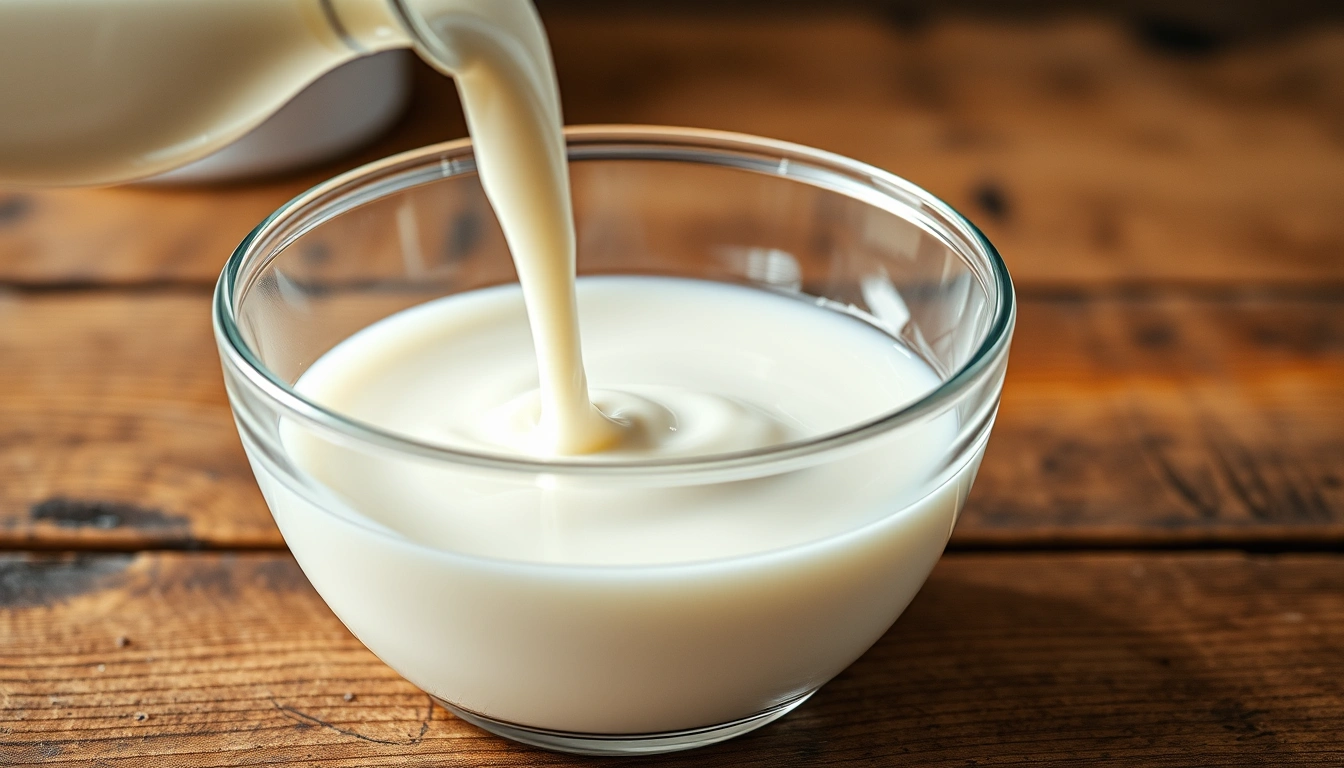
Whole milk
61 kcal per 100 g
Category: Dairy
Nutritional information (per 100 g)
| Calories | 61 kcal |
| Protein | 3.15g |
| Carbohydrates | 4.8g |
| Sugars | 4.8g |
| Total fats | 3.25g |
| Saturated fats | 1.9g |
| Sodium | 43mg |
| Cholesterol | 10mg |
Vitamins and minerals
Description
Whole milk is a basic ingredient in cooking, characterized by its full fat content, which is usually around 3.5% or more. It is obtained directly from the cow without the fat having been removed, which gives it a creamy texture and a smooth, natural flavor, ideal for a wide variety of recipes, from desserts to sauces and stews.
Its origin dates back to dairy farming, and it is one of the most consumed products worldwide. In many Latin American countries, whole milk is fundamental to the daily diet and in traditional preparations.
Regarding its properties, whole milk is an excellent source of calcium, high-quality biological proteins, vitamins A, D, and B complex, as well as healthy fats that provide energy and aid in the absorption of fat-soluble vitamins.
Depending on the country, whole milk has synonyms such as natural milk, fresh milk, or simply milk, although always referring to the version without its fat content separated or removed.
This ingredient is essential in recipes that require a point of creamy flavor and texture, such as flans, custards, cakes, milkshakes, and various sauces, adding richness and good flavor to the preparations.