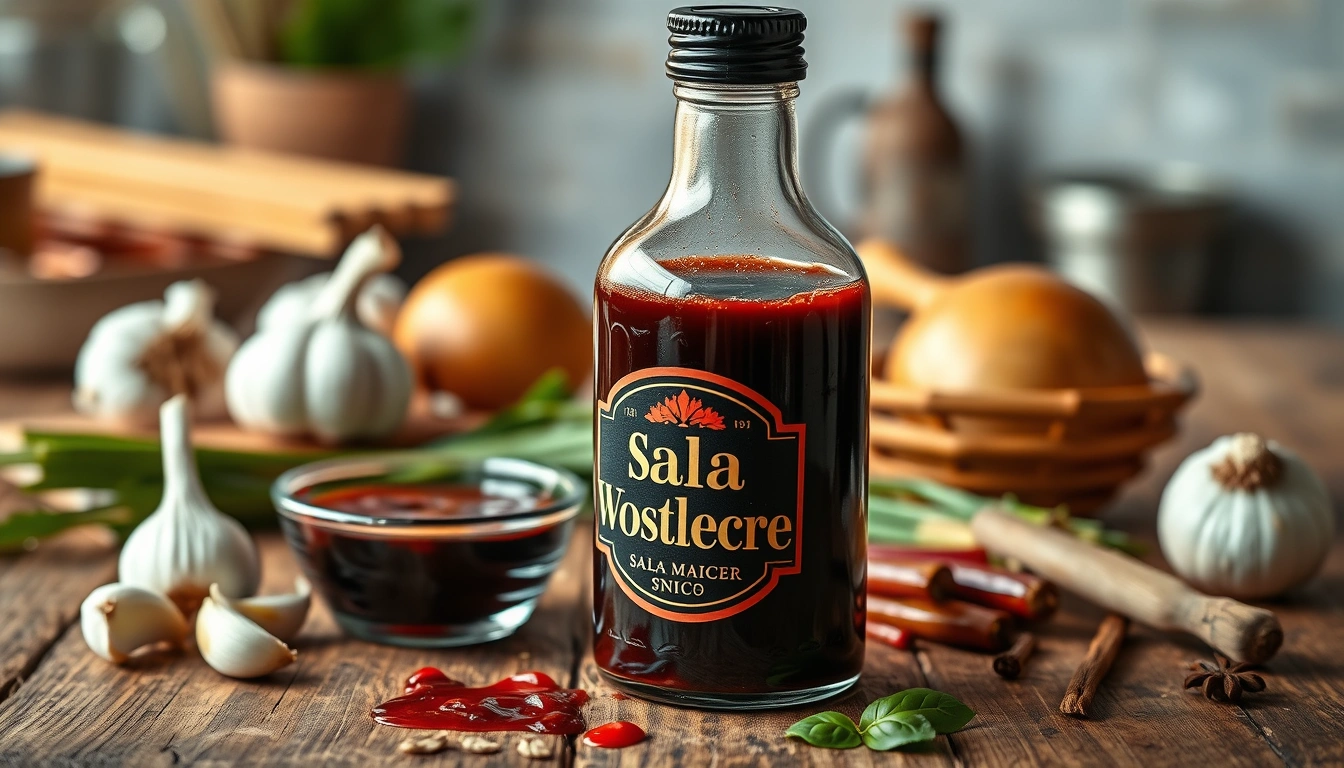
Worcestershire sauce
78 kcal per 100 g
Category: Spices and Herbs
Nutritional information (per 100 g)
| Calories | 78 kcal |
| Protein | 0.4g |
| Carbohydrates | 17.3g |
| Sugars | 14g |
| Total fats | 0.6g |
| Fiber | 0g |
| Sodium | 1672mg |
Vitamins and minerals
Description
Worcestershire sauce is a fermented liquid condiment with an intense, complex, and slightly tangy flavor, commonly used to enhance the taste of meats, stews, sauces, and dressings. Its dark color and liquid texture make it ideal for marinating and seasoning a wide variety of recipes, adding a touch of umami, slight sweetness, and notes of vinegar, spices, and anchovies.
The origin of Worcestershire sauce is attributed to the city of Worcester, England, where it was created in the 19th century by chemists John Lea and William Perrins. The traditional formula includes ingredients such as vinegar, molasses, sugar, anchovies, tamarind, soy sauce, onion, garlic, and various spices, which are slowly fermented to develop its characteristic flavor.
Properties: In addition to being a natural flavor enhancer, Worcestershire sauce is low in calories and contains no fat. Its moderate use can enrich dishes without adding much volume or excess sodium. It should be noted that it contains anchovies, so it is not suitable for people with fish allergies or those following vegetarian or vegan diets.
Synonyms in Spanish-speaking Latin America: Although its name is usually kept in English due to its specificity, in some countries it is simply known as salsa inglesa or salsa Worcestershire. There are no more widely used common synonyms, but in informal contexts it may be referred to as aderezo inglés or salsa inglesa de Worcestershire.