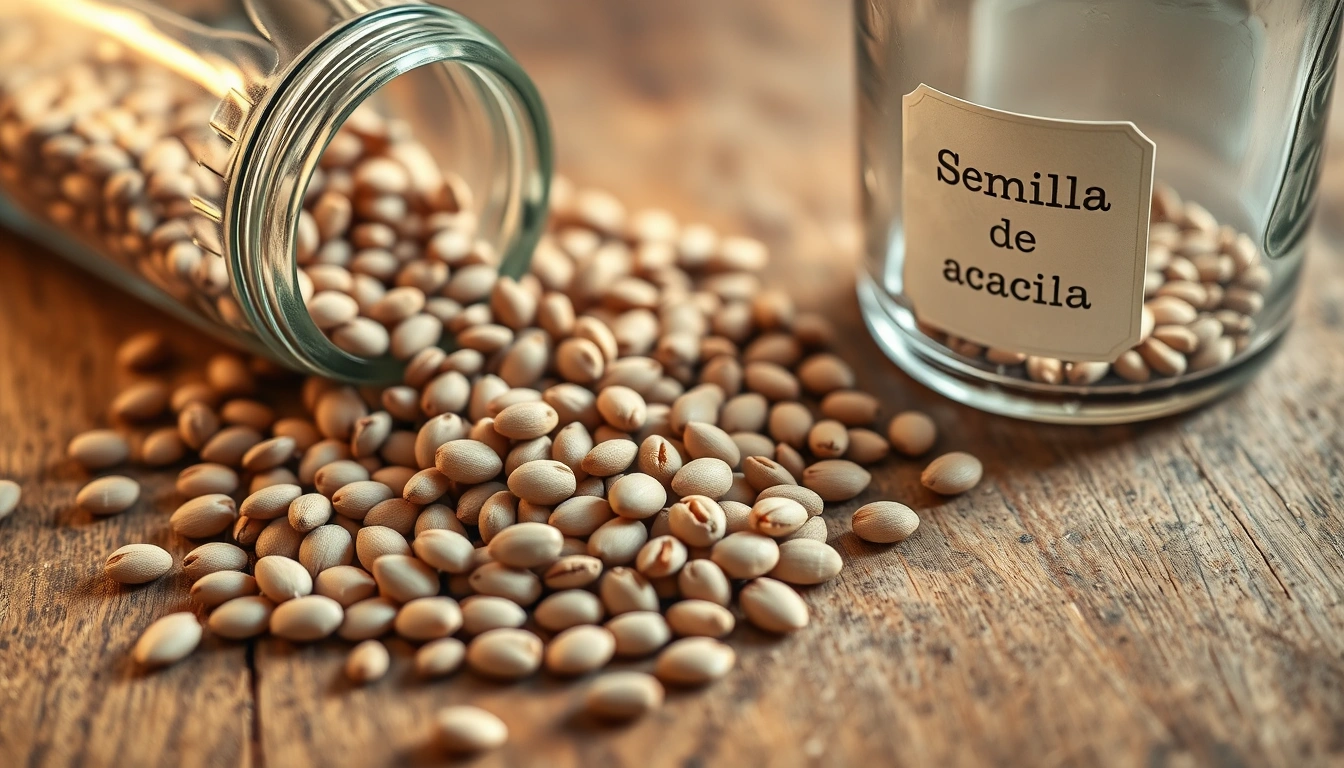
Acacia seed
345 kcal per 100 g
Category: Nuts
Nutritional information (per 100 g)
| Calories | 345 kcal |
| Protein | 3.5g |
| Carbohydrates | 80g |
| Total fats | 1.5g |
| Fiber | 55g |
Vitamins and minerals
Description
Acacia seed
The acacia seed is the dried fruit that comes from the various species of the Acacia genus, trees and shrubs that grow primarily in tropical and subtropical regions of the Americas, Africa, Asia, and Australia. These seeds are characterized by their small size and oval shape, and in cooking, they are used both whole and ground, mainly to thicken preparations or add texture.
Origin: The acacia is native to warm, arid regions of Africa and Australia, although in the Americas there are both wild and cultivated species. In gastronomy, the seeds are used in different traditional cultures as a source of fiber and to improve the consistency of sauces, soups, or desserts.
Properties: Acacia seeds are rich in dietary fiber, especially soluble fiber, which aids digestion and helps regulate intestinal transit. They also contain plant-based proteins, B-complex vitamins, and minerals such as calcium, potassium, and magnesium. Their high concentration of mucilage makes them ideal for thickening liquids and creating smooth, creamy textures in culinary preparations.
Synonyms in Latin America: Depending on the country and region, the acacia seed may also be known as gum acacia seed, acacia sen seed, acacian seed, or simply acacia. It is important not to confuse them with gum arabic, which also comes from the acacia but is a resin and not the seed.
In recipes, these seeds are especially valued for preparing vegetable gelatins, natural thickeners, and high-fiber products, providing a healthy and versatile alternative in modern cooking.