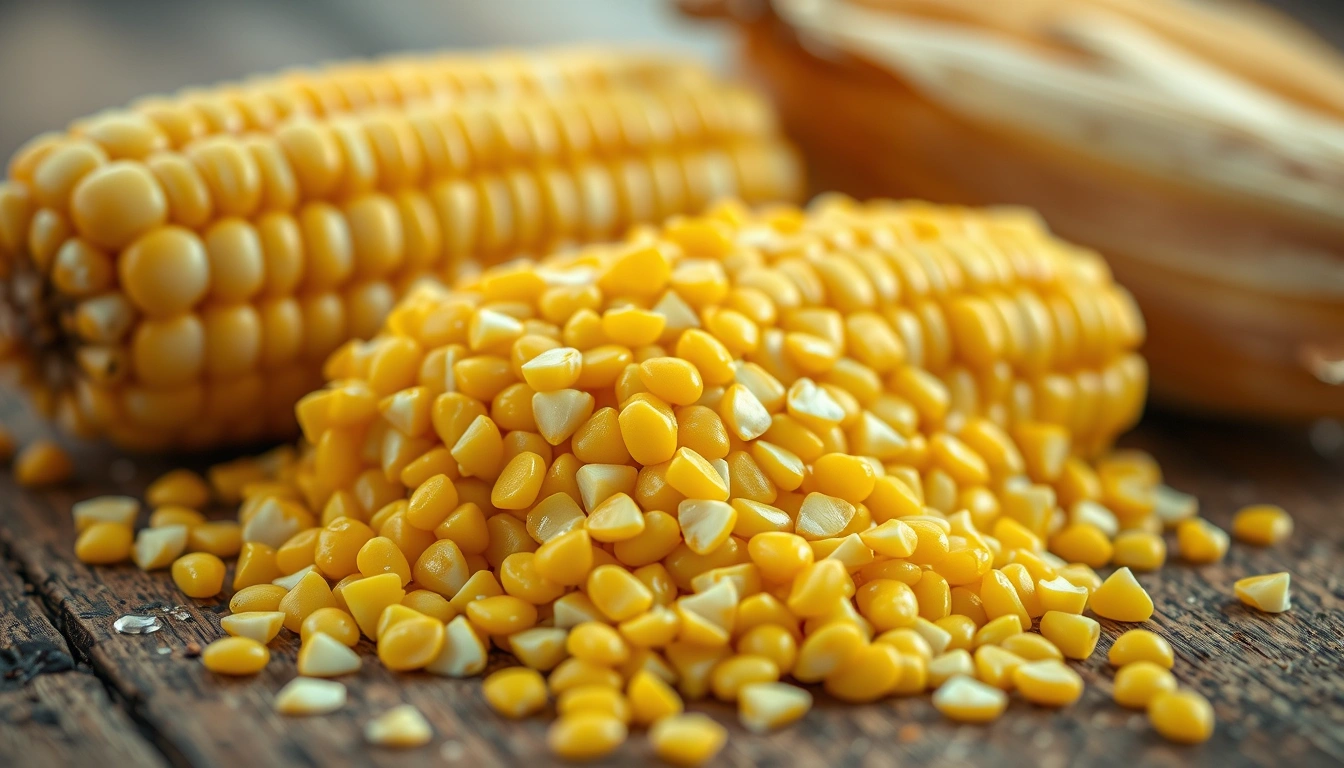
Corn without added sugar
96 kcal per 100 g
Category: Cereals and Grains
Nutritional information (per 100 g)
| Calories | 96 kcal |
| Protein | 3.4g |
| Carbohydrates | 21g |
| Sugars | 0.6g |
| Total fats | 1.5g |
| Fiber | 7.3g |
Vitamins and minerals
Description
Unsweetened corn kernels are a versatile and nutritious ingredient widely used in the cuisine of various countries, especially in Latin America. It consists of the kernel of Zea mays, commonly known as corn, which is found in its natural or slightly processed form but without the addition of sugars, making it a healthy option for multiple preparations.
Corn originated in Mesoamerica, where it was cultivated by ancient indigenous civilizations thousands of years ago. Thanks to its adaptability and nutritional value, it has spread throughout the world and is a fundamental part of the diet in many cultures.
From a nutritional standpoint, corn kernels are an important source of complex carbohydrates, dietary fiber, B vitamins (especially niacin and folate), and minerals such as magnesium and phosphorus. Its consumption provides sustained energy and contributes to healthy digestion, in addition to being naturally sugar-free when no sweet ingredients are added.
In the culinary context, unsweetened corn kernels are ideal for preparing salads, stews, soups, side dishes, or even cold dishes. Their natural sweet flavor and firm texture add color and body to recipes.
Synonyms in Spanish used in Hispanic American countries:
- Choclo – common in countries such as Peru, Bolivia, and Ecuador.
- Elote – popular in Mexico and parts of Central America (though it also refers to tender corn on the cob).
- Grano de maíz – a general, widely understood term.
- Maíz dulce – when referring to sweeter varieties, though still without added sugar.