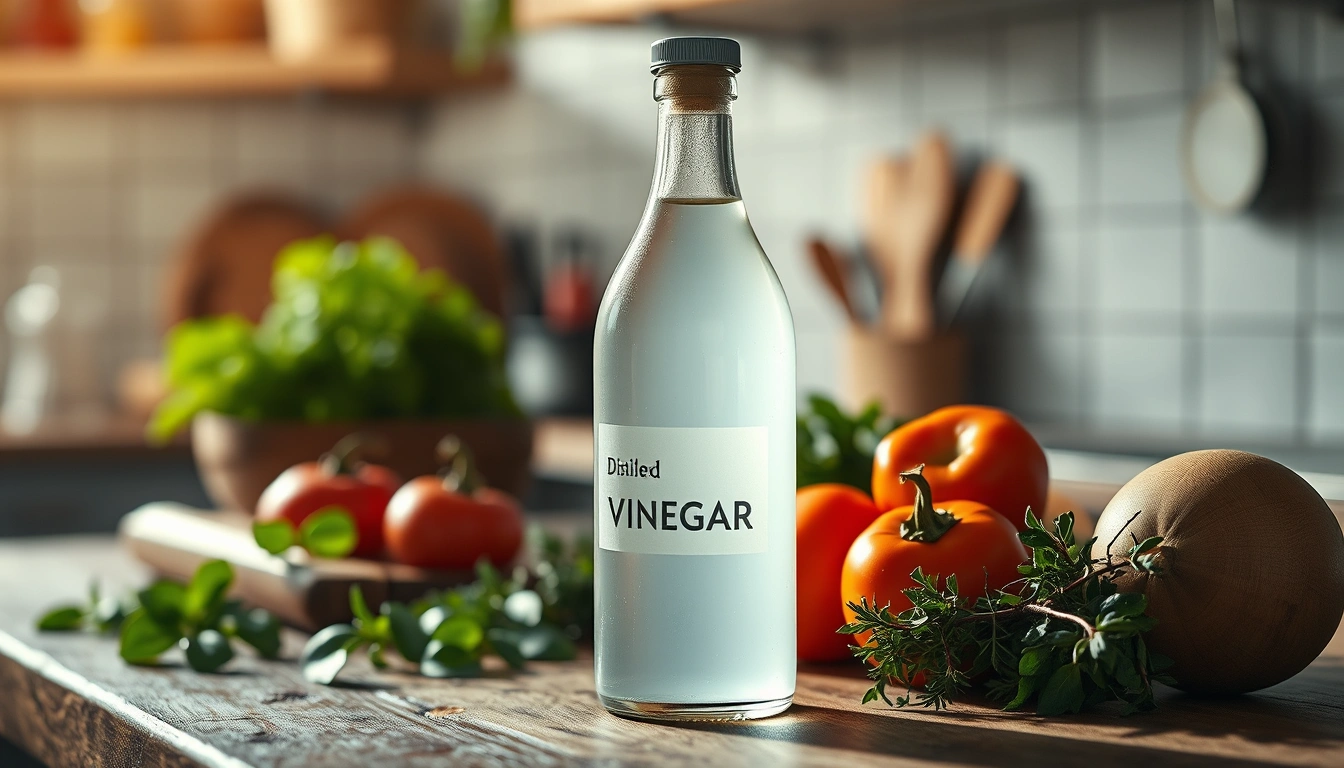
Distilled white vinegar
3 kcal per 100 g
Category: Oils and Fats
Nutritional information (per 100 g)
| Calories | 3 kcal |
| Protein | 0g |
| Carbohydrates | 0.1g |
| Sugars | 0g |
| Total fats | 0g |
| Fiber | 0g |
| Sodium | 2mg |
Vitamins and minerals
Description
Distilled white vinegar is a transparent liquid with a strong, acidic flavor, obtained primarily from the fermentation of ethyl alcohol derived from grains or sugarcane. Its distillation process ensures high purity and acidity, generally around 5%, making it a fundamental ingredient in cooking for flavoring, preserving food, and balancing preparations.
The origin of distilled white vinegar dates back to ancient fermentation techniques used in various cultures, although its modern industrial production was consolidated in Europe and North America during the 20th century. Today, it is a common product in most households and professional kitchens around the world.
Among its properties, its ability to act as a natural preservative stands out, thanks to its acidity, which inhibits the growth of bacteria and fungi. Additionally, it is used to add an acidic touch to dressings, marinades, pickles, and sauces. Due to its neutral flavor, it does not overpower other notes in the dish, allowing the main flavors to stand out.
In the Latin American context, distilled white vinegar is also known by other synonyms depending on the region, such as crystal vinegar, alcohol vinegar, or simply white vinegar. These terms are interchangeable in recipes and culinary notes, so their usage depends on the country and local tradition.
In summary, distilled white vinegar is an essential ingredient in cooking due to its versatility, preserving capacity, and contribution of a clean, balanced acidity.