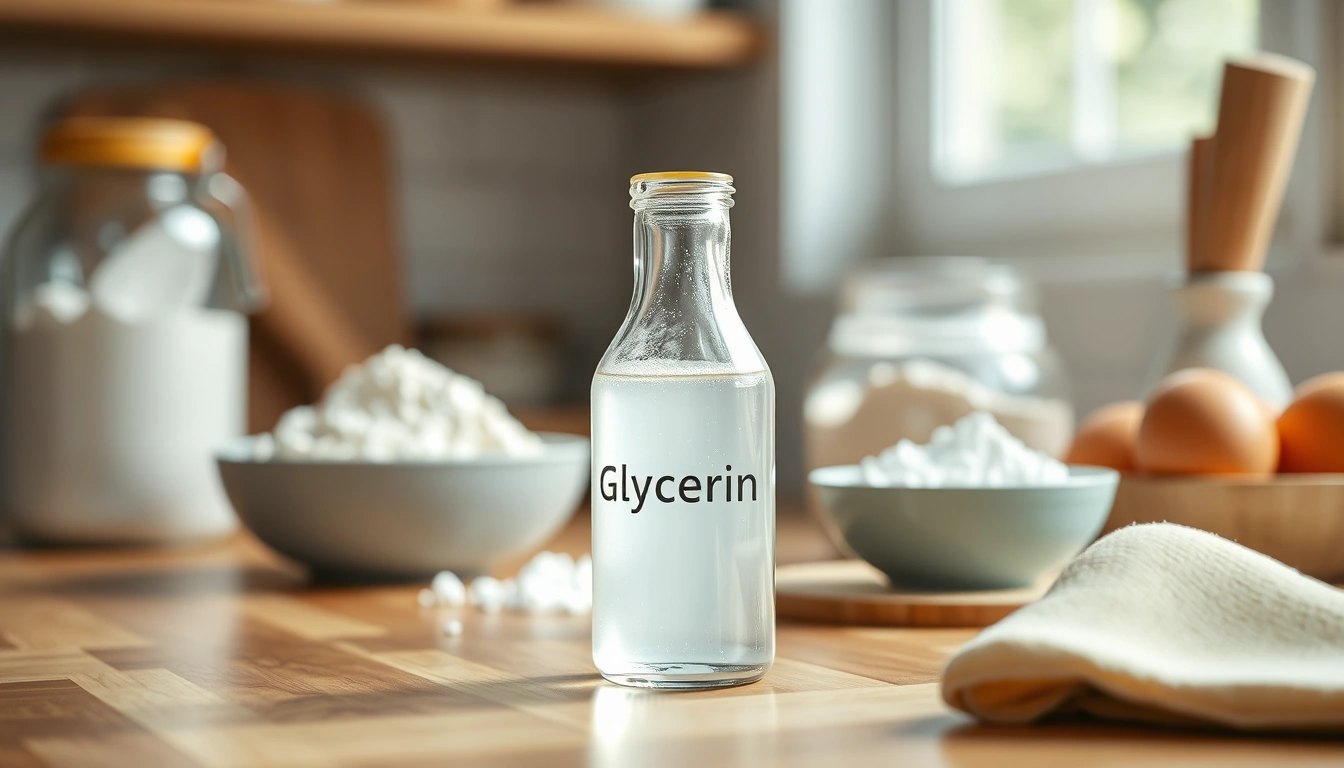
Glycerin
4 kcal per 100 g
Category: Oils and Fats
Nutritional information (per 100 g)
| Calories | 4 kcal |
| Protein | 0g |
| Carbohydrates | 1g |
| Sugars | 1g |
| Total fats | 0g |
| Fiber | 0g |
| Sodium | 0mg |
Vitamins and minerals
Description
Glycerin, also known as glycerol, is a colorless, odorless, and sweet-tasting organic compound used in cooking primarily as a humectant, sweetener, and stabilizer. It comes in liquid form and has a viscous texture, which helps retain moisture in baked goods and confectionery, keeping them fresh for longer.
Its origin can be either natural or synthetic. Natural glycerin is obtained from the saponification of animal fats or vegetable oils, especially from palm or coconut, while the synthetic version is produced from petroleum derivatives. In gastronomy, vegetable-based glycerin is preferred as it is suitable for consumption and respectful of vegetarian or vegan diets.
Regarding its properties, glycerin is an excellent humectant, meaning it attracts and retains water, which is very useful for preventing products like cakes, jams, candies, or icings from drying out or hardening. It provides sweetness without adding too many calories and helps stabilize textures and mixtures, improving the final consistency of various foods.
In the Latin American context, glycerin may be found under various synonyms or related terms, although the most common is glycerin. Other less frequent terms include glycerol or, in some cases, it is simply referred to as liquid humectant.
In summary, glycerin is a versatile and valuable ingredient in the kitchen, especially in baking and candy making, where the goal is to prolong freshness and improve the texture of products.