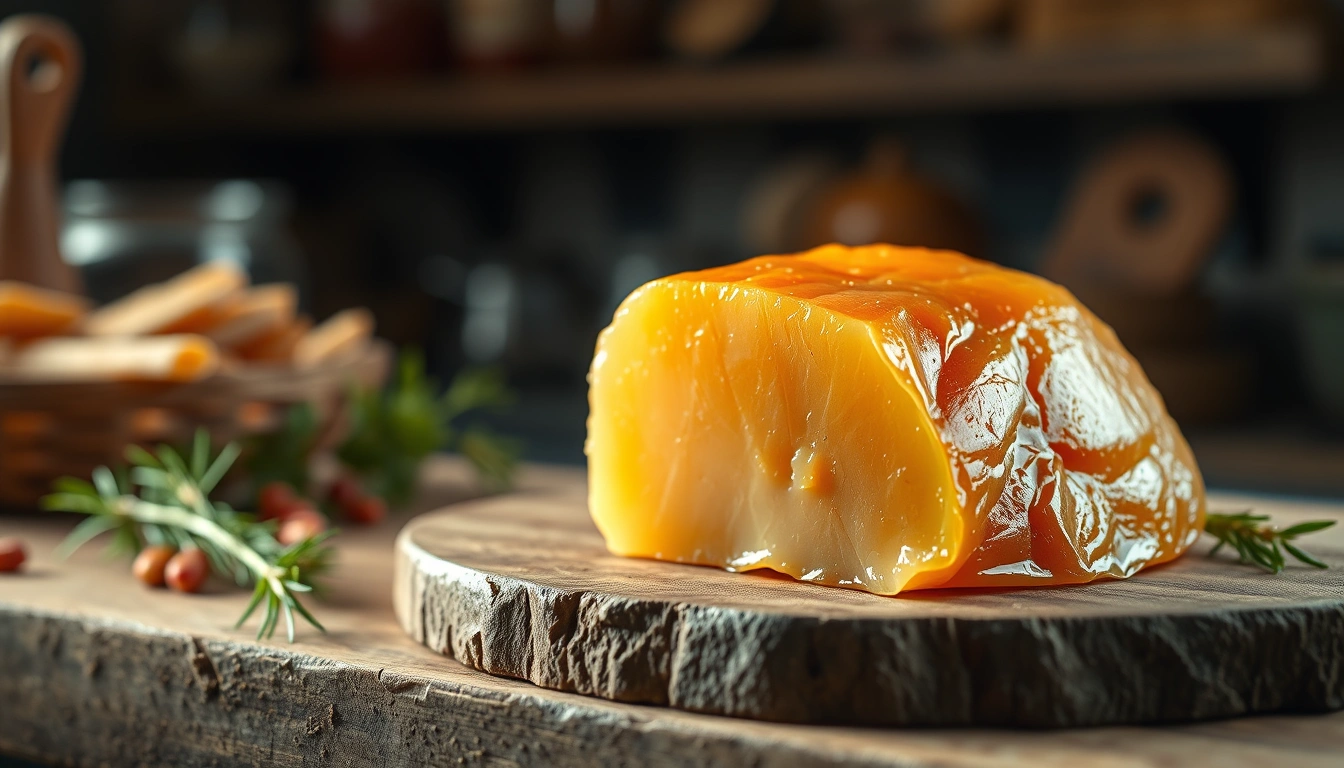
Ham fat
900 kcal per 100 g
Category: Oils and Fats
Nutritional information (per 100 g)
| Calories | 900 kcal |
| Protein | 0g |
| Carbohydrates | 0g |
| Total fats | 100g |
| Saturated fats | 39g |
| Fiber | 0g |
| Sodium | 1500mg |
| Cholesterol | 90mg |
Vitamins and minerals
Description
Ham fat is the fat obtained from the cooking or butchering of ham, especially cured ham. It is characterized by its intense flavor and smoky aroma, derived from the pig's curing process. This fat is highly valued in traditional Spanish and Latin American cuisine for adding a deep flavor and a rich, unctuous texture to a wide variety of dishes.
Origin: Ham fat comes from the Iberian pig or the white pig, depending on the region where the ham is produced. In Spain, it is extracted from serrano or Iberian ham, while in various Latin American countries it may come from locally cured hams or even from the residual fat of similar cured meats.
Properties: Ham fat is rich in monounsaturated fatty acids, especially oleic acid, which is associated with cardiovascular benefits. Furthermore, it provides a great amount of umami flavor thanks to its content of amino acids and minerals. Due to its composition, it is used in small quantities for cooking, enhancing stews, sofritos, vegetables, and traditional preparations like rice, legumes, and eggs.
Synonyms in Latin America: In some regions of Latin America, ham fat is called manteca de jamón, grasa de pernil, or simply grasa de cerdo curado (cured pork fat). Although it may vary, these terms refer to the fat extracted from cured cuts of pork that provide a similar flavor in cooking.