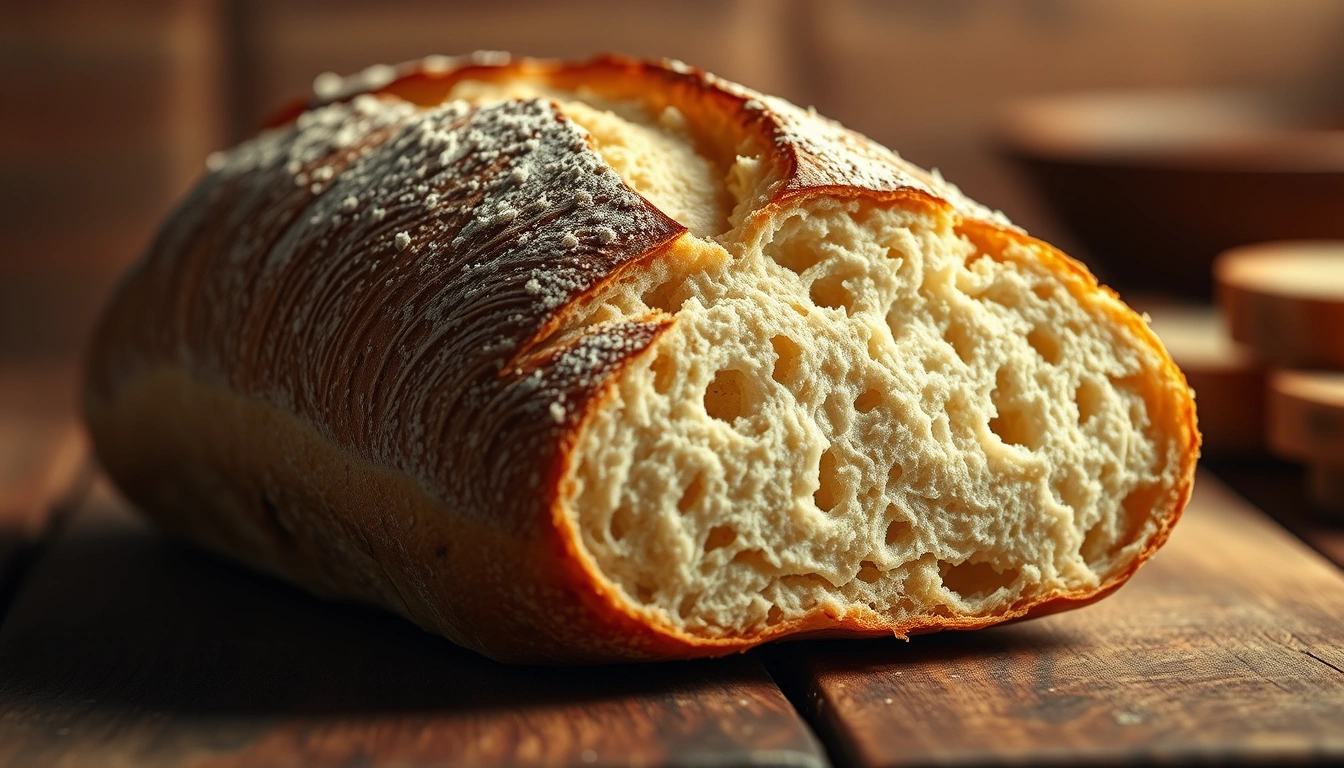
Italian bread
265 kcal per 100 g
Category: Cereals and Grains
Nutritional information (per 100 g)
| Calories | 265 kcal |
| Protein | 9g |
| Carbohydrates | 49g |
| Sugars | 3.2g |
| Total fats | 3.2g |
| Saturated fats | 0.5g |
| Fiber | 2.7g |
| Sodium | 491mg |
Vitamins and minerals
Description
Italian bread is a type of traditional bread originating from Italy, characterized by its crispy and golden crust and a soft, airy crumb. This bread is very versatile in the kitchen, used in both savory preparations and as an accompaniment to main dishes, salads, or for making sandwiches and bruschetta.
Italian bread is typically made with white wheat flour, water, yeast, salt, and, in some recipes, olive oil, which gives it a light and slightly aromatic flavor. Its fermentation and baking technique allows for an ideal texture that combines lightness with a crunchy, golden crust.
Regarding its origin, this bread has deep roots in the Italian baking tradition, where each region has specific variations, although classic Italian bread is recognized by its elongated shape and is consumed throughout the country and around the world.
Among its properties, Italian bread is a good source of complex carbohydrates, which provide sustained energy. Its consumption in controlled portions is suitable within a balanced diet. Additionally, depending on the added ingredients, it may contain traces of healthy fats, especially if olive oil is used in the recipe.
In different regions of Latin America, Italian bread may have different names or be confused with similar breads. Some approximate synonyms or equivalents include: baguette bread (in certain areas), French bread (although this is usually thinner and crispier), and simply white bread when referring to an artisanal bread with a soft crumb. However, it is important to note that the term "Italian bread" remains quite recognizable and used in many areas to refer to this style of bread.