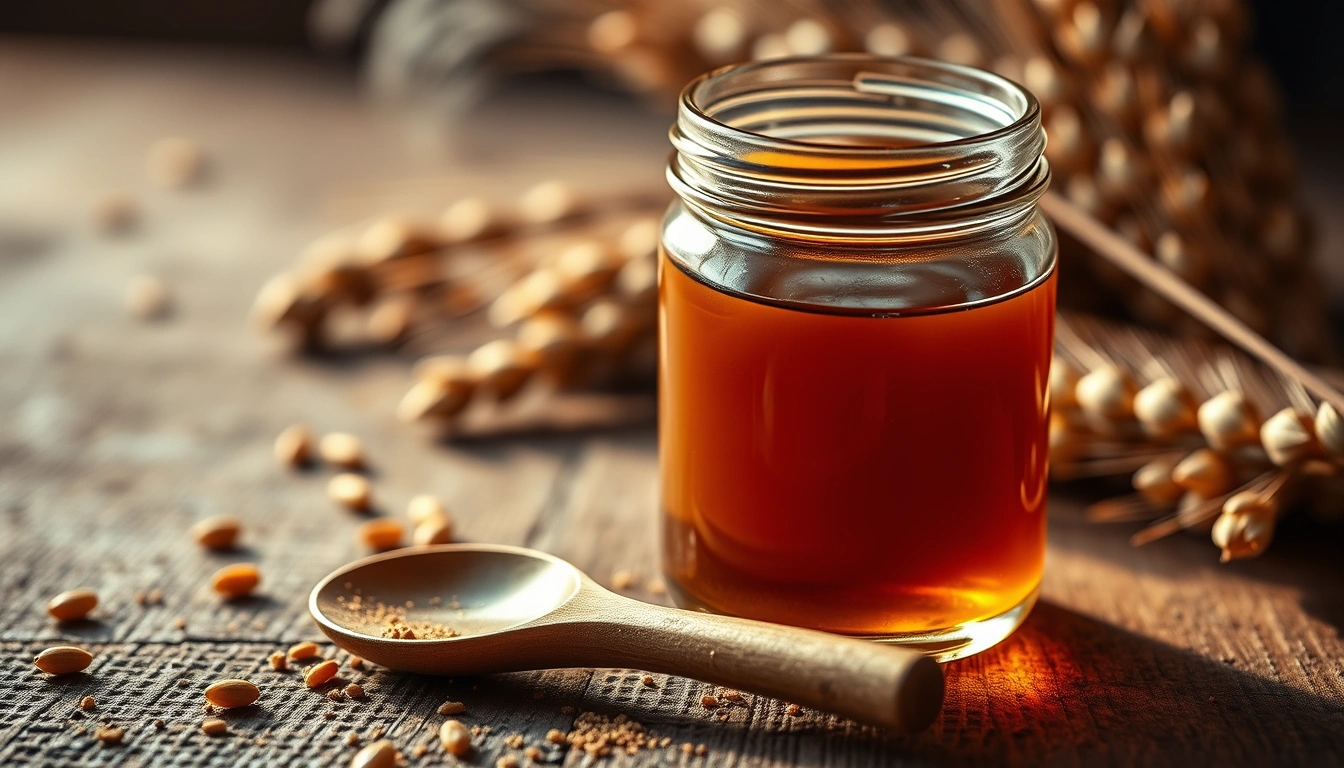
Malt extract
47 kcal per 100 g
Category: Cereals and Grains
Nutritional information (per 100 g)
| Calories | 47 kcal |
| Protein | 1g |
| Carbohydrates | 11g |
| Sugars | 2g |
| Total fats | 0.1g |
| Fiber | 0.5g |
| Sodium | 5mg |
Vitamins and minerals
Description
Malt extract is a liquid or powdered ingredient obtained from maltose, a sugar derived from germinated and subsequently roasted or malted barley. This extract concentrates the natural sugars present in the grain, offering a sweet, slightly roasted flavor with cereal nuances, which is commonly used to enrich the flavor and provide natural sweetness to various culinary preparations.
Its origin dates back to traditional malt production processes, widely used in the production of beers and whiskies, where barley is germinated and carefully dried to develop enzymes that transform starch into fermentable sugars. Subsequently, this malt can be processed to obtain the extract, a highly valued ingredient in pastry, baking, beverage, and sauce making.
Regarding its properties, malt extract is a rich source of natural sugars like maltose, which provides quick energy and improves the texture and color of baked goods. It also contains small amounts of B vitamins, minerals, and antioxidants derived from the malted grain. Furthermore, it helps enhance fermentation in bread dough, facilitating a more even rise and a more golden and crispy crust.
In different Spanish-speaking regions, especially in Latin America, malt extract is also known as: malt syrup, malt molasses, or simply malt honey, although the latter can be confused with other types of natural honey. It is important to note that malt extract is not the same as common molasses, as it comes exclusively from malted grain.
This ingredient is ideal for recipes for artisanal breads, cookies, homemade beers, and some sauces and marinades where a natural sweet touch with a characteristic aromatic profile is desired.