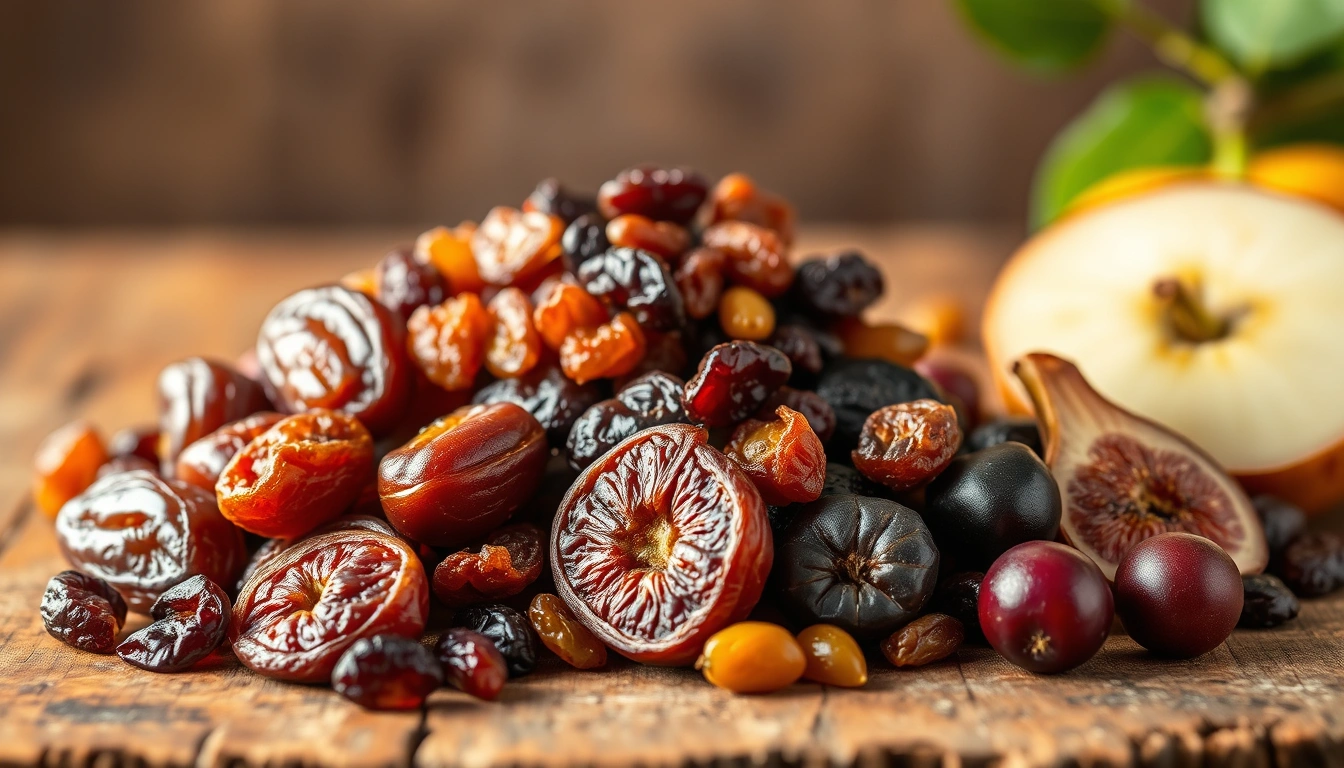
Other dried fruits
282 kcal per 100 g
Category: Nuts
Nutritional information (per 100 g)
| Calories | 282 kcal |
| Protein | 3.6g |
| Carbohydrates | 75g |
| Sugars | 64g |
| Total fats | 1.1g |
| Fiber | 7.3g |
Vitamins and minerals
Description
Other dried fruits refer to a variety of dehydrated fruits that are not part of traditional nuts like walnuts or almonds. These dried fruits include dates, prunes, raisins, dried figs, dried cherries, and dried apples, among others.
Origin: These fruits are obtained by dehydrating fresh fruit, a process that has been used since ancient times to preserve food and concentrate its flavor. Dried fruits are produced in various regions of the world, with notable production in countries of the Mediterranean, Middle East, Latin America, and Asia.
Properties: Dried fruits are a natural source of energy due to their concentrated natural sugar content. In addition, they provide dietary fiber, vitamins such as vitamin A, vitamin K, and some B-complex vitamins, as well as essential minerals like potassium, magnesium, and iron. They are ideal for adding sweetness and texture to dessert recipes, salads, savory dishes, and snacks, and are a healthy alternative to processed sweets.
Synonyms in Spanish from Latin America: In different Latin American countries, this group of ingredients is commonly called frutas deshidratadas, frutas pasas, or simply frutas secas. It is important not to confuse them with nuts (such as walnuts, almonds, or peanuts), which correspond to oilseeds or kernels.