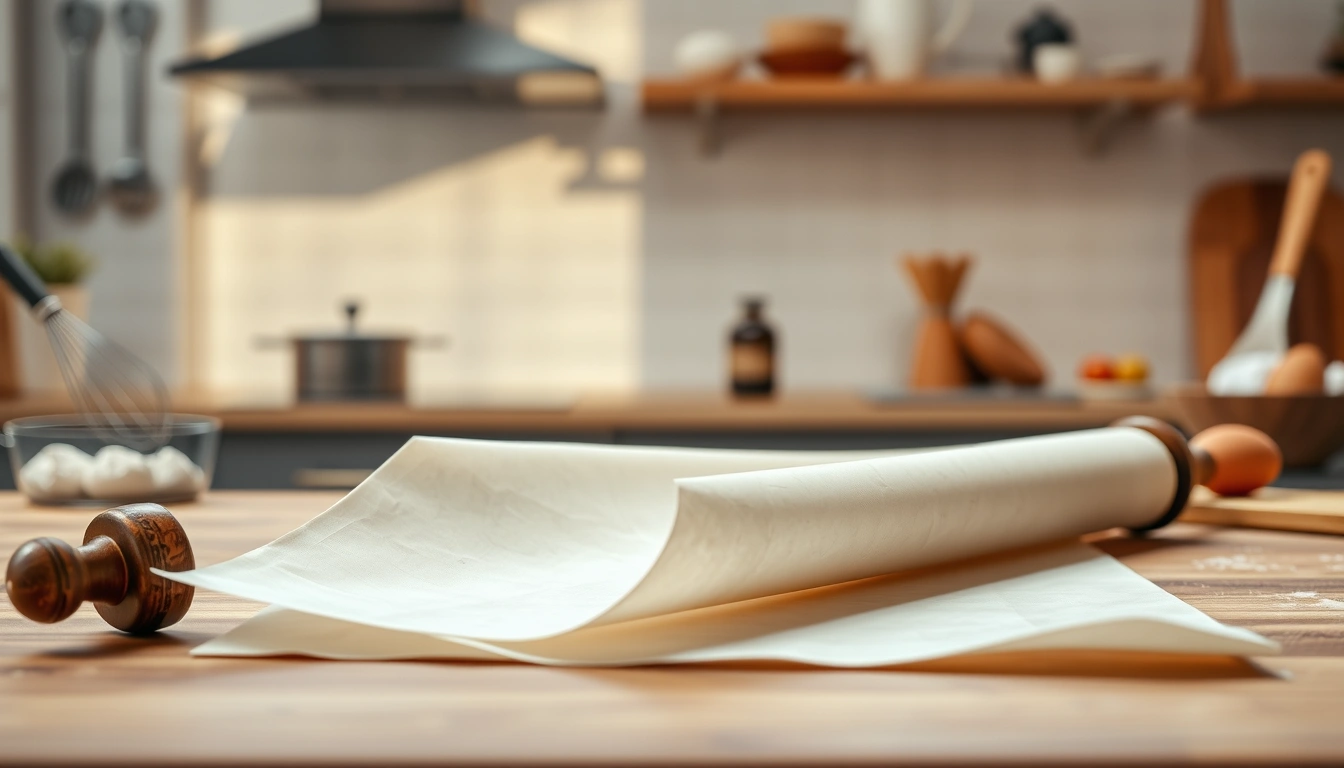
Parchment paper
0 kcal per 100 g
Category: Oils and Fats
Nutritional information (per 100 g)
| Calories | 0 kcal |
| Protein | 0g |
| Carbohydrates | 0g |
| Sugars | 0g |
| Total fats | 0g |
| Fiber | 0g |
| Sodium | 0mg |
Vitamins and minerals
Description
Parchment paper, also known as baking paper or sulfurized paper, is an indispensable item in the kitchen and in pastry making. It is a sturdy paper coated with a thin layer of silicone that gives it non-stick properties and heat resistance, allowing it to be used for lining pans, trays, and surfaces when cooking or baking.
Origin: Parchment paper has its roots in European cooking techniques, where the goal was to prevent food from sticking during cooking. Over time, its use has spread globally, making it a common item in kitchens all over the world.
Properties: It is resistant to high temperatures (generally up to 220 °C or more), does not burn easily, and prevents food from sticking to surfaces, enabling quick and easy cleanup. Furthermore, it allows for cooking with less fat or oil, facilitating the preparation of healthier recipes. It is ideal for baking cookies, cakes, and breads, as well as for steaming or wrapping food.
Synonyms in Latin America: In different Spanish-speaking regions, parchment paper may also be called baking paper, non-stick paper, or sulfurized paper.