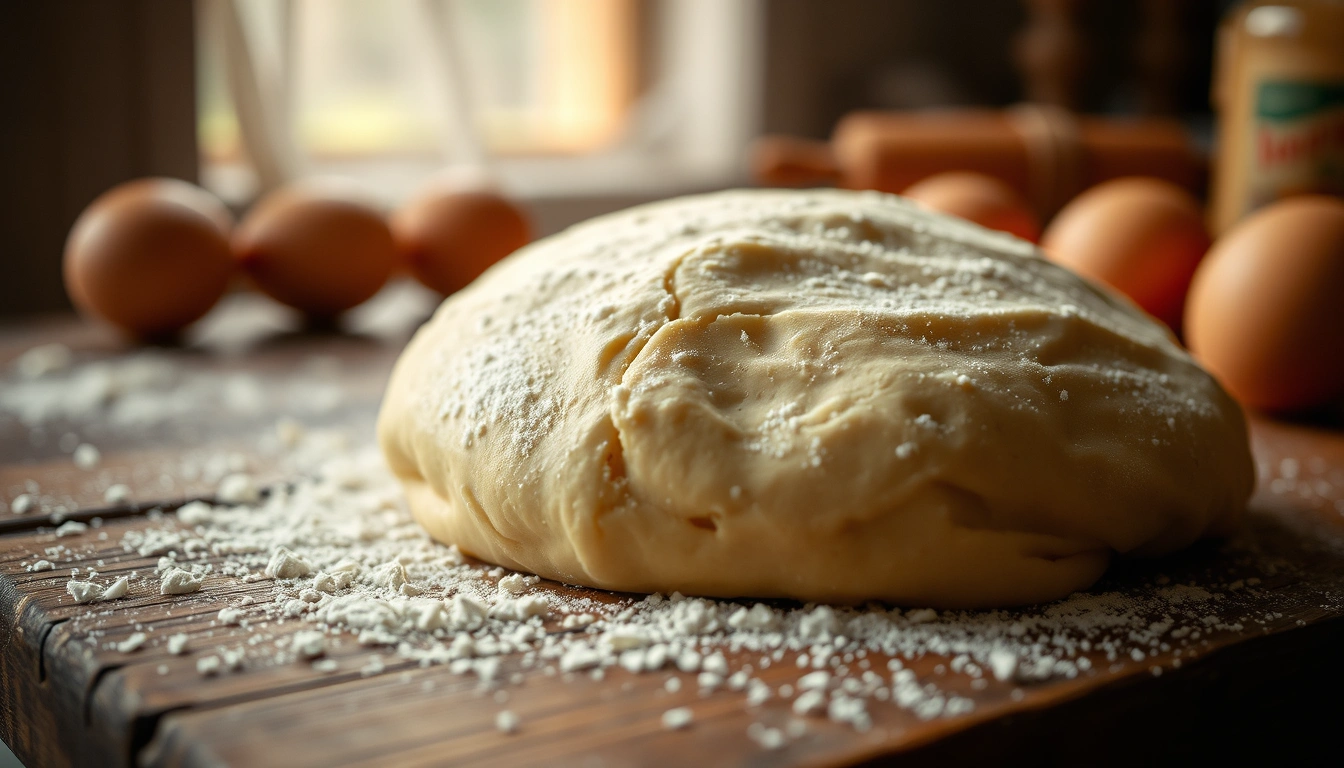
Pasta dough
131 kcal per 100 g
Category: Cereals and Grains
Nutritional information (per 100 g)
| Calories | 131 kcal |
| Protein | 5g |
| Carbohydrates | 25g |
| Sugars | 1.1g |
| Total fats | 1.1g |
| Saturated fats | 0.2g |
| Fiber | 2.7g |
| Sodium | 2mg |
Vitamins and minerals
Description
Pasta dough is the fundamental base for preparing a wide variety of Italian recipes and international cuisine involving fresh pasta. It is a simple and versatile mixture, generally composed of wheat flour, eggs, and a pinch of salt, although there are variants that use only water and flour for lighter or vegan versions.
Its origin dates back to Italian culinary tradition, where fresh pasta has been an essential food for centuries. Over time, pasta dough has been adapted and popularized in various regions of the world, integrating into countless dishes ranging from ravioli and fettuccine to gnocchi and lasagna.
Regarding its properties, pasta dough is an important source of complex carbohydrates, which provide sustained energy. When prepared with eggs, it also provides proteins and B vitamins, especially if fresh eggs and quality flour are used. Furthermore, its elastic texture allows for a great variety of shapes and sizes, adapting to multiple culinary techniques.
In the context of Latin American gastronomy, pasta dough may also be known as noodle dough, noodle pastry, or simply fresh pasta dough, depending on the country and region.
It is an essential ingredient for those who wish to create homemade dishes with authentic flavor and delicate texture, offering a personalized and fresh culinary experience that surpasses commercial dried pasta.