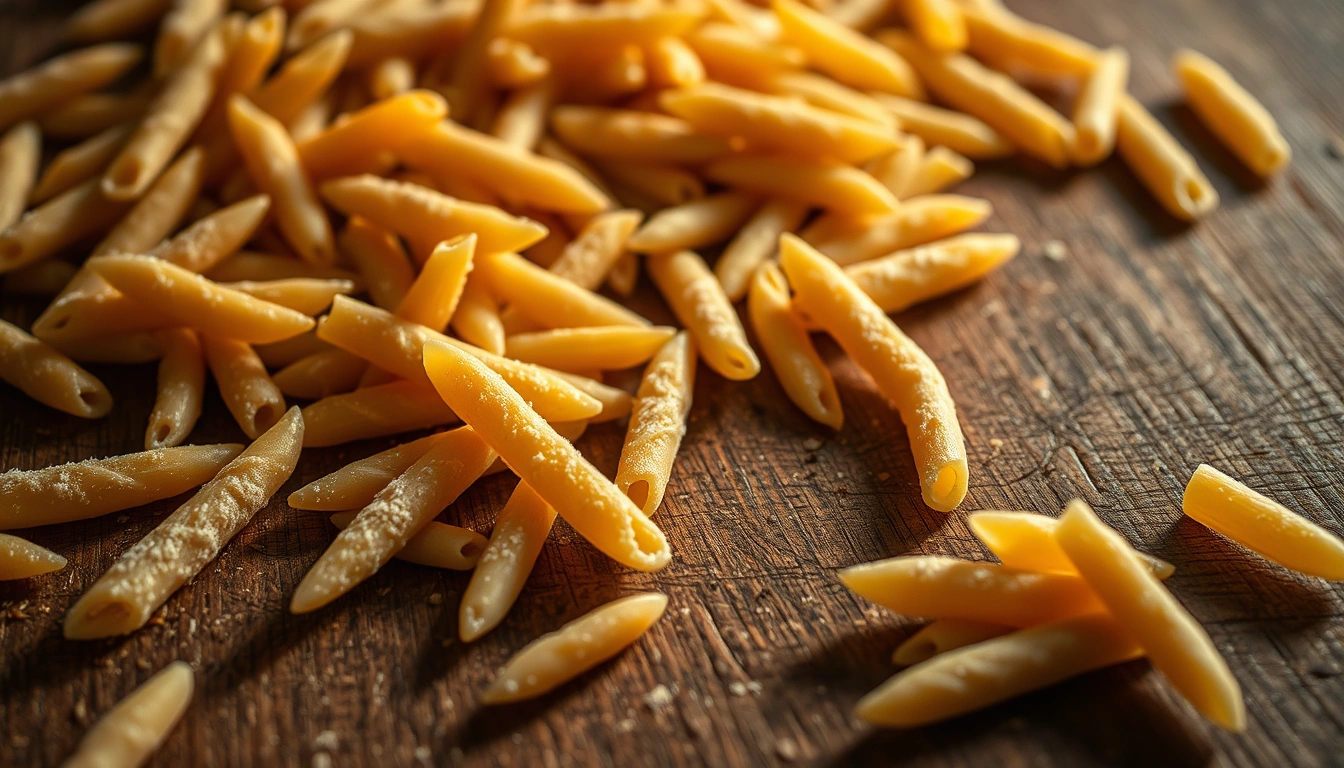
Penne pasta
157 kcal per 100 g
Category: Cereals and Grains
Nutritional information (per 100 g)
| Calories | 157 kcal |
| Protein | 5.8g |
| Carbohydrates | 31g |
| Sugars | 1g |
| Total fats | 0.9g |
| Saturated fats | 0.2g |
| Fiber | 1.8g |
| Sodium | 1mg |
Vitamins and minerals
Description
Penne Pasta is a type of Italian pasta with a tubular shape and diagonal cuts on both ends, giving it the appearance of small feathers or cut quills, hence its name which in Italian means "feathers" or "pens." This particular shape allows the pasta to hold sauces inside, making each bite flavorful and well-coated.
Originating from the Campania region of Italy, penne pasta is very popular in Mediterranean recipes and has become widespread in cuisines all over the world. Its firm texture and ability to pair with a wide variety of sauces, from creamy to tomato-based or vegetable-based, make it a versatile and preferred choice in cooking.
Regarding its properties, penne pasta is primarily made from durum wheat flour (semolina), which provides a good amount of complex carbohydrates, an important source of energy. Additionally, being a dry pasta that is cooked al dente, it has a moderate glycemic index. Some types can also be found in whole wheat versions, which contain more fiber, and gluten-free for those with intolerances.
In Latin America, penne pasta may be known by different names depending on the region, although the term penne is widely recognized in most countries. Some synonyms or related terms you might encounter are: plumas (due to the appearance of the cut), tubitos, or simply tubular pasta, though these do not necessarily specify the characteristic diagonal shape of penne.
In cooking, penne pasta is ideal for preparing baked dishes, pasta salads, and sides with thick or chunky sauces, taking advantage of its shape to capture ingredients and optimize flavor.