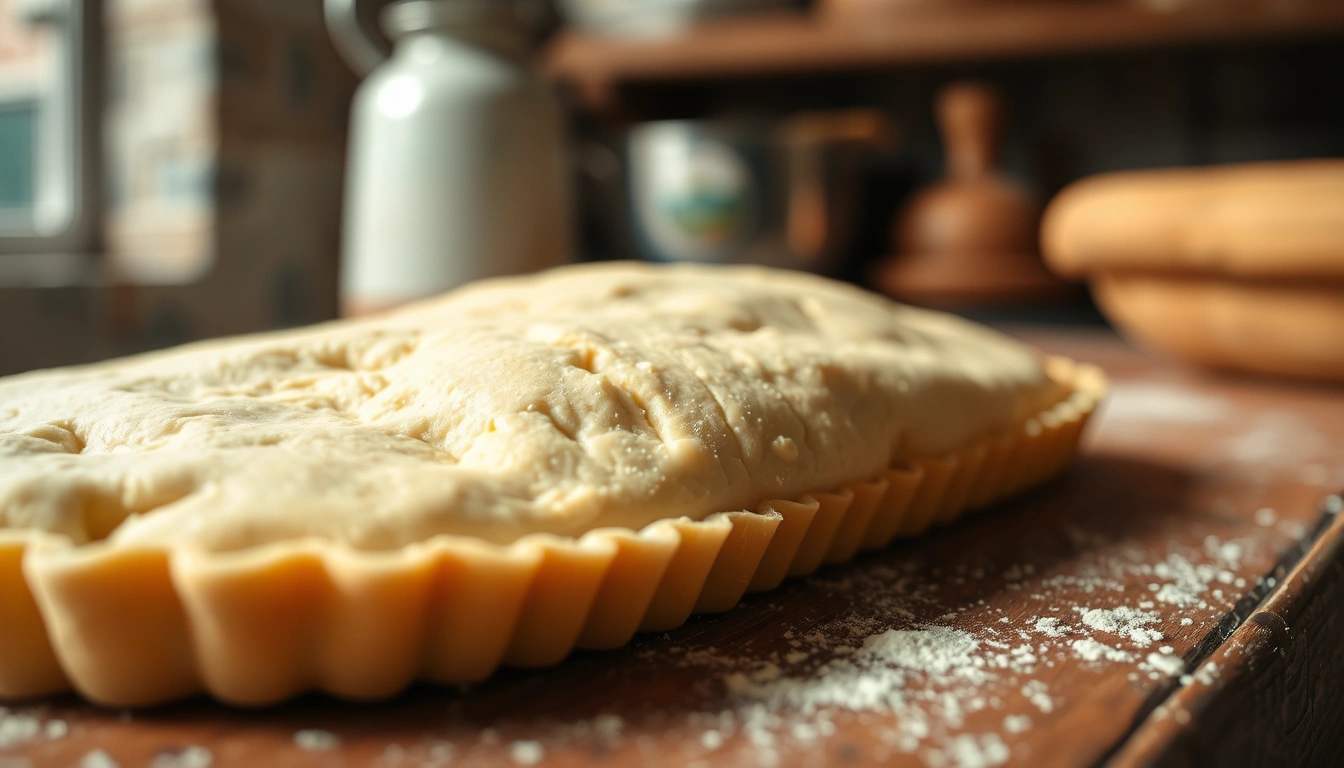
Pie crust
237 kcal per 100 g
Category: Cereals and Grains
Nutritional information (per 100 g)
| Calories | 237 kcal |
| Protein | 4.2g |
| Sugars | 1.2g |
| Total fats | 9.8g |
| Saturated fats | 4.5g |
| Fiber | 2.7g |
| Sodium | 350mg |
Vitamins and minerals
Description
Pie crust is a basic and versatile preparation used as a base in a wide variety of recipes, both sweet and savory. It is characterized by its texture, which can range from crispy and crumbly to soft and flaky, depending on the ingredients and technique used. Pie crusts are usually made from flour, fat (such as shortening, butter, or oil), water, and in some cases, egg.
Origin: Pie crust has its roots in European cuisine, especially in French and Italian gastronomy, where pies and quiches are traditional dishes. Over time, this preparation became popular all over the world and was adapted to different cultures and culinary styles.
Properties: Pie crust is a moderate source of carbohydrates and fats, and its nutritional value depends on the ingredients used. Its main function in cooking is to provide structure and support for the filling, in addition to adding texture and flavor to the final dish. There are whole wheat or lower-fat versions for healthier options.
Synonyms in Spanish from Latin America: in different countries it may be called by different names, such as base para tartas, masa quebrada (when the texture is crispier), masa para empanadas (in some contexts for similar savory doughs), or simply masa para pastel. It is important to note that in some countries the term pastel can refer to different preparations, so "masa para tarta" is the most universal term.