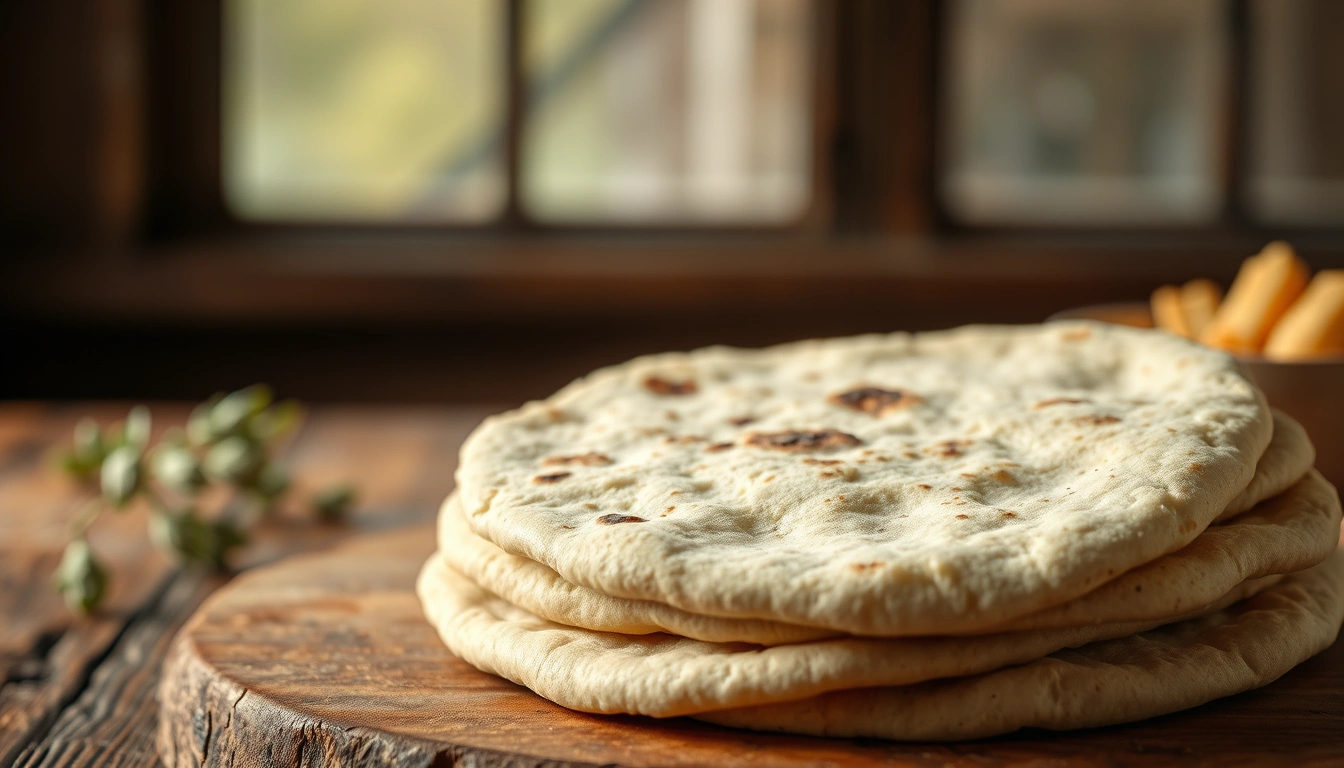
Pita bread without pockets
275 kcal per 100 g
Category: Cereals and Grains
Nutritional information (per 100 g)
| Calories | 275 kcal |
| Protein | 9g |
| Carbohydrates | 56g |
| Sugars | 2.0g |
| Total fats | 1.2g |
| Saturated fats | 0.2g |
| Fiber | 6.3g |
| Sodium | 410mg |
Vitamins and minerals
Description
Pocketless pitas are a type of flatbread traditional to Mediterranean and Middle Eastern cuisine. Unlike classic pitas that have an interior pocket for stuffing, these pitas are thinner and do not form that pouch, making them ideal for use as a base for wrapping ingredients or accompanying various dishes.
The origin of pita bread dates back thousands of years, being a very popular bread in countries like Greece, Turkey, Lebanon, and Israel. Pocketless pitas are especially valued for their versatility in the kitchen, facilitating their use in recipes that require a flatter and more uniform bread, such as wraps, tacos, or for spreading sauces and dips.
Regarding their properties, pitas are made primarily from wheat flour, water, yeast, and salt. They are a good source of complex carbohydrates that provide sustained energy. Furthermore, being baked at high temperatures, they have a soft yet sturdy texture, ideal for holding fillings without falling apart.
In different regions of Latin America, this type of bread may also be known as pocketless Arabic bread, flat pita bread, or simply Arabic bread, although the latter can sometimes refer to the pocketed version. It is important to specify "pocketless" to avoid confusion in recipes.
Pocketless pitas are perfect for those looking for a lighter and more flexible bread option for their preparations, whether for wraps, open-faced sandwiches, or to accompany typical dishes with hummus, baba ganoush, and other Mediterranean or Middle Eastern sauces.