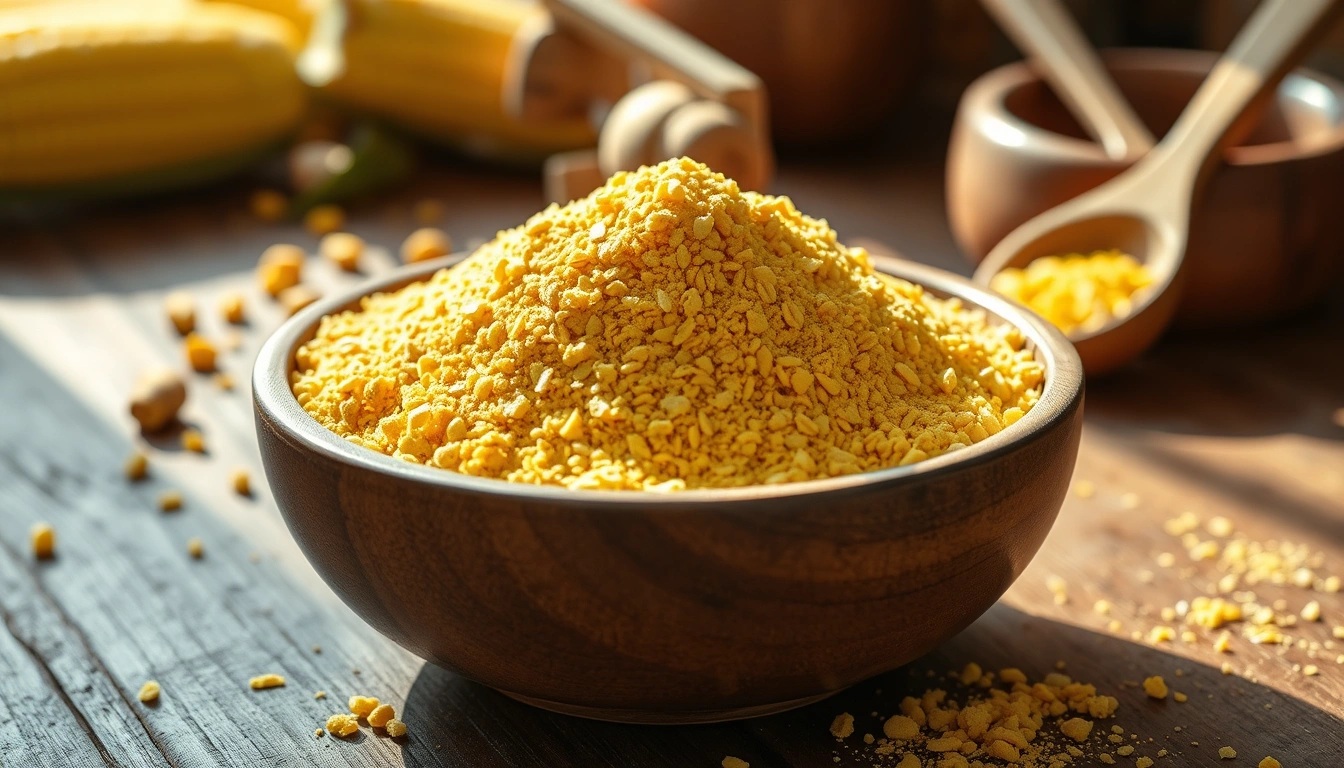
Polenta flour
370 kcal per 100 g
Category: Cereals and Grains
Nutritional information (per 100 g)
| Calories | 370 kcal |
| Protein | 7.5g |
| Carbohydrates | 79g |
| Total fats | 1.5g |
| Fiber | 3.4g |
| Sodium | 7mg |
Vitamins and minerals
Description
Polenta flour is a type of coarse flour obtained from ground yellow corn. It is a staple ingredient in traditional Italian cuisine and is also widely used in various regions of Latin America. Polenta is characterized by its grainy texture and mild flavor, making it an ideal base for preparing creamy dishes, stews, or for cooking until firm so it can be cut into portions.
Its origin dates back to the popular gastronomy of Northern Italy, where it was a fundamental food for peasant families. In Latin America, although the traditional preparation with polenta is not as common, its flour is used in various recipes, adapting to local tastes.
From a nutritional point of view, polenta flour is a source of complex carbohydrates, low in fat and gluten-free, making it suitable for people with an intolerance to this protein. Furthermore, it provides fiber and minerals such as iron and magnesium.
In different Spanish-speaking countries, polenta flour can be found under various names: coarse corn flour, corn flour for polenta, or simply polenta. In some regions, it is also known as grits (an adapted English term) or corn semolina, although the latter may refer to a finer grind.
In summary, polenta flour is a versatile ingredient in the kitchen, ideal for preparing everything from creamy dishes to firm and crispy preparations, providing a mild flavor and a characteristic texture.