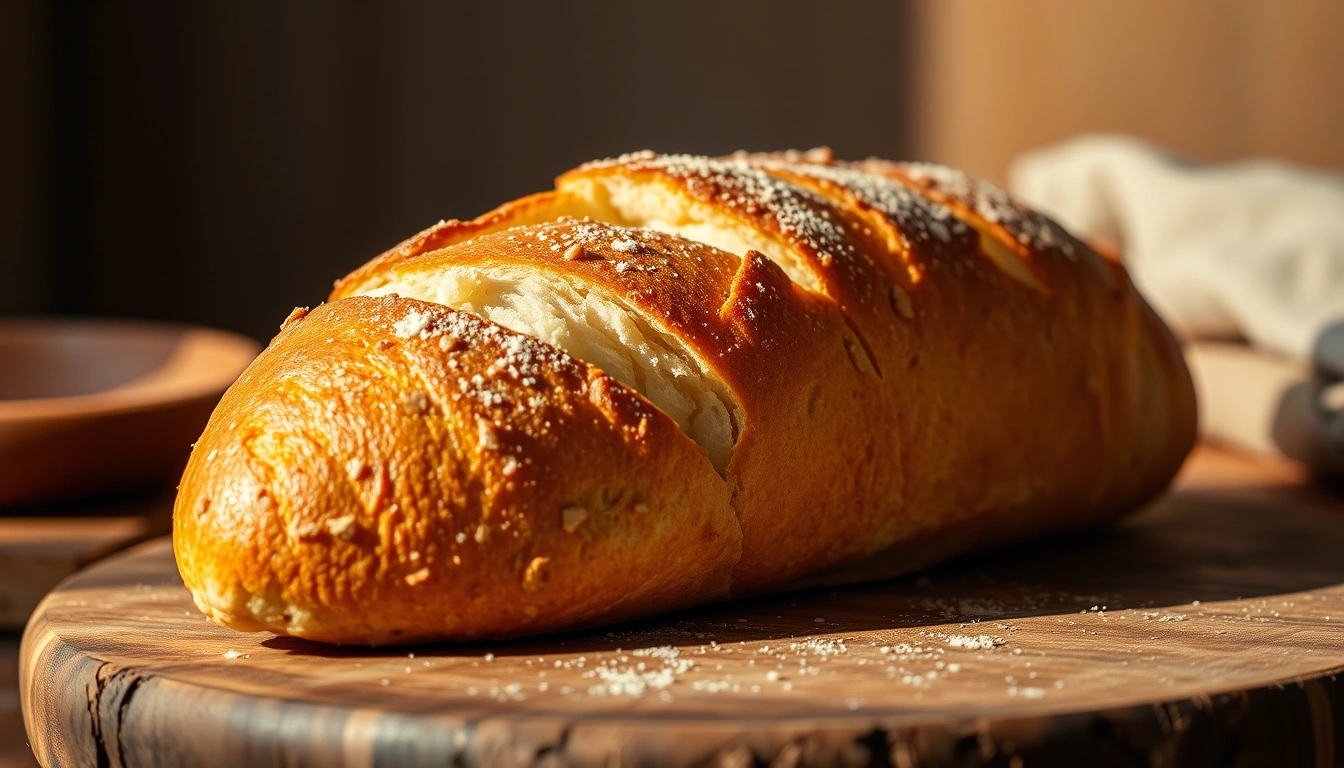
Portuguese bread
270 kcal per 100 g
Category: Cereals and Grains
Nutritional information (per 100 g)
| Calories | 270 kcal |
| Protein | 9g |
| Carbohydrates | 55g |
| Sugars | 2.5g |
| Total fats | 3.5g |
| Fiber | 2.7g |
| Sodium | 460mg |
Vitamins and minerals
Description
Portuguese bread is a type of bread characterized by its soft texture on the inside and a crunchy, slightly golden crust on the outside. This bread, very popular in various regions of Latin America, is commonly used to prepare sandwiches, accompany meals, or enjoyed with butter and jam.
Its origin lies in Portugal, where it is made with simple ingredients such as wheat flour, water, yeast, and salt, following traditional techniques that give it its particular airy crumb and firm exterior. Although it is associated with Portuguese baking, the version known as Portuguese bread in Latin America is usually adapted to local recipes that prioritize a tender and soft crumb, perfect for making homemade breads and sandwiches.
Among its properties, it stands out for its high content of complex carbohydrates, which provide prolonged energy. Being fresh and less dense than other more rustic breads, it is ideal for those looking for a versatile option that is easy to combine with different ingredients.
Regarding its synonyms in the Hispanic American sphere, Portuguese bread is also known as marraqueta in Chile and Bolivia, pan batido in some regions of Mexico, or simply as French bread in certain countries, although it is important to note that each variant may present slight differences in texture and shape.