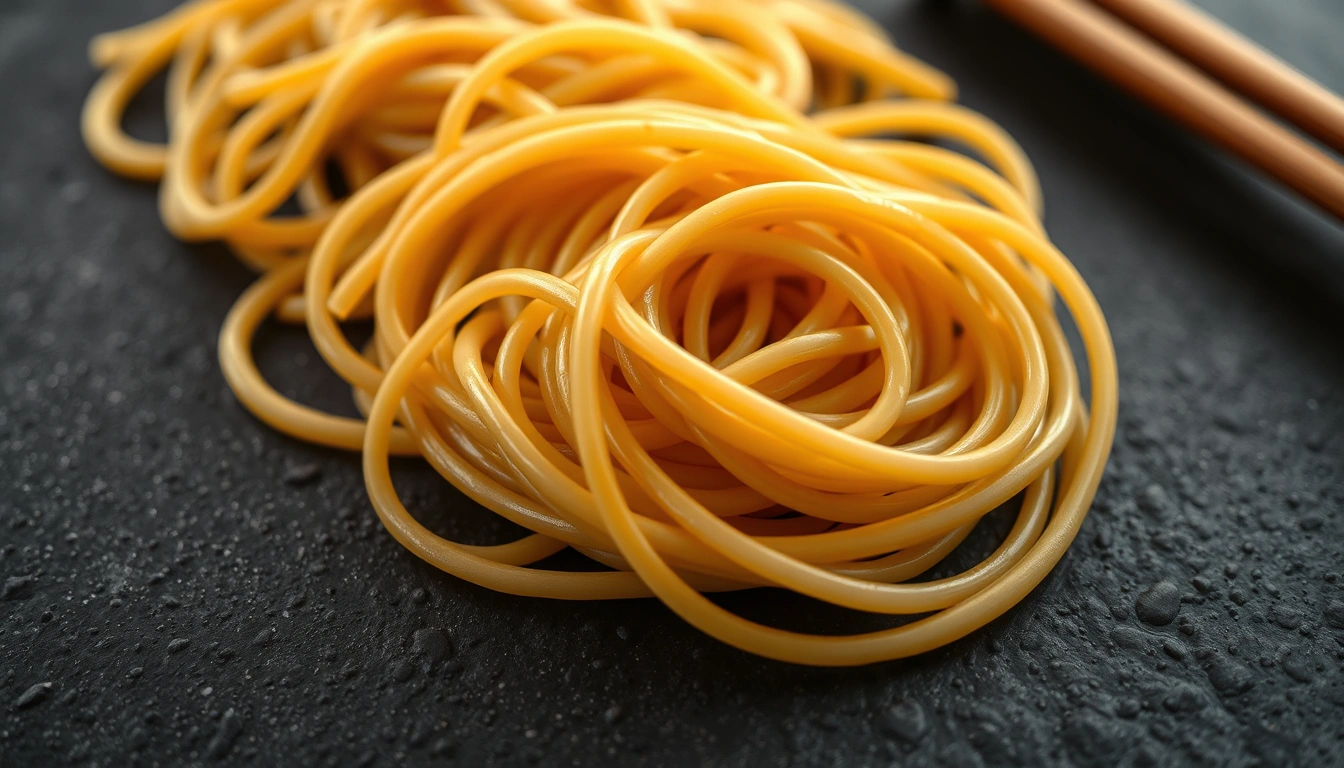
Ramen noodles
436 kcal per 100 g
Category: Cereals and Grains
Nutritional information (per 100 g)
| Calories | 436 kcal |
| Protein | 8g |
| Carbohydrates | 66g |
| Sugars | 2g |
| Total fats | 12g |
| Saturated fats | 5g |
| Fiber | 3g |
| Sodium | 1180mg |
Vitamins and minerals
Description
Ramen noodles are a type of Japanese pasta made primarily from wheat flour, water, salt, and a small amount of kansui (alkaline water), which gives them their characteristic firm and slightly elastic texture. These noodles are the base ingredient of the famous Japanese dish known as ramen, a hearty soup that combines broth, various toppings, and noodles to offer a comforting and flavorful meal.
The origin of ramen noodles dates back to the influence of Chinese cuisine on Japan in the early 20th century, where they were adapted and perfected to become a Japanese culinary symbol. Although their history is linked to Japan, their popularity has transcended borders, and today they are common ingredients in many cuisines around the world.
Regarding their properties, ramen noodles primarily provide quickly digestible carbohydrates, making them an ideal energy source. Depending on the type of flour and preparation, their nutritional content may vary, but they generally have low fat and protein content. It is important to consider that they are usually consumed in broths and with accompaniments that complement their nutritional value.
In the context of cooking recipes, ramen noodles can be used not only in the traditional soup but also in stir-fries, salads, and creative preparations that take advantage of their texture and ability to absorb flavors.
In different Hispanic American countries, it is common to find some synonyms or alternative names for ramen noodles, including: Chinese noodles, Japanese noodles, or simply ramen. However, "ramen noodles" is the most precise and recognized term in the culinary field to refer to this specific ingredient.