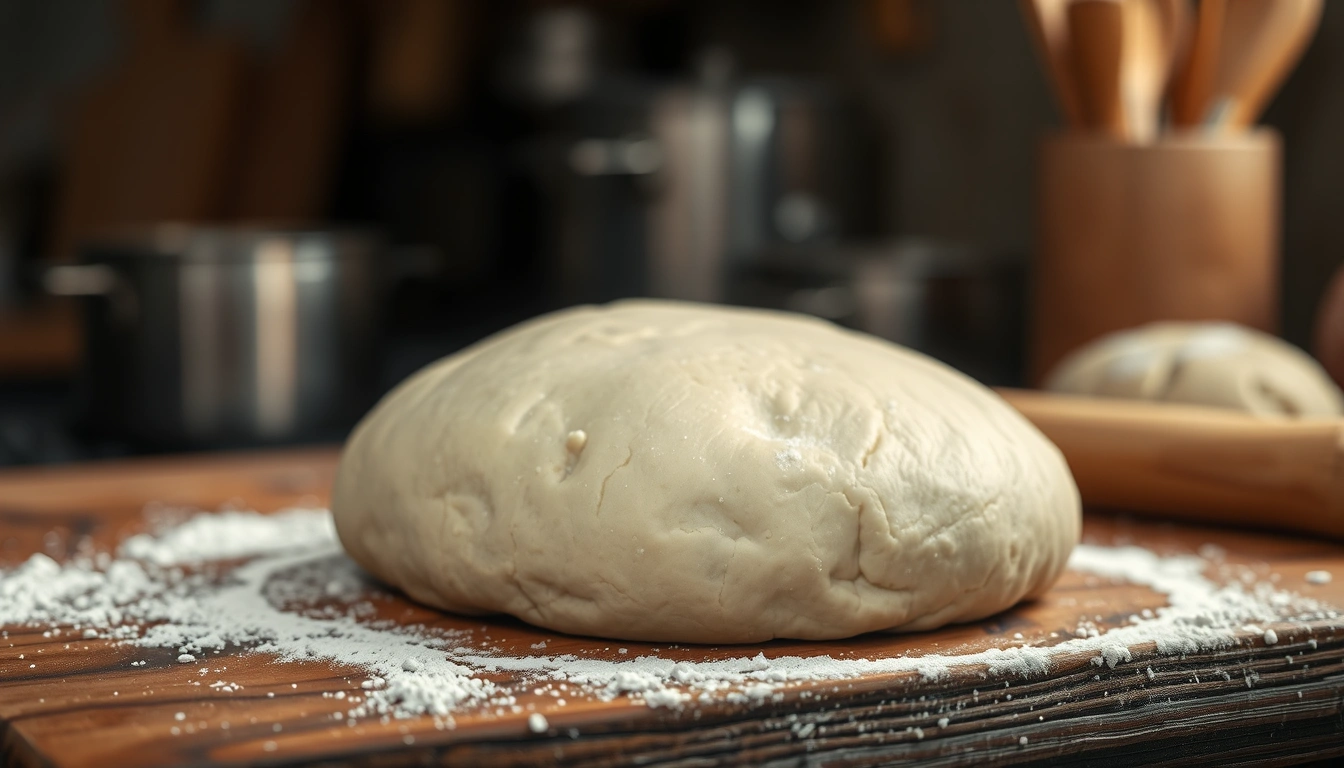
Refrigerated bread dough
260 kcal per 100 g
Category: Cereals and Grains
Nutritional information (per 100 g)
| Calories | 260 kcal |
| Protein | 8g |
| Carbohydrates | 49g |
| Sugars | 3g |
| Total fats | 3.5g |
| Saturated fats | 0.7g |
| Trans Fat | 0g |
| Fiber | 2.7g |
| Sodium | 450mg |
Vitamins and minerals
Description
Refrigerated bread dough is a preparation made from flour, water, yeast, and salt, which has been kneaded and undergone an initial fermentation process, before being preserved by refrigeration. This type of dough is sold ready to use, which simplifies and speeds up the preparation of bread, pastries, and other baked goods at home or in professional kitchens.
Its origin dates back to the modern baking industry, which developed methods to preserve the dough in cold conditions while maintaining its fermentative capacity, allowing users to carry out the final proofing and baking whenever they wish. It is very popular in both Latin America and Spain, as well as other regions, due to its practicality and versatility.
Properties: Refrigerated bread dough retains the texture and flavor of artisanal bread thanks to its controlled fermentation. Its refrigeration slows down the yeast's activity to prolong its shelf life, but once taken out of the refrigerator and given adequate resting time, the yeast resumes fermentation to yield a fluffy, well-aerated bread. Furthermore, this dough is typically low in chemical additives and allows for experimentation with different types of bread and homemade recipes without the complexity of traditional kneading.
Regarding synonyms in Spanish from Latin America, it can be found as masa refrigerada para pan, masa lista para pan, masa para pan congelada (when sold frozen), or simply masa de pan when it is implied that it is refrigerated for later use.