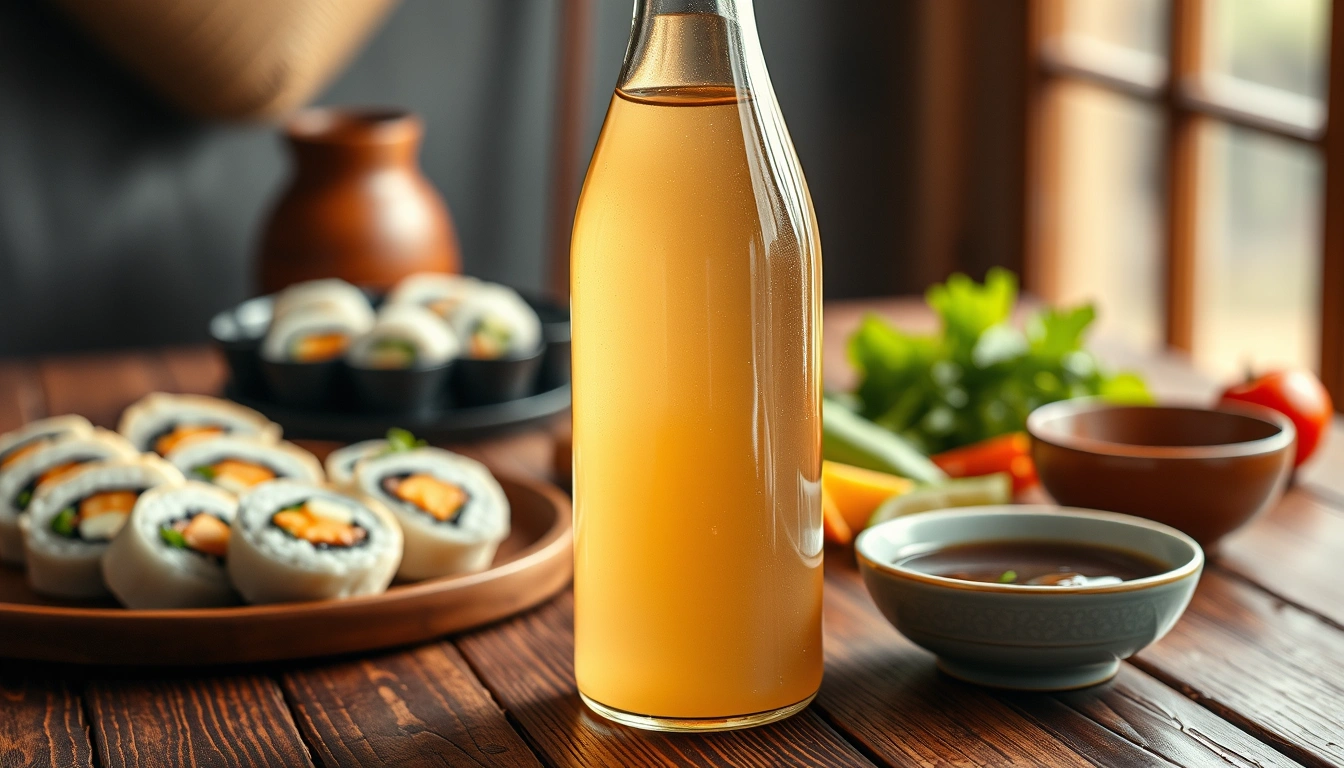
Rice vinegar
18 kcal per 100 g
Category: Oils and Fats
Nutritional information (per 100 g)
| Calories | 18 kcal |
| Protein | 0g |
| Carbohydrates | 0.9g |
| Total fats | 0g |
| Fiber | 0g |
Vitamins and minerals
Description
Rice vinegar is a liquid ingredient obtained from the fermentation of rice. It is a type of vinegar very popular in Asian cuisine, especially in countries like Japan, China, Korea, and Vietnam, where it is used to give an acidic and delicate flavor to various preparations.
This vinegar is characterized by its mild, slightly sweet, and less acidic flavor compared to other types of vinegar, making it ideal for dressing salads, preparing dressings, marinating meats and fish, as well as for use in classic recipes like sushi.
Rice vinegar originates from Asia, where it has been used for centuries both in gastronomy and in food preservation. Its production process involves fermenting cooked rice with bacteria and yeasts that transform the starch into alcohol and then into acetic acid.
From a nutritional standpoint, rice vinegar is low in calories and may provide some antioxidants and minerals derived from rice. Additionally, it is attributed digestive properties and a regulatory effect on blood sugar levels, although its consumption should be moderate.
In the Spanish-speaking world of Latin America, this ingredient may be found under the following synonyms: rice vinegar (the most common), Asian vinegar, or simply mild vinegar, although the name varies little and it is generally recognized as rice vinegar due to its origin.