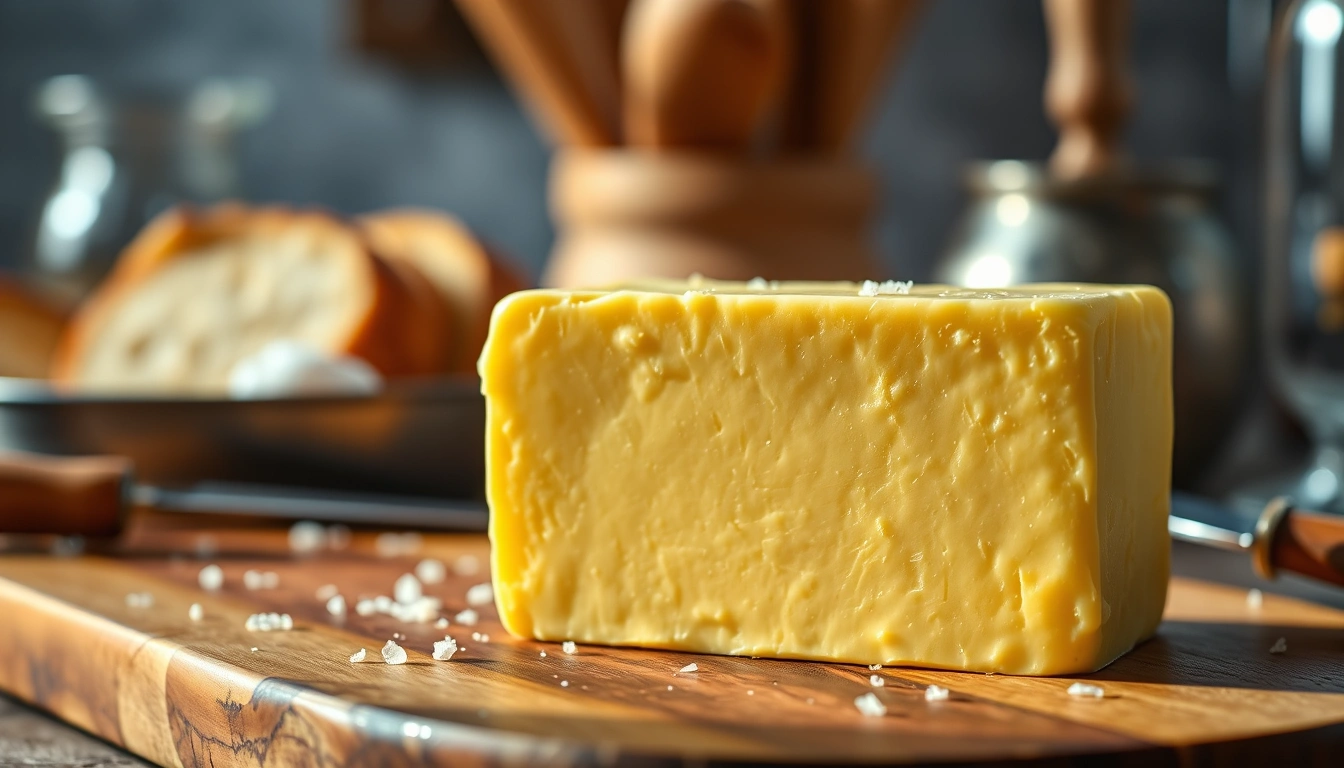
Salted butter
717 kcal per 100 g
Category: Oils and Fats
Nutritional information (per 100 g)
| Calories | 717 kcal |
| Protein | 0.9g |
| Carbohydrates | 0.1g |
| Sugars | 0.1g |
| Total fats | 81g |
| Saturated fats | 51g |
| Trans Fat | 3g |
| Fiber | 0g |
| Sodium | 643mg |
| Cholesterol | 215mg |
Vitamins and minerals
Description
Salted butter is a dairy product made from milk cream, to which salt is added during its manufacturing process to enhance its flavor and preserve it for longer. This butter is characterized by its soft and creamy texture, and a slightly salty taste that adds a special touch to various culinary preparations.
Its origin dates back to traditional butter-making techniques in Europe, although today it is a common ingredient in many cuisines around the world. Salt not only intensifies its flavor but also helps preserve the product, making it ideal for use in baking, spreading on breads, cooking, and frying, providing a more complex flavor than unsalted butter.
Regarding its properties, salted butter is an important source of saturated fats and fat-soluble vitamins such as A, D, and E. It should be consumed in moderation due to its calorie and sodium content. Its use in the kitchen allows for flavorful preparations with a creamy texture.
In different Latin American countries, salted butter can be found under names such as manteca con sal, mantequilla salada, or simply manteca when the context refers to traditional salted butter. It is important to distinguish it from unsalted butter, especially in recipes where controlling the salt level is key.