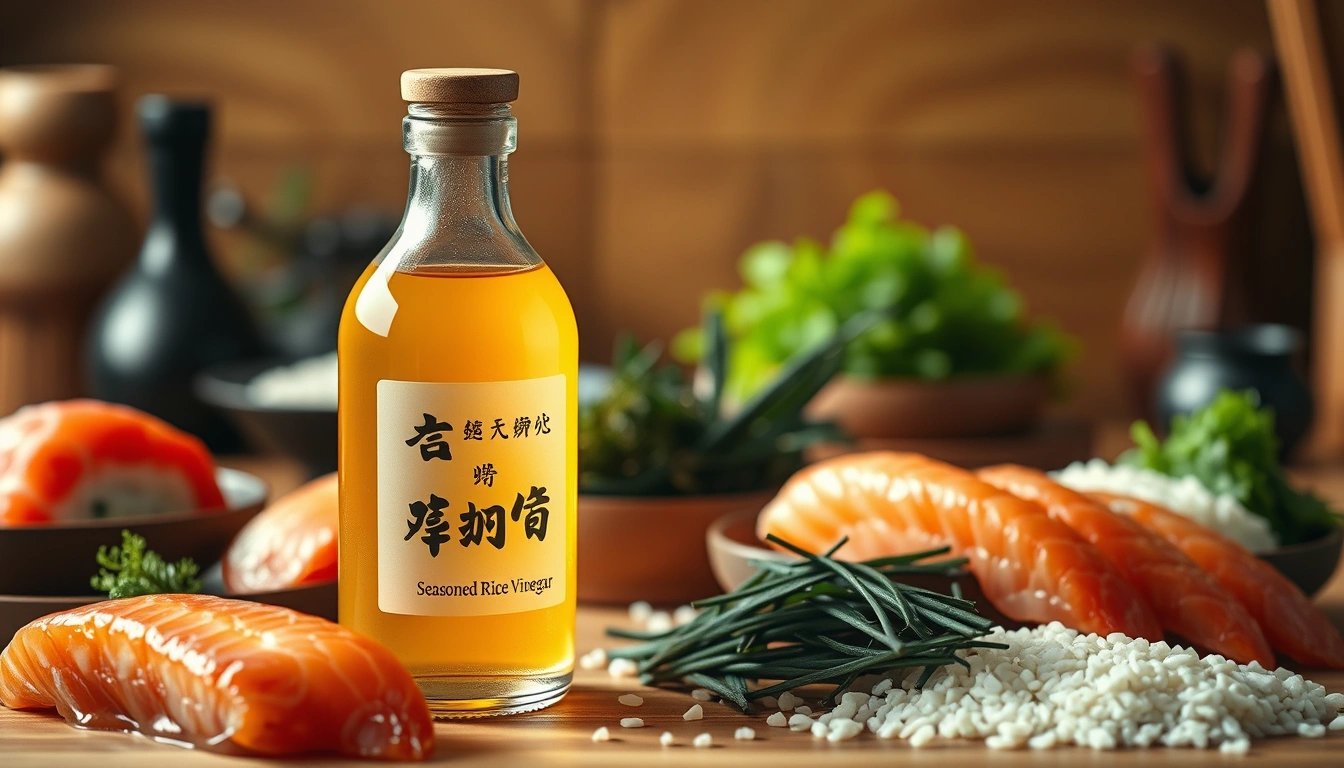
Seasoned rice vinegar
21 kcal per 100 g
Category: Oils and Fats
Nutritional information (per 100 g)
| Calories | 21 kcal |
| Protein | 0g |
| Carbohydrates | 0.9g |
| Sugars | 0.4g |
| Total fats | 0g |
| Saturated fats | 0g |
| Fiber | 0g |
| Sodium | 661mg |
Vitamins and minerals
Description
Seasoned rice vinegar is a type of vinegar made from the fermentation of rice, to which sugar, salt, and other seasonings are added to enhance its flavor, providing a balance between acidity and sweetness. It is a fundamental ingredient in Asian cuisine, especially in Japanese cooking, where it is commonly used to prepare sushi, dress salads, and marinate fish and meats.
Its origin lies in Asia, primarily in Japan and China, countries where rice has been a staple food for centuries and its fermentation has given rise to different types of vinegar. Seasoned rice vinegar stands out for its mild and slightly sweet flavor, unlike white or wine vinegar, which tend to be more acidic and strong.
Among its properties, this vinegar is low in calories, helps enhance the flavor of foods without the need to add excessive salt, and has slight antioxidant and natural preservative properties, which helps prolong the freshness of certain dishes. Furthermore, being a liquid condiment, it facilitates the incorporation of flavors in both cold and hot recipes.
Regarding synonyms in Spanish used in different regions of Latin America, it can be found as vinagre de arroz sazonado, vinagre dulce de arroz, or simply vinagre de arroz condimentado. However, its most common and recognized name for culinary purposes is seasoned rice vinegar.