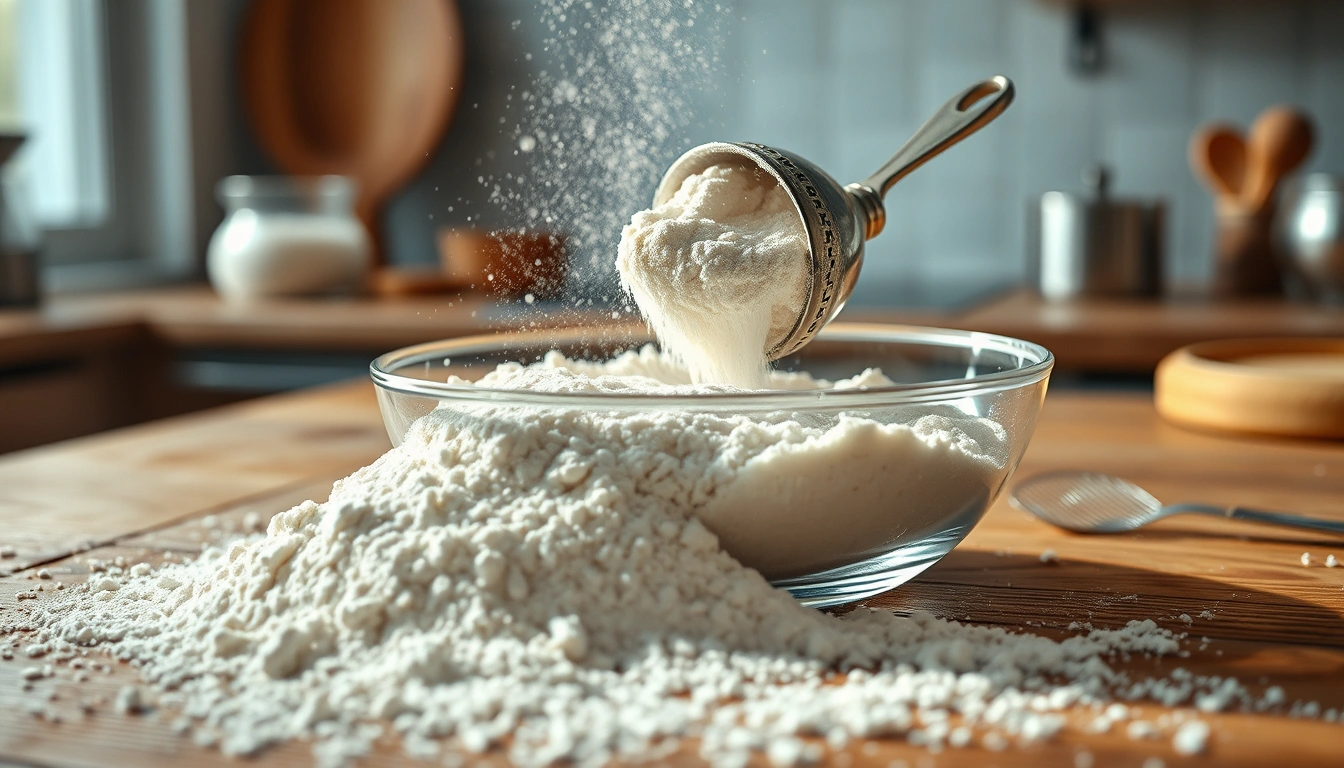
Self-rising flour
364 kcal per 100 g
Category: Cereals and Grains
Nutritional information (per 100 g)
| Calories | 364 kcal |
| Protein | 10g |
| Carbohydrates | 76g |
| Sugars | 0.3g |
| Total fats | 1g |
| Fiber | 2.7g |
| Sodium | 500mg |
Vitamins and minerals
Description
Self-rising flour is a type of wheat flour that contains incorporated leavening agents, such as baking powder, baking soda, or cream of tartar, which allow doughs to rise and become fluffy during baking without the need to add additional yeast. Its fine texture and its ability to generate volume make it ideal for preparing cakes, tortes, muffins, pound cakes, and other baked goods that require quick and even leavening.
This ingredient has its origins in the European baking tradition, where the need to speed up processes led to the incorporation of chemical leaveners into the flour. Currently, its use is very widespread in both home and professional kitchens, facilitating the preparation of fluffy and soft products.
In nutritional terms, self-rising flour mainly provides complex carbohydrates and some protein, like all wheat flours. However, since it contains chemical agents, it is important to use it in the recommended amounts to avoid unpleasant flavors or alterations in texture.
In different Latin American countries, self-rising flour may be known as prepared flour, flour with baking powder, or pastry flour. However, it is essential to verify that it includes the leavening agent, as in some regions these terms may vary.