Semolina
360 kcal per 100 g
Category: Cereals and Grains
Nutritional information (per 100 g)
| Calories | 360 kcal |
| Protein | 12.7g |
| Carbohydrates | 72g |
| Total fats | 1.05g |
| Fiber | 3.9g |
Vitamins and minerals
Description
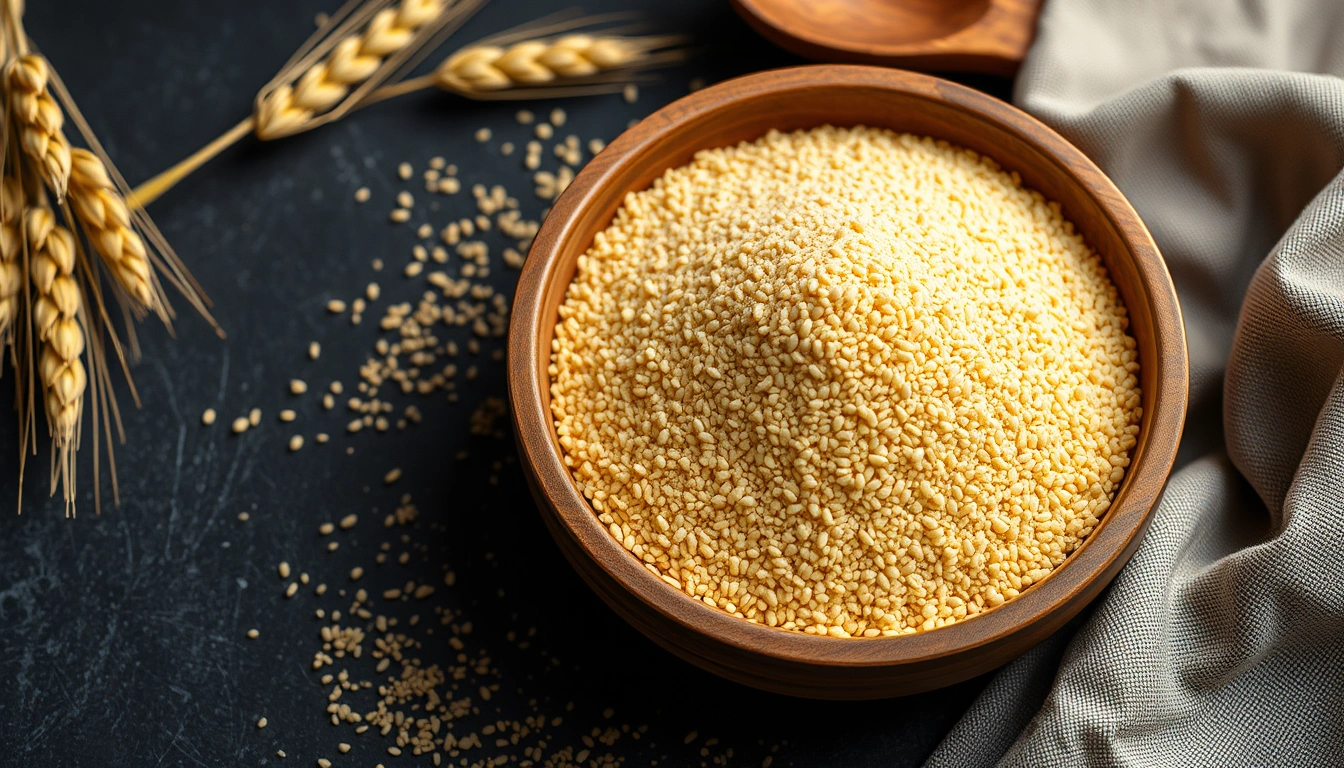
Semolina is a basic ingredient in many cuisines around the world, especially in pasta, bread, and dessert recipes. It is obtained from the coarse milling of durum wheat (triticum durum), which gives it a granular texture and a characteristic yellow color. Its name comes from the Latin simila, meaning fine flour, although in reality semolina is coarser than common flour.
Origin: Semolina has a Mediterranean origin and is especially popular in countries like Italy, Spain, and several North African countries. In Italian cuisine, for example, it is the base for making artisanal pasta and certain types of bread, while in Spanish and Latin American cuisine it is used to prepare desserts like the famous semolina with milk or to thicken stews and soups.
Properties: Semolina is rich in complex carbohydrates, which provide slow-release energy. Additionally, it contains proteins from durum wheat and a moderate amount of fiber, B vitamins, and minerals such as iron and magnesium. It is a versatile, easy-to-cook, and digestible food, ideal for providing texture and consistency in numerous culinary preparations.
Synonyms in Spanish from Latin America: In different regions, semolina may be called by various names such as coarse flour, granza, or simply wheat semolina. In some countries, it is confused or equated with durum wheat flour, although the shape and granulometry may vary.
In summary, semolina is an essential ingredient in the kitchen for preparations that require a firm or granular texture, being a fundamental resource in both traditional dishes and modern creations.