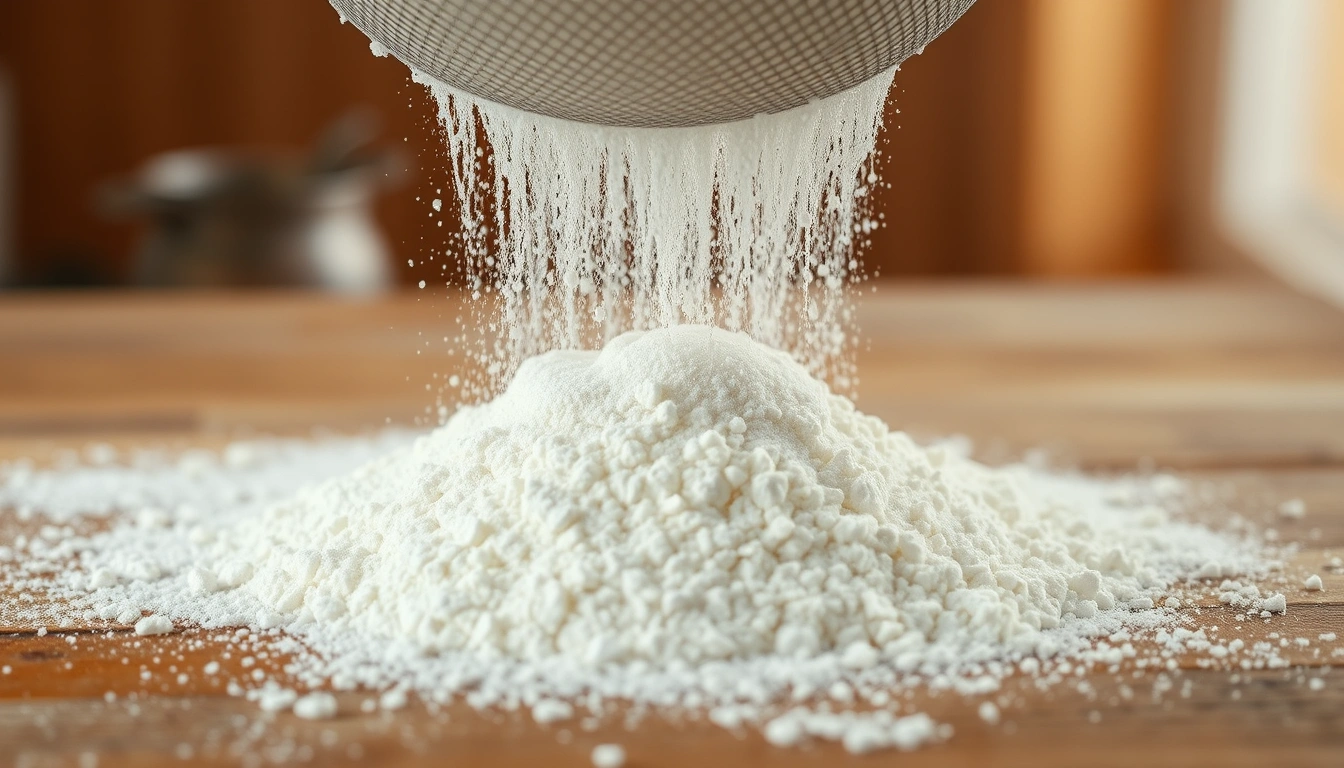
Sifted flour
364 kcal per 100 g
Category: Cereals and Grains
Nutritional information (per 100 g)
| Calories | 364 kcal |
| Protein | 10g |
| Carbohydrates | 76g |
| Sugars | 0.3g |
| Total fats | 1g |
| Saturated fats | 0.2g |
| Fiber | 2.7g |
| Sodium | 2mg |
Vitamins and minerals
Description
Sifted flour is flour that has been passed through a sieve or fine strainer to remove lumps, impurities, and to aerate it. This process makes the flour looser and lighter, which facilitates its incorporation into doughs and mixtures, achieving smoother and more uniform results in baking and pastry making.
Origin: Flour comes from the milling of cereals, primarily wheat, although it can also be obtained from other grains. The practice of sifting flour to improve its texture is common in many culinary cultures around the world and is fundamental in the preparation of cakes, breads, cookies, and other baked goods.
Properties: Being sifted, the flour has a lighter and more homogeneous texture, which contributes to better liquid absorption and a more uniform mix. This prevents the formation of lumps and helps achieve fluffier and more delicate doughs. Furthermore, sifting flour can help incorporate air, enriching the final texture of baked products.
Synonyms in Hispanic America: depending on the country, sifted flour may be known simply as harina cernida, harina colada, or harina pasada por cedazo. These terms refer to the same sifting process that improves the quality and texture of the flour for use in recipes.