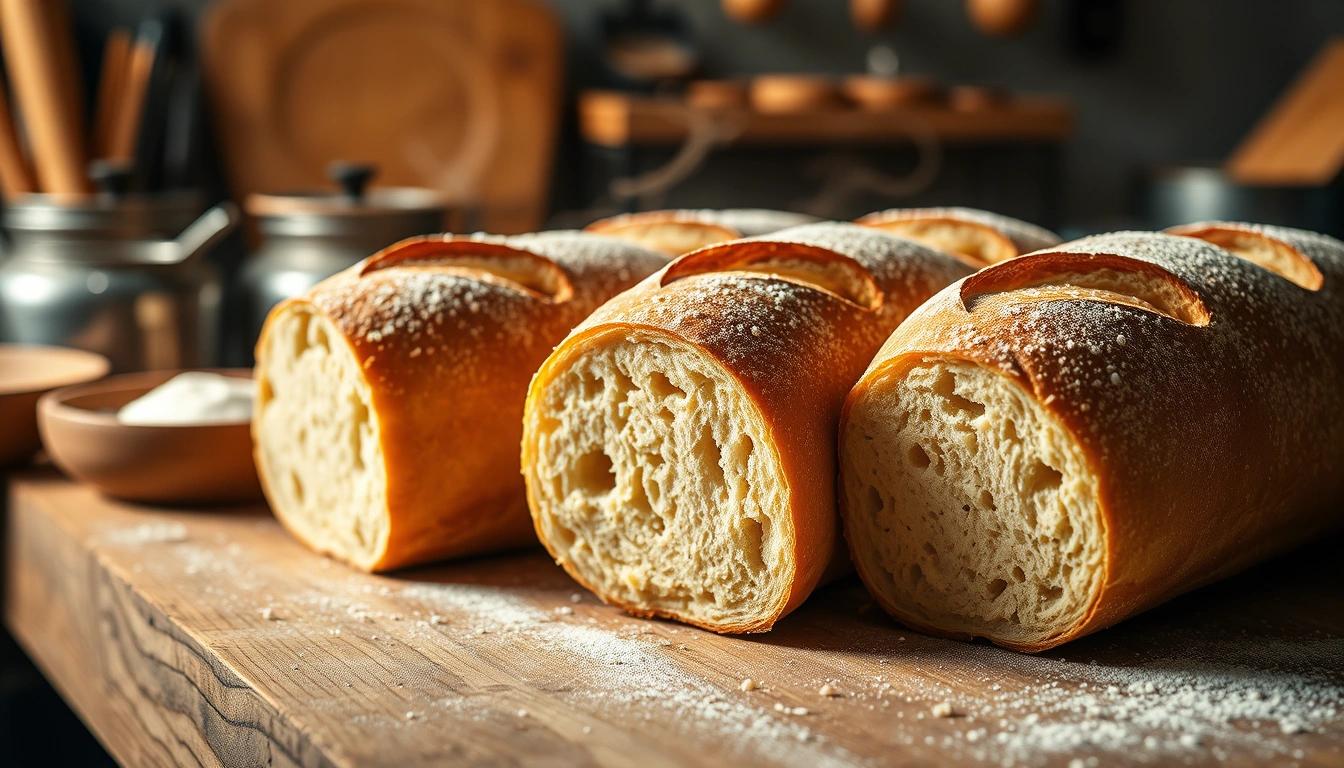
Sourdough baguettes
250 kcal per 100 g
Category: Cereals and Grains
Nutritional information (per 100 g)
| Calories | 250 kcal |
| Protein | 9g |
| Carbohydrates | 49g |
| Sugars | 3.2g |
| Total fats | 3.2g |
| Saturated fats | 0.5g |
| Fiber | 2.7g |
| Sodium | 450mg |
Vitamins and minerals
Description
Sourdough baguettes are a type of elongated and crispy bread made through the natural fermentation of a sourdough starter, which is a mixture of flour and water with natural yeasts and bacteria present in the environment. This slow fermentation process provides a more complex, slightly acidic flavor and a spongier, airier texture on the inside, accompanied by a golden and crispy crust.
Origin: The baguette originates from France, where it is a classic symbol of traditional baking. The sourdough version is an ancestral technique that has been used for centuries before the incorporation of commercial yeasts, thus preserving natural and artisanal methods to obtain high-quality bread.
Properties: Sourdough baguettes are known for their better digestibility and longer shelf life compared to breads made with industrial yeast. Natural fermentation helps break down certain gluten compounds, which can be beneficial for people with mild sensitivity. They also tend to have a lower glycemic index and provide a good source of complex carbohydrates and fiber.
Synonyms in Spanish from Latin America: In different regions of Latin America, sourdough baguettes may simply be called "artisanal baguette," "sourdough bread," or "sourdough loaf." Although the term "baguette" is widely recognized, in some countries this bread may also be referred to as "French loaf" or "fermented French bread."