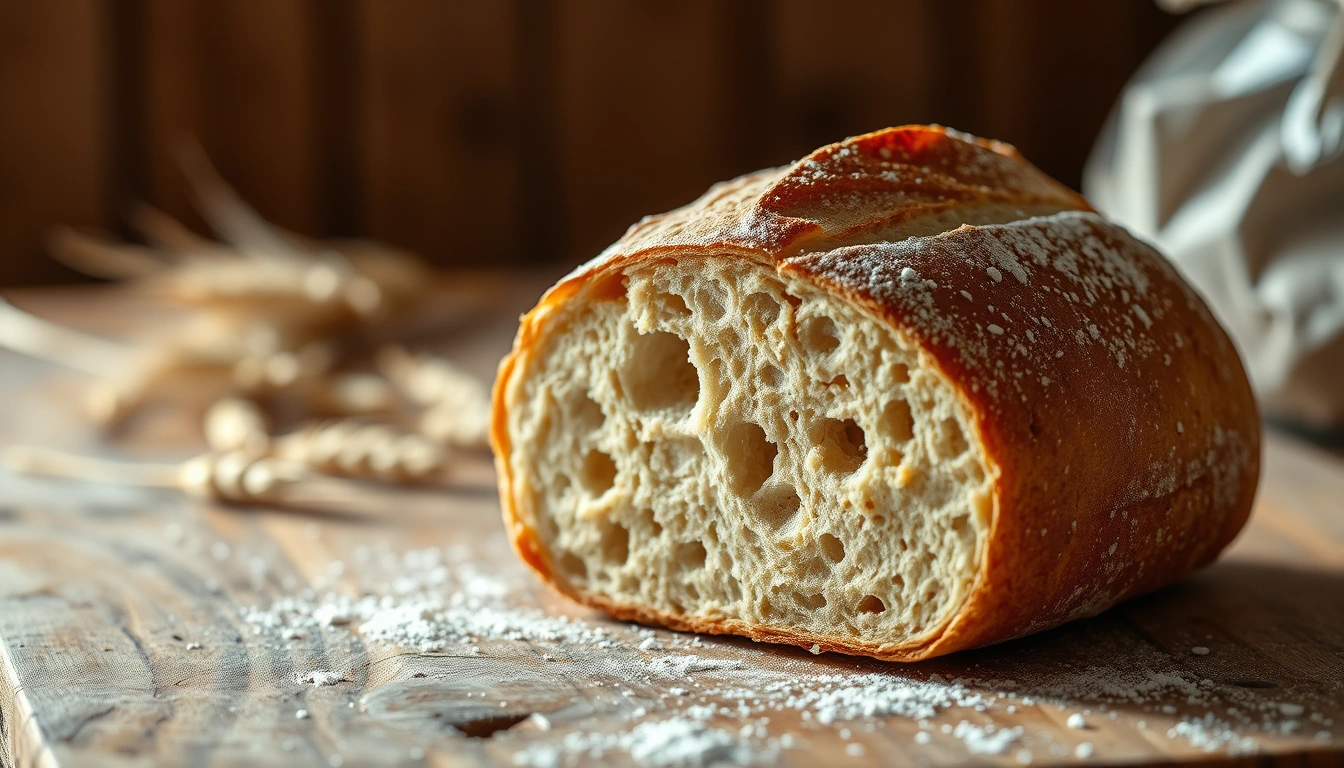
Sourdough bread
250 kcal per 100 g
Category: Cereals and Grains
Nutritional information (per 100 g)
| Calories | 250 kcal |
| Protein | 9g |
| Carbohydrates | 48g |
| Sugars | 2g |
| Total fats | 3.0g |
| Fiber | 2.7g |
Vitamins and minerals
Description
Sourdough bread is a type of bread made from natural fermentation using a mixture of flour and water that contains beneficial yeasts and bacteria present in the environment. Unlike common bread made with commercial yeast, sourdough bread ferments slowly, which gives it a denser texture, a crispy crust, and a characteristic slightly acidic flavor.
The origin of sourdough bread dates back thousands of years, being one of the oldest forms of bread-making in different cultures around the world. Traditionally, this method developed in various regions of Europe and the Middle East, and today it has gained popularity in artisanal and healthy cuisine globally.
Among its properties, sourdough bread is recognized for being more digestible compared to bread produced with commercial yeast, thanks to the prolonged fermentation that helps break down certain complex compounds. Additionally, it has a lower glycemic index and may have a longer shelf life without the need for additives, making it a preferred choice for those seeking natural ingredients and health benefits.
In different Spanish-speaking countries, sourdough bread may also be known simply as fermented bread, artisanal bread, or natural bread, although the most precise and commonly used term is sourdough bread.