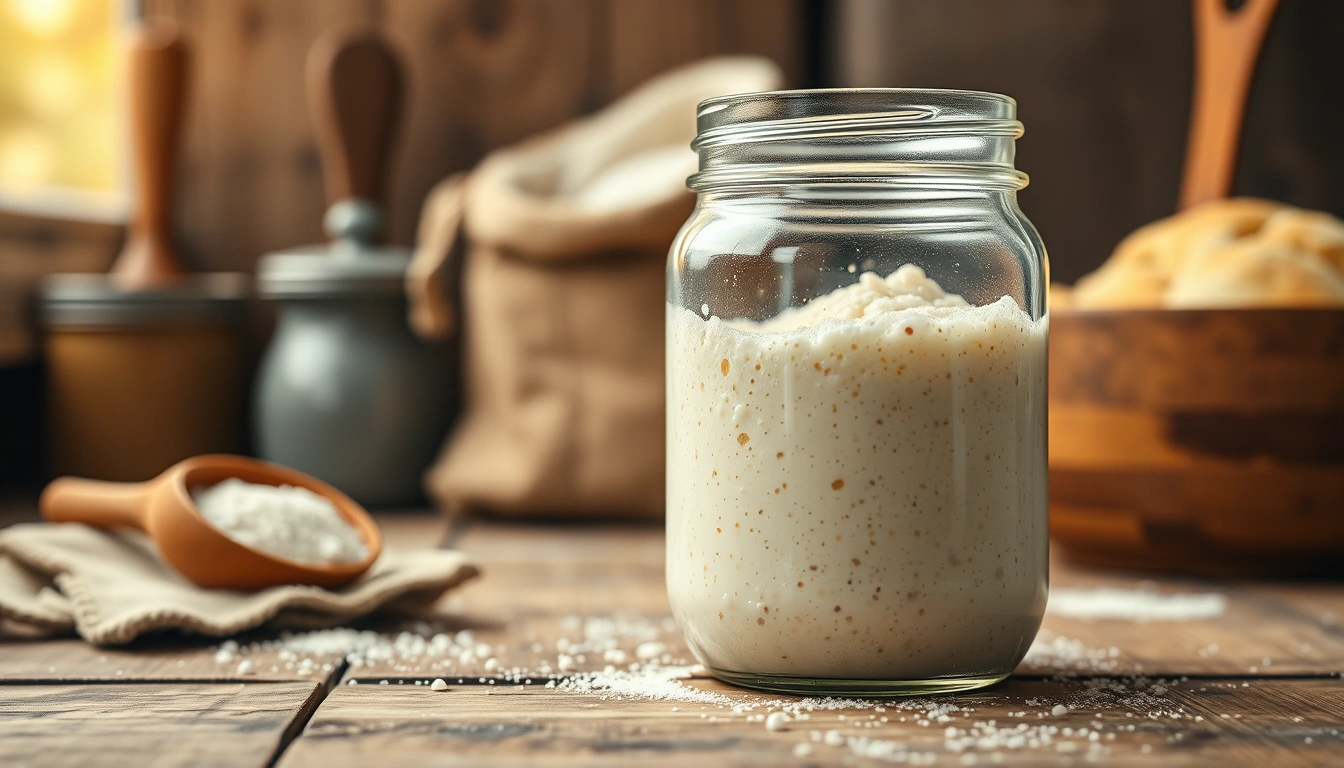
Sourdough starter
260 kcal per 100 g
Category: Cereals and Grains
Nutritional information (per 100 g)
| Calories | 260 kcal |
| Protein | 9g |
| Carbohydrates | 49g |
| Total fats | 3.3g |
| Fiber | 2.7g |
Vitamins and minerals
Description
Sourdough starter is a natural mixture of flour and water that, thanks to the spontaneous fermentation of yeasts and bacteria present in the environment, becomes a leavening agent for baking. This natural ferment is essential for making bread with better texture, flavor, and shelf life, providing a characteristic acidity and a crispy crust.
The origin of sourdough starter dates back thousands of years, being one of the first techniques used to produce bread before the invention of commercial yeast. Ancient cultures in Egypt, the Middle East, and Europe used this natural fermentation to harness wild yeasts.
Among its properties, sourdough improves the digestibility of bread, as during the fermentation process part of the gluten and sugars are broken down. It also enhances the absorption of minerals like iron and zinc by reducing phytates present in the flour. Furthermore, sourdough bread usually has a longer shelf life without the need for preservatives.
In different Spanish-speaking countries, sourdough starter may also be known as natural ferment, natural yeast, mother dough, or simply ferment. However, the term sourdough starter is the most commonly used in recipes to refer to this fundamental ingredient in the making of artisanal breads.