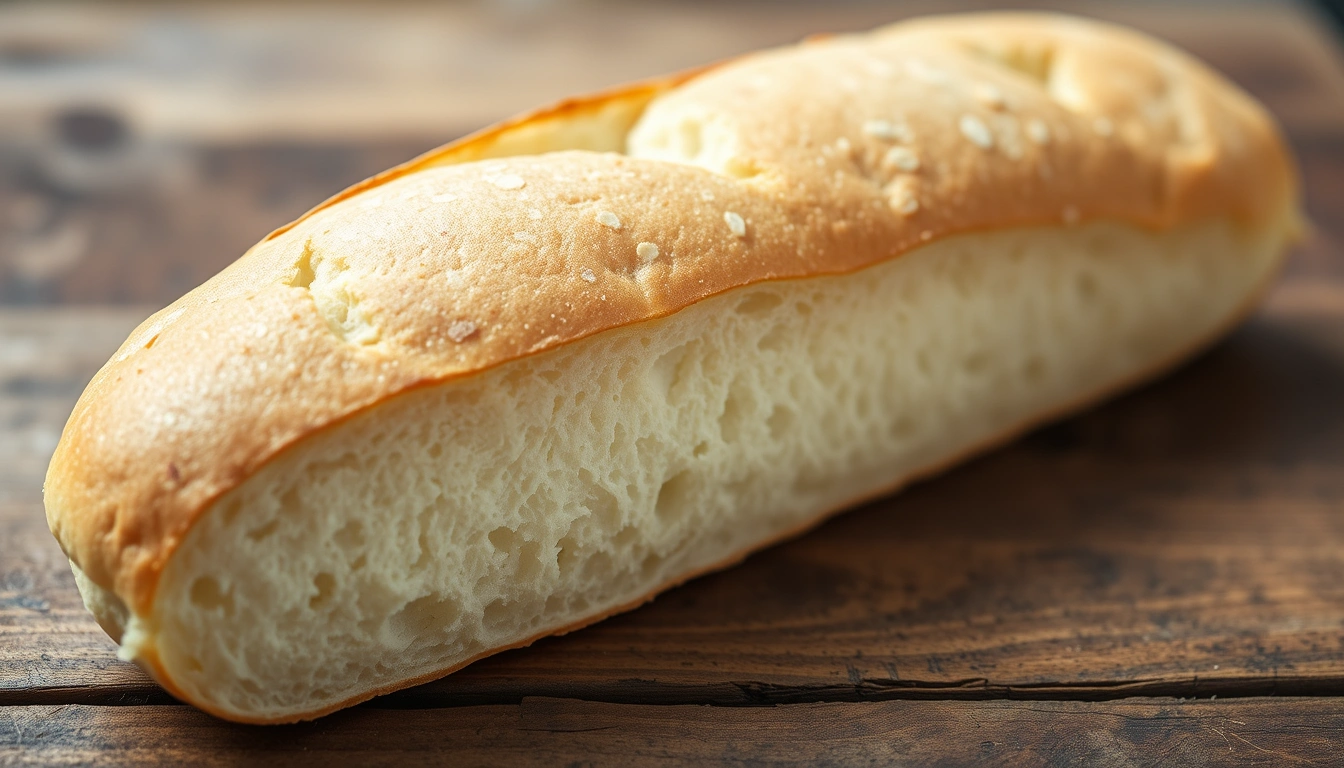
Submarine sandwich bread
265 kcal per 100 g
Category: Cereals and Grains
Nutritional information (per 100 g)
| Calories | 265 kcal |
| Protein | 9g |
| Carbohydrates | 49g |
| Sugars | 5g |
| Total fats | 3.2g |
| Saturated fats | 0.5g |
| Fiber | 2.7g |
| Sodium | 490mg |
Vitamins and minerals
Description
Submarine sandwich bread is a type of elongated bread, soft and slightly crispy on the outside, specifically designed for preparing submarine-style sandwiches or "subs." This bread has a spongy crumb that allows it to hold various ingredients, from cold cuts and cheeses to vegetables and dressings, without falling apart easily.
Its origin is primarily linked to the American tradition of submarine sandwiches, also known as subs, which became popular in the northeastern United States in the mid-20th century. However, the concept and style of this bread have spread to many Latin American countries, adapting to local tastes.
Regarding its properties, this bread is generally made with wheat flour, water, yeast, salt, and occasionally sugar or fat to improve its texture and flavor. Being a soft, white bread, it mainly provides carbohydrates that serve as a quick source of energy. Its elongated shape facilitates the assembly of sandwiches with multiple ingredients, ensuring each bite is balanced in flavor and texture.
In the Hispanic American context, submarine sandwich bread goes by different names depending on the region. Some of the most common synonyms include hot dog bun (though it is a bit smaller and softer), bolillo alargado (elongated roll) in some areas, or simply sandwich bread. In countries like Argentina or Chile, it may also be called pan para sánguche (a phonetic adaptation of "sandwich"), and in Mexico, it is often found as bolillo para torta when the bread is denser. However, the term "submarine sandwich bread" is widely understood in recipes that require a firm, elongated bread for preparing sub-style sandwiches.