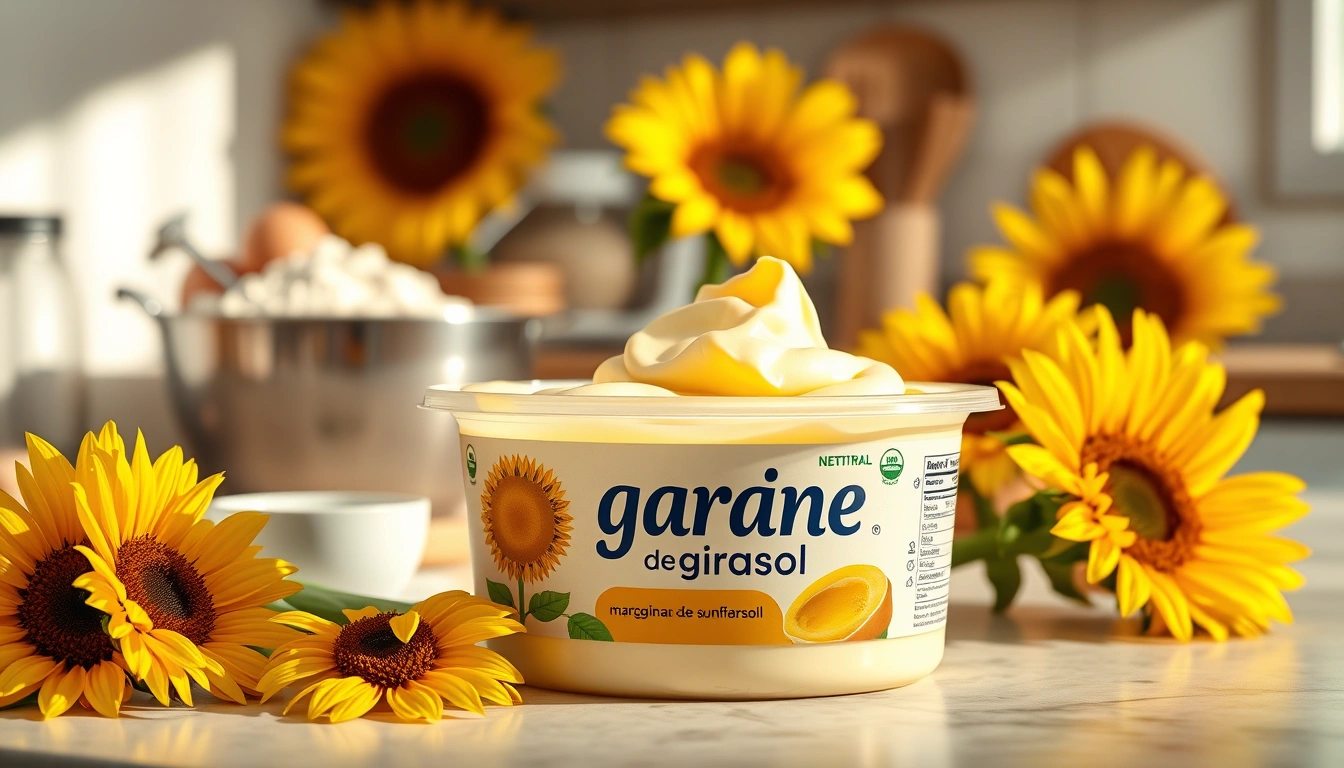
Sunflower margarine
720 kcal per 100 g
Category: Oils and Fats
Nutritional information (per 100 g)
| Calories | 720 kcal |
| Protein | 0g |
| Carbohydrates | 0g |
| Sugars | 0g |
| Total fats | 81g |
| Saturated fats | 12g |
| Fiber | 0g |
| Sodium | 700mg |
| Cholesterol | 0mg |
Vitamins and minerals
Description
Sunflower margarine is a type of margarine made primarily from sunflower seed oil. It is a plant-based product commonly used in cooking as an alternative to butter, ideal for spreading, cooking, and baking due to its soft texture and ability to add flavor without overpowering other ingredients.
The origin of sunflower margarine lies in the production of sunflower oil, which comes from the seeds of the Helianthus annuus plant, native to North America, although it is now cultivated in many regions of the world, especially in Europe and the Americas. The margarine is obtained through the hydrogenation or interesterification process of the oil, adjusting its consistency and properties for culinary use.
Among its main properties, the following stand out:
- It is rich in monounsaturated and polyunsaturated fatty acids, especially linoleic acid.
- It contains no cholesterol, making it a suitable option for vegetarian diets or for those looking to reduce their consumption of animal fats.
- It has a melting point suitable for spreading and for cooking at moderate temperatures.
- It is usually enriched with vitamins A and D.
In the culinary world, sunflower margarine is valued for its neutral flavor and for providing a light texture to preparations such as cakes, breads, pastries, and sauces.
Regarding synonyms and common terms in Latin America, sunflower margarine may simply be found as vegetable margarine, sunflower oil-based margarine, or, in some countries, it is generically referred to as margarine if the origin is not specified. There is no single synonym, but in all cases, it refers to a margarine made from vegetable oils, in this case, predominantly from sunflower.