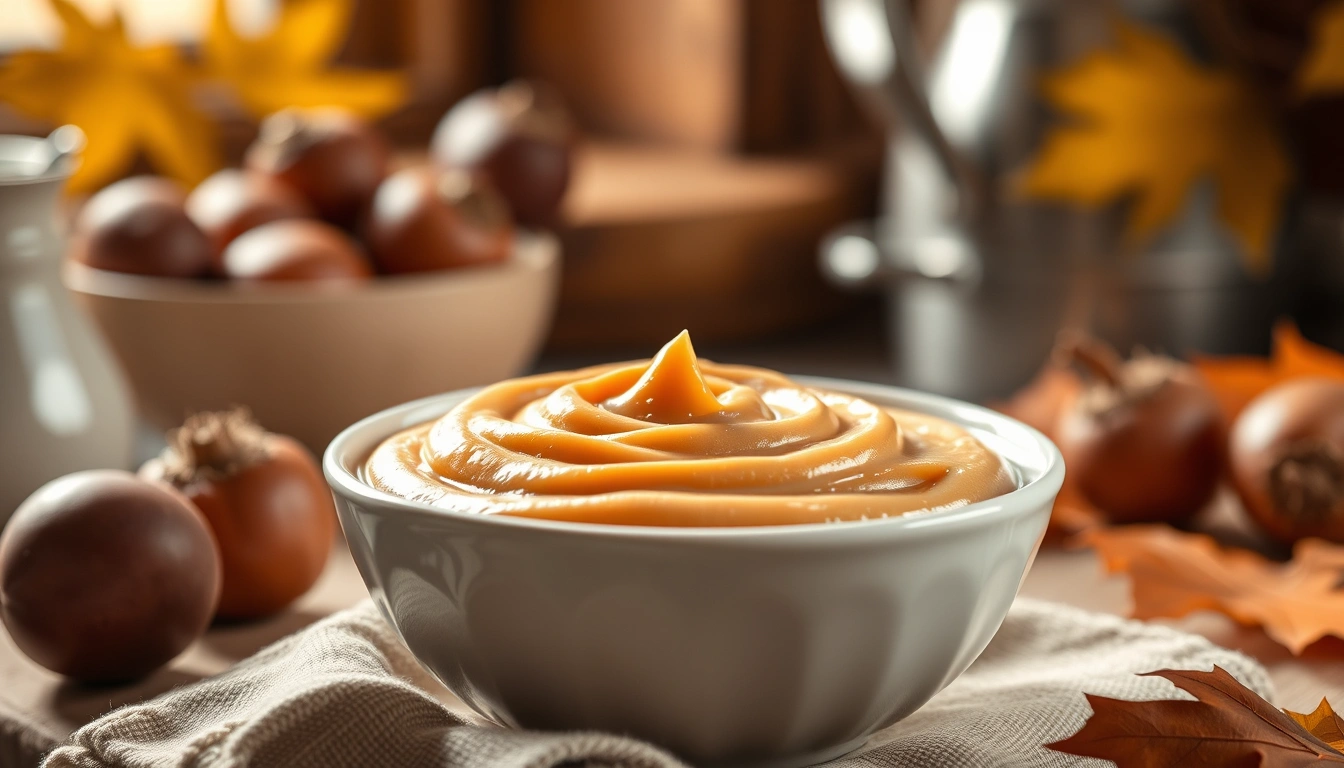
Sweetened chestnut puree
150 kcal per 100 g
Category: Nuts
Nutritional information (per 100 g)
| Calories | 150 kcal |
| Protein | 2g |
| Carbohydrates | 34g |
| Sugars | 15g |
| Total fats | 1g |
| Saturated fats | 0.2g |
| Fiber | 3.9g |
Vitamins and minerals
Description
Sweetened chestnut puree is a creamy and sweet preparation made from cooked and mashed chestnuts, to which sugar or another type of sweetener is added. This ingredient is frequently used in baking and in the preparation of traditional desserts, providing a mild, sweet, and slightly toasted flavor, characteristic of chestnuts.
Origin: The chestnut is a very popular nut in Europe, especially in countries like France, Italy, and Spain, where its consumption dates back centuries. Sweetened chestnut puree is typical of French cuisine, known as "crème de marrons," and is used to prepare everything from spreadable creams to cake fillings and ice creams.
Properties: Chestnuts are a nutritious food, low in fat and rich in complex carbohydrates, fiber, B vitamins, and minerals such as iron, potassium, and magnesium. The sweetened puree retains these properties, although it also provides calories due to the added sugar, so it is recommended to consume it in moderation, primarily as a sweet ingredient in various recipes.
Synonyms in Spanish from Latin America: In different Spanish-speaking countries, although sweetened chestnut puree is not an extremely common ingredient, it may be called by descriptive names such as dulce de castañas or simply puré de castañas dulce. In some places, the chestnut may be called castaña europea or chestnut (in areas with Anglo-Saxon influence), but there is no widely used regional synonym for this specific preparation.