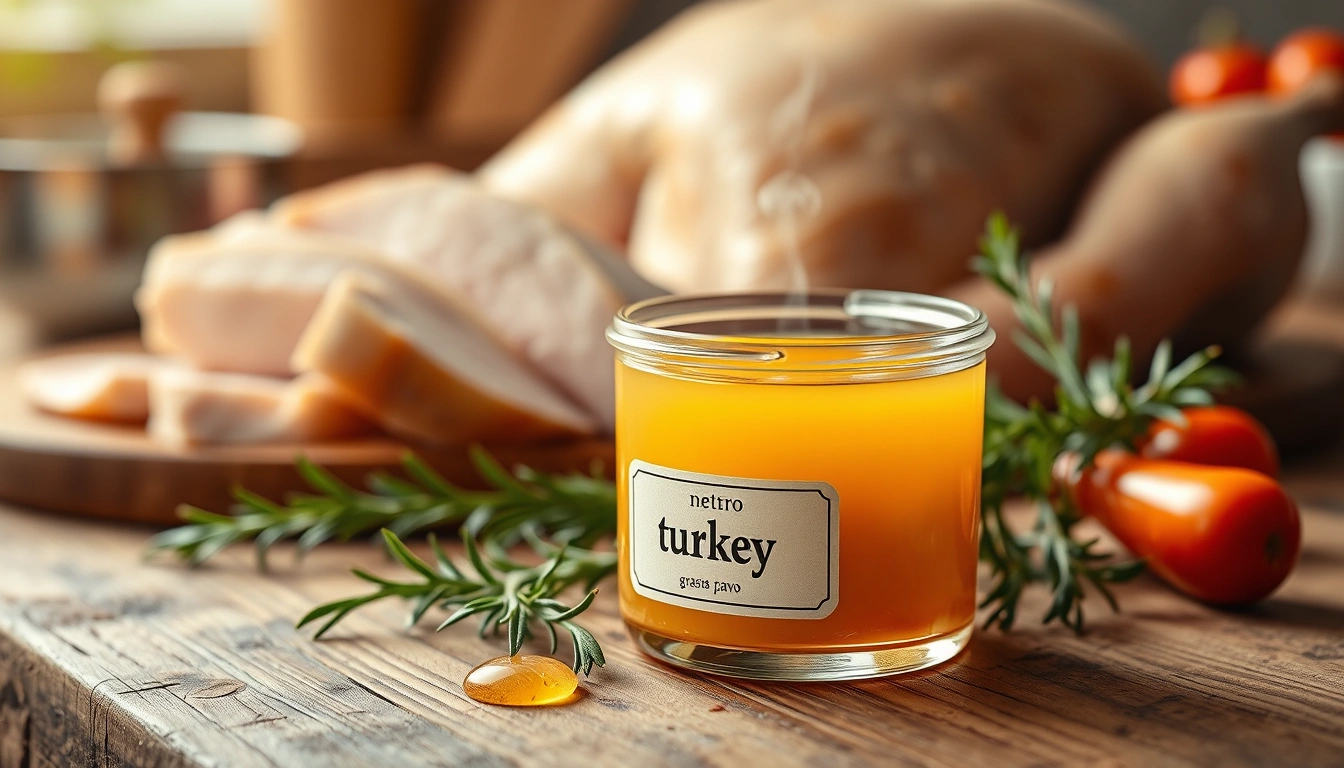
Turkey fat
450 kcal per 100 g
Category: Oils and Fats
Nutritional information (per 100 g)
| Calories | 450 kcal |
| Protein | 0g |
| Carbohydrates | 0g |
| Total fats | 49g |
| Saturated fats | 13g |
| Fiber | 0g |
| Cholesterol | 90mg |
Vitamins and minerals
Description
Turkey fat is an animal fat obtained by rendering the subcutaneous or visceral fat of turkeys. This ingredient is highly valued in cooking for its delicate flavor and its ability to add juiciness and aroma to dishes, especially in stews, fried foods, and roasts.
The turkey is a bird native to North America, where it has been a fundamental part of indigenous cuisine since pre-Columbian times. Turkey fat is primarily used in both traditional and contemporary recipes, providing an alternative to other animal fats like lard or chicken fat.
Among the properties of turkey fat, its relatively low melting point stands out, making it ideal for cooking at medium temperatures without burning easily. Furthermore, it contains unsaturated fatty acids that are beneficial for cardiovascular health when consumed in moderation. It is a source of concentrated energy and helps improve the texture and flavor of dishes.
In different Spanish-speaking countries, turkey fat may be known by various synonyms or descriptions, although it is not a universally common term. In Latin America, it might be heard as grasa de guajolote (Mexico), grasa de pava (some regions of Argentina and Uruguay), or simply grasa de ave (poultry fat). It is important to note that, although pavo is the most widely recognized term, the regional variants refer to the same fat from this type of bird.