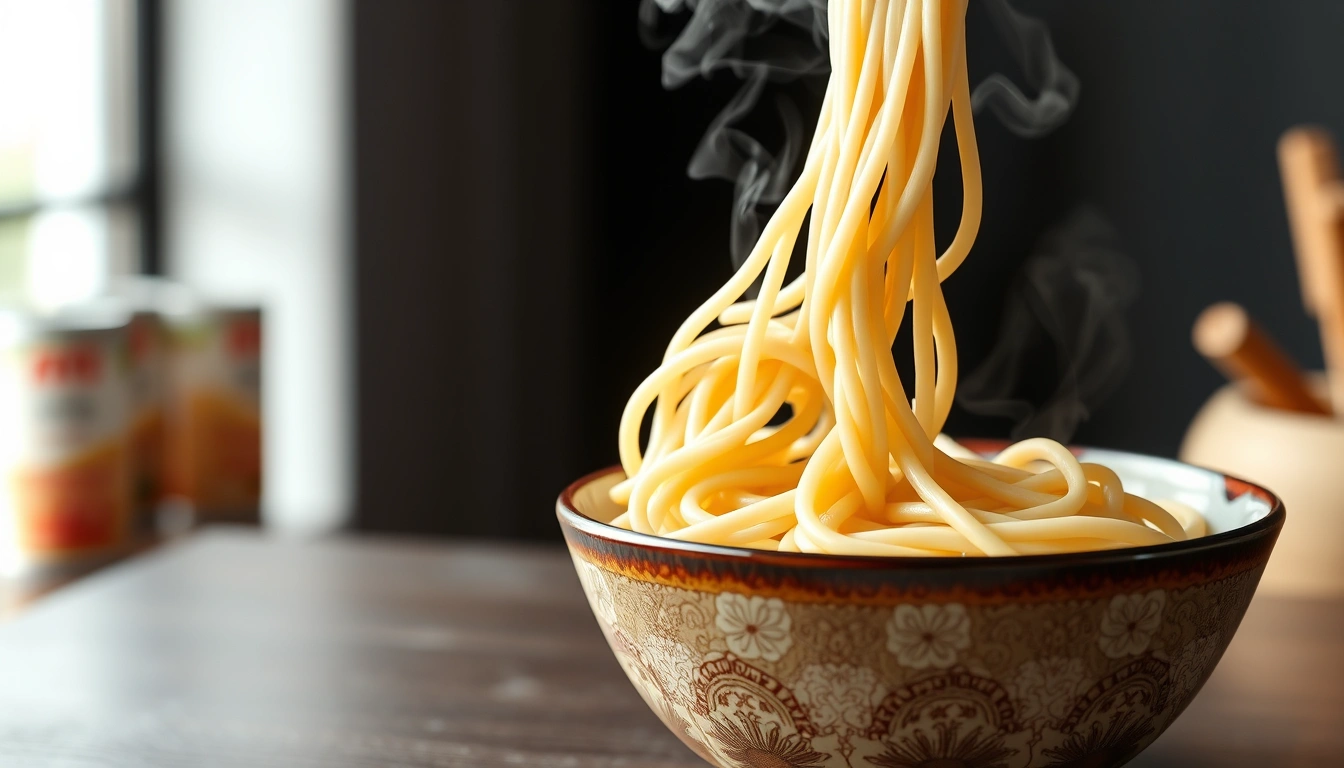
Udon noodles
127 kcal per 100 g
Category: Cereals and Grains
Nutritional information (per 100 g)
| Calories | 127 kcal |
| Protein | 4g |
| Carbohydrates | 25g |
| Sugars | 1g |
| Total fats | 0.5g |
| Saturated fats | 0.1g |
| Fiber | 2.0g |
| Sodium | 5mg |
Vitamins and minerals
Description
Udon Noodles are a type of traditional Japanese pasta, recognized for their thick, soft, and chewy texture. They are made primarily from wheat flour, water, and salt, which gives them an elastic consistency and a neutral flavor, making them ideal for a wide variety of culinary preparations.
Origin: Udon noodles originate from Japan, where they are a staple and very popular food in the local cuisine. They are consumed both in hot dishes, such as soups and stews, and in cold preparations during the summer.
Properties: Udon noodles are an important source of complex carbohydrates, providing sustained energy. Since they are made primarily with wheat flour, they contain gluten and are therefore not suitable for people with gluten intolerance or allergy. Their mild flavor allows them to be easily combined with broths, sauces, and vegetables, making them very versatile in the kitchen.
Synonyms in Spanish in Latin America: although the term fideos udon is the most commonly used, in some regions they may be referred to simply as thick Japanese noodles or Japanese thick noodles. However, to maintain authenticity and accuracy, it is recommended to use the original name udon.