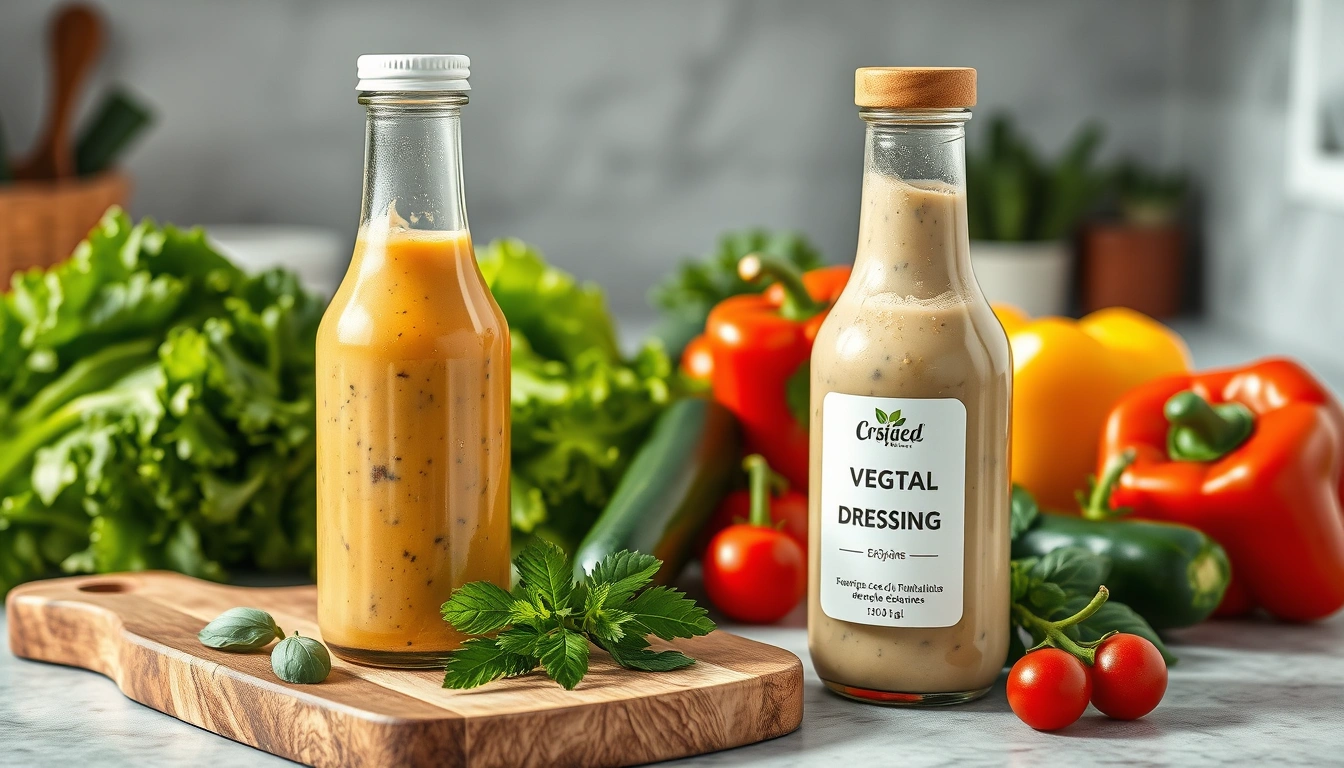
Vegetable dressing
120 kcal per 100 g
Category: Oils and Fats
Nutritional information (per 100 g)
| Calories | 120 kcal |
| Protein | 0.3g |
| Carbohydrates | 3g |
| Sugars | 2g |
| Total fats | 12g |
| Saturated fats | 1.5g |
| Fiber | 0.5g |
| Sodium | 300mg |
Vitamins and minerals
Description
Vegetable dressing is a liquid or creamy mixture made primarily from plant-based ingredients, used to enhance the flavor and texture of salads, vegetables, and other dishes in cooking. It generally includes vegetable oils, vinegars, citrus juices, herbs, and spices, and may incorporate elements such as mustard, garlic, or tahini to add complexity to the flavor.
Vegetable dressing has its roots in various culinary traditions, standing out in Mediterranean and American cuisines, where the use of fresh, natural ingredients is key to preparing healthy and tasty dishes. It is especially popular in recipes focused on the consumption of raw or cooked vegetables, providing moisture and contrast without adding animal fats.
Among its main properties, vegetable dressing is characterized by being a source of healthy fats if based on olive, sunflower, or avocado oils, providing natural antioxidants thanks to the herbs and spices, and helping to increase the absorption of fat-soluble vitamins present in vegetables, such as A, D, E, and K. Furthermore, it is usually low in calories and cholesterol-free, making it a suitable option for vegan or vegetarian diets.
In different regions of Latin America, vegetable dressing may have different names or refer to similar preparations, such as aliño, vegetable dressing, or simply salad dressing. In some countries, it is also known as vinaigrette, especially when the base is a mixture of oil and vinegar with herbs.