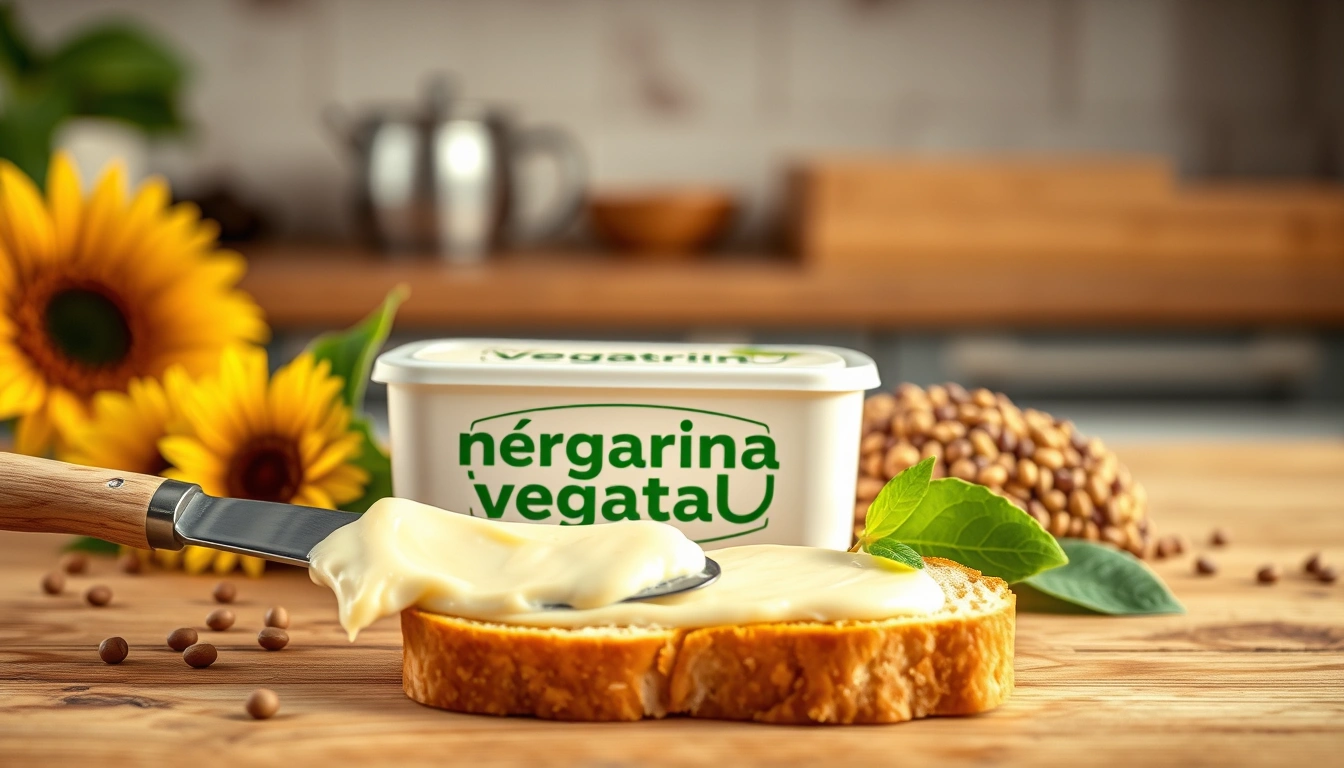
Vegetable margarine
720 kcal per 100 g
Category: Oils and Fats
Nutritional information (per 100 g)
| Calories | 720 kcal |
| Protein | 0g |
| Carbohydrates | 0g |
| Sugars | 0g |
| Total fats | 80g |
| Saturated fats | 15g |
| Trans Fat | 0g |
| Fiber | 0g |
| Sodium | 700mg |
| Cholesterol | 0mg |
Vitamins and minerals
Description
Vegetable margarine is a food product made from vegetable oils, commonly used as an alternative to butter in cooking and baking. Its creamy texture and spreadability make it ideal for preparing sauces, baking, and frying, adding flavor and smoothness to various recipes.
Originally developed in the late 19th century as a more economical and longer-lasting option than traditional butter, vegetable margarine has evolved into a versatile ingredient in many kitchens worldwide. It is made from oils such as soybean, sunflower, palm, or canola, which undergo hydrogenation or interesterification processes to achieve their solid or semi-solid consistency.
Among its properties, its content of unsaturated fatty acids stands out, which are beneficial for cardiovascular health when consumed in moderation. Additionally, many vegetable margarines are enriched with vitamins A and D, making them an additional source of essential nutrients.
In different Latin American countries, vegetable margarine may be known by various names, such as margarina, manteca vegetal (although this term can also refer to solid fats of animal origin in some regions), or simply mantequilla vegetal. However, margarine is the most common and widely recognized term in recipes and markets.
In summary, vegetable margarine is a key ingredient for those seeking healthy and versatile cooking options, ideal for spreading, cooking, and baking in a wide variety of preparations.