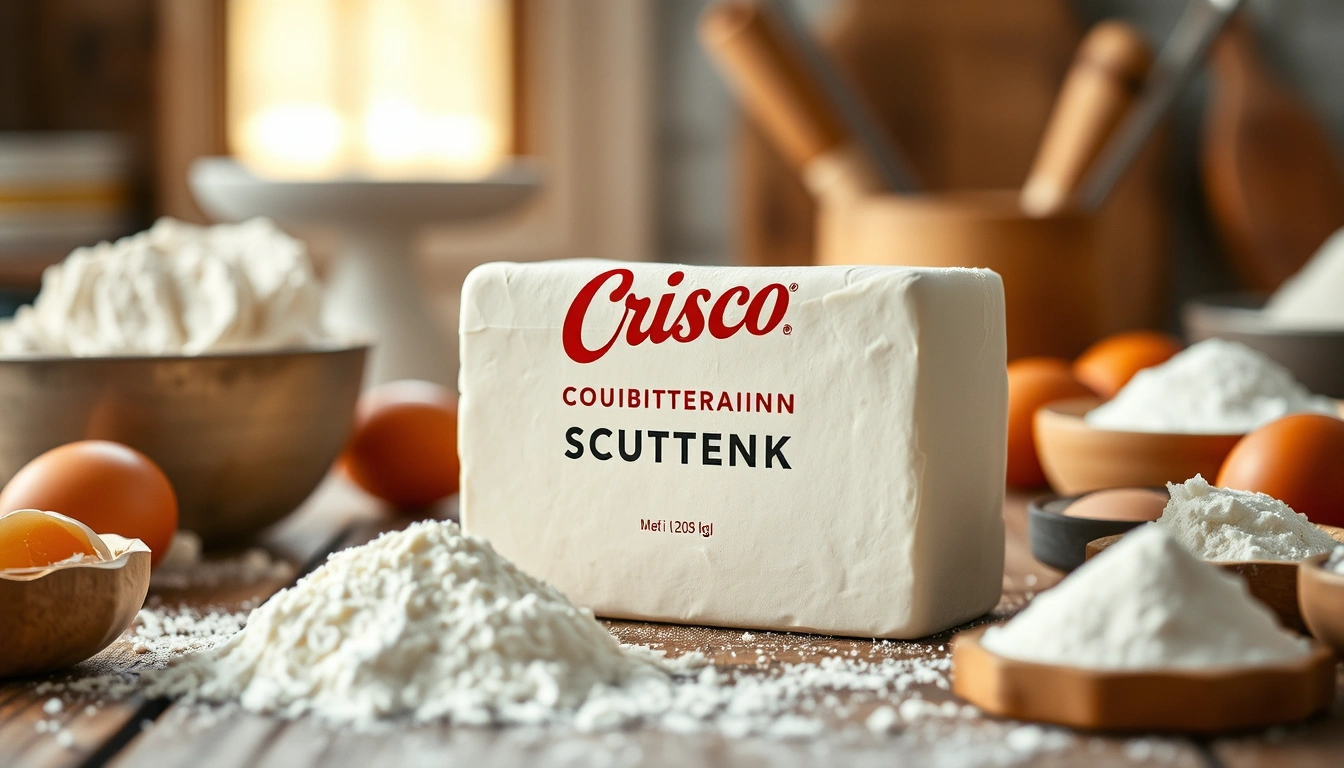
Vegetable shortening Crisco
884 kcal per 100 g
Category: Oils and Fats
Nutritional information (per 100 g)
| Calories | 884 kcal |
| Protein | 0g |
| Carbohydrates | 0g |
| Sugars | 0g |
| Total fats | 100g |
| Saturated fats | 24g |
| Trans Fat | 0g |
| Fiber | 0g |
| Sodium | 0mg |
| Cholesterol | 0mg |
Vitamins and minerals
Description
Crisco vegetable shortening is a type of partially hydrogenated fat of vegetable origin, commonly used in cooking and baking as a substitute for lard or butter. It was created in the early 20th century in the United States and has become popular for its solid texture at room temperature, which makes it ideal for making doughs, fried foods, and baked goods such as cakes, cookies, and pastries.
Crisco vegetable shortening is made primarily from vegetable oils, such as soybean or palm oil, which undergo a hydrogenation process to achieve a firm consistency. Its main advantage is that it provides a crispy and flaky texture to preparations, in addition to having a high smoke point, which is beneficial for frying foods.
Regarding its nutritional properties, it is a concentrated source of saturated and unsaturated fats, although it should be consumed in moderation due to its calorie content and trans fats (in traditional versions). Currently, there are improved formulations that are trans fat-free.
In Latin America, this ingredient may be found under different names depending on the region, such as manteca vegetal, grasa vegetal, or simply Crisco. In some countries, it is also called manteca para repostería or grasa para hornear (baking shortening).
In summary, Crisco vegetable shortening is an essential ingredient in many cooking and baking recipes that seek a specific texture in doughs and fried foods, adding flavor and consistency to dishes.