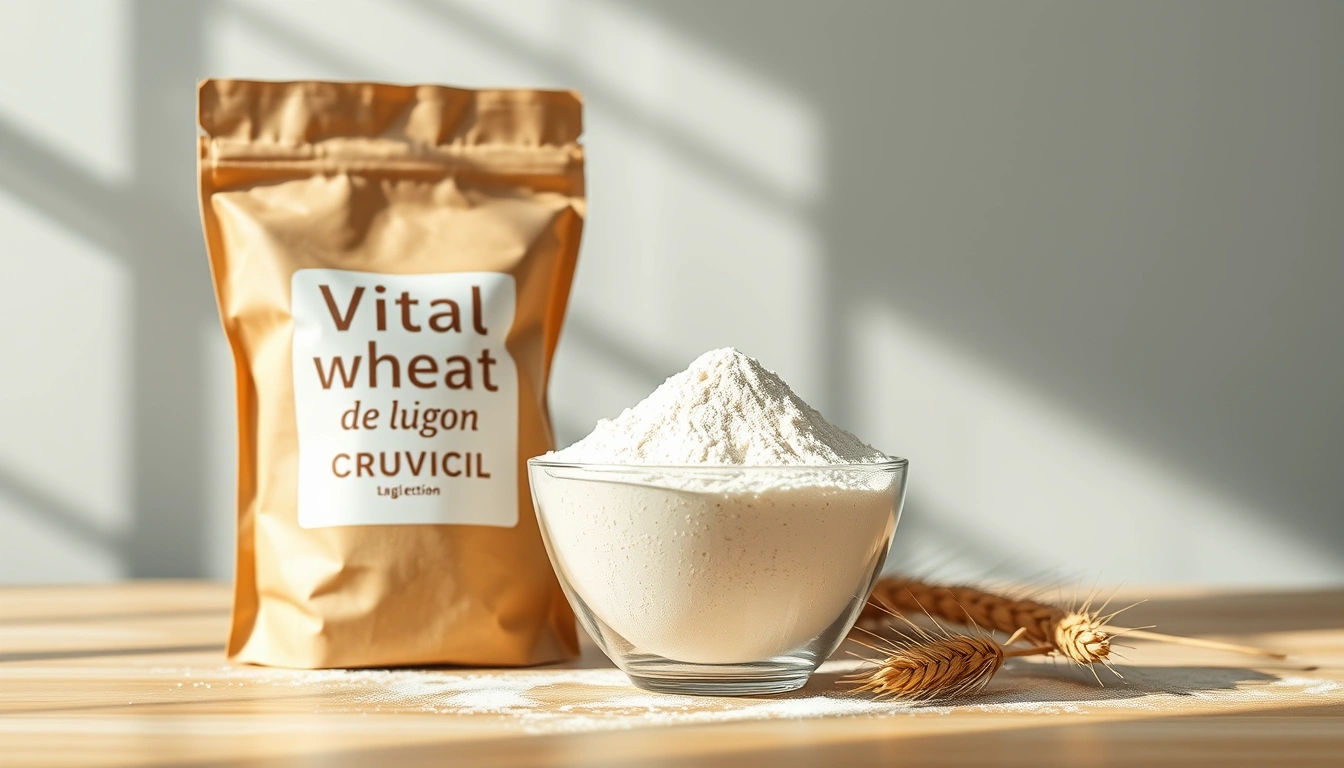
Vital wheat gluten
370 kcal per 100 g
Category: Cereals and Grains
Nutritional information (per 100 g)
| Calories | 370 kcal |
| Protein | 75g |
| Carbohydrates | 14g |
| Total fats | 1.5g |
| Fiber | 8.0g |
Vitamins and minerals
Description
Vital wheat gluten is a food ingredient obtained from wheat protein. It comes in the form of powder or flour and is known for its high capacity to provide elasticity and structure to doughs, making it an essential component in the production of breads, baked goods, and vegetarian or vegan recipes that aim to mimic the texture of meat.
The origin of vital wheat gluten lies in the separation of the protein from the wheat starch through a process of washing and drying. This ingredient has been traditionally used in the baking industry to improve the texture and volume of bread, in addition to being fundamental in the preparation of seitan, a very popular meat substitute in various cultures.
Regarding its properties, vital wheat gluten is rich in protein (around 75% to 80%), almost free of fats and carbohydrates, and helps increase the elasticity and strength of doughs. It is especially valued for its ability to retain gas during fermentation, which improves the fluffiness and structure of bread. However, it is not suitable for people with celiac disease or gluten sensitivity.
In different Hispanic American countries, vital wheat gluten may also be known as wheat gluten, gluten flour, or simply gluten. In some regions, it may be called vital gluten or wheat protein flour. It is important to distinguish it from common flour, as its main function is to add protein and structure to culinary preparations.